About Echinaster luzonicus (Gray, 1840)
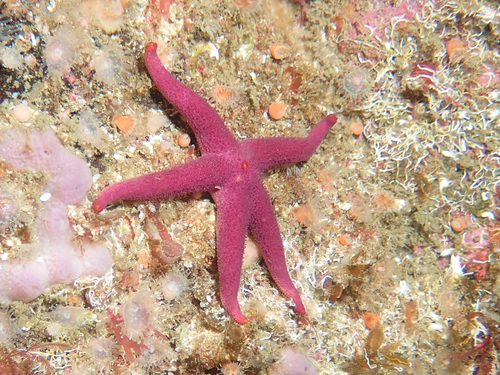
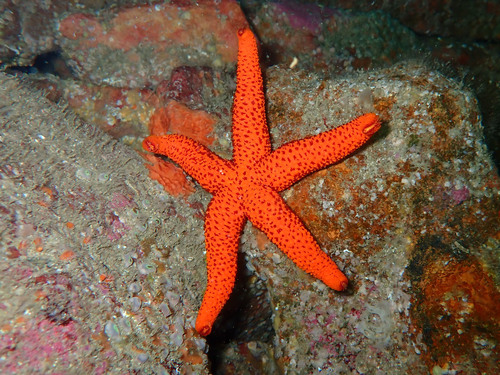
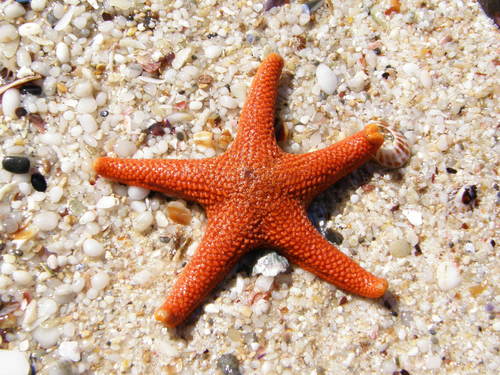
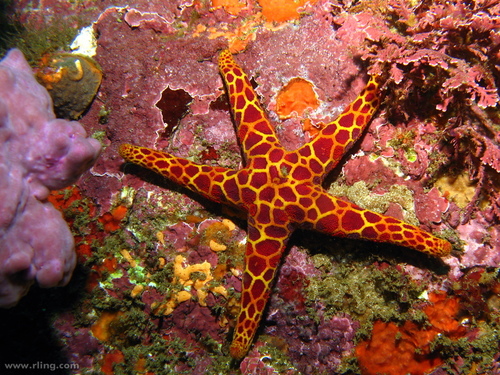
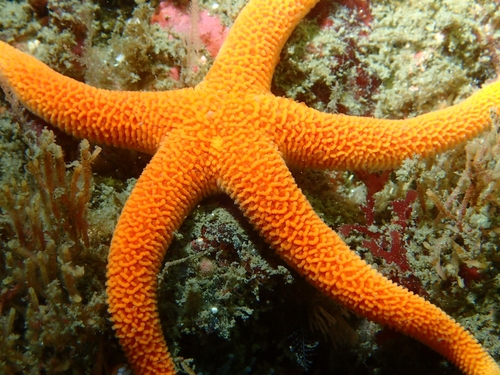
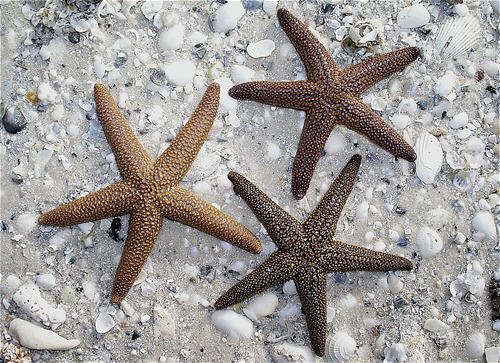
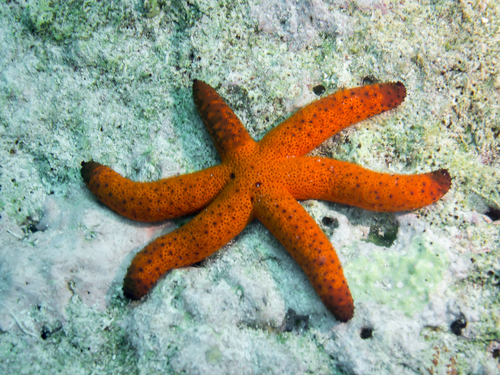
Echinaster luzonicus is typically a six-armed starfish, but it often has an asymmetrical appearance due to its habit of shedding arms. Its colouring is somewhat variable, ranging from red to dark brown. Both of these colour morphs have been collected off Heron Island in the Great Barrier Reef, and individual starfish appear able to change their colour from red to brown and back again, possibly in response to the amount of ambient light they receive. Echinaster luzonicus occurs in the tropical and sub-tropical western Indo-Pacific region. Its range extends from Madagascar and the east coast of Africa to Northern Australia, Indonesia and the Philippines. It is a common species found on reef crests and in the intertidal zone. Echinaster luzonicus feeds on bacterial and algal films that it extracts from sediment. This species is unique within its genus because it reproduces asexually through arm autotomy; the shed arm then regenerates, growing a new central disc and additional arms. No other reproductive methods have been recorded for this species. One species of copepod lives symbiotically on the oral (under) surface of Echinaster luzonicus, and its cryptic colouration makes it almost indistinguishable from its host. Another associate of this starfish is the comb jelly Coeloplana astericola, which grows abundantly on its aboral (upper) surface. Three additional symbionts have been recorded on E. luzonicus in the waters of a volcanic island: the ectoparasitic snail Melanella martinii (A. Adams in Sowerby, 1854), the pontoniine shrimp Zenopontonia soror (Nobili, 1904), and the polychaete scaleworm Asterophilia carlae Hanley, 1989.