About Echidnocerus foraminatus Stimpson, 1859
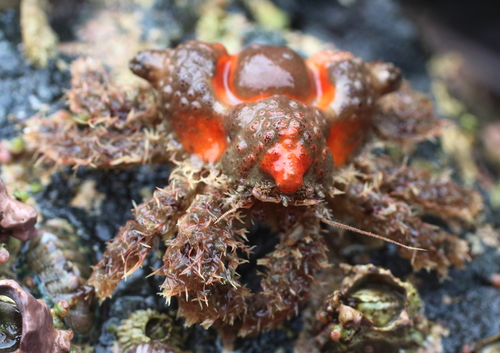
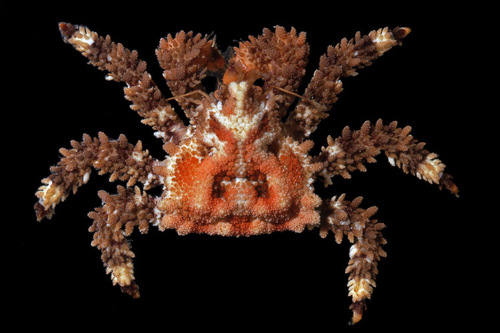
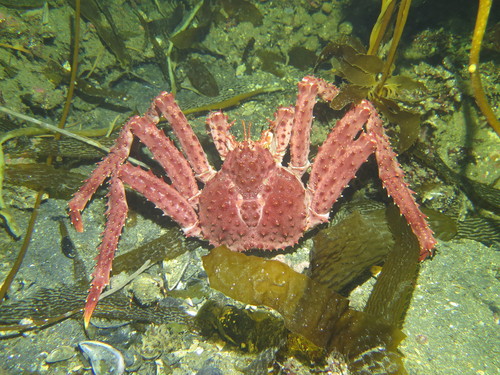
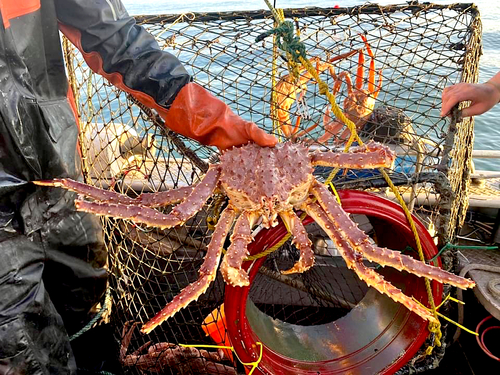
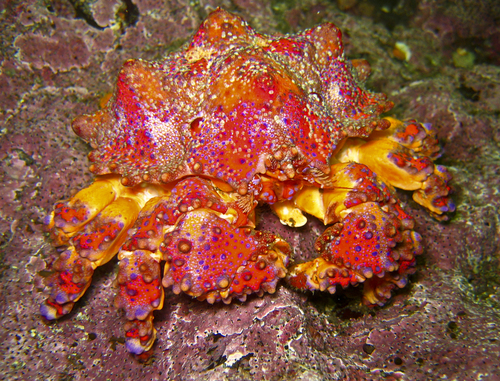
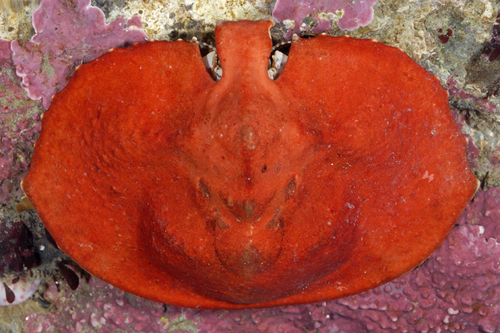
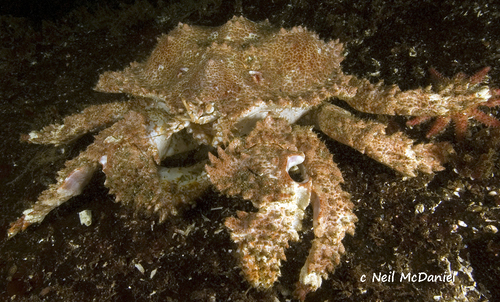
The brown box crab, scientifically named Echidnocerus foraminatus, is a species of king crab. Its range extends along the Pacific coast of North America from Prince William Sound, Alaska, down to San Diego, California, and it can be found at depths between 0 and 547 metres (0 to 1,795 feet). Adults reach a maximum carapace length of 150 millimetres (5.9 inches). This crab feeds on bivalves and detritus. It gets its common name from a pair of round, tunnel-like openings that form when the crab folds its limbs tight against its body, between the claws and their adjacent legs. Each claw and its matching adjacent leg has a half-circle notch; when the limbs are pulled tightly together, these notches align to form one complete circular opening. Each of these tubular round openings is called a foramen. The brown box crab often spends time buried in sediment, and the two foramina on its chelipeds let water enter its gill chamber to allow respiration. Commensal fish of the species Careproctus sometimes use the crab's gill chamber to hold their eggs.