About Echeneis naucrates Linnaeus, 1758
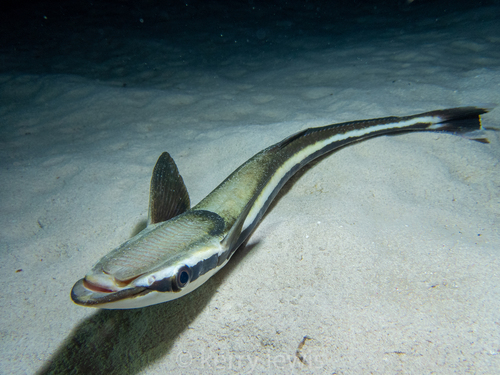
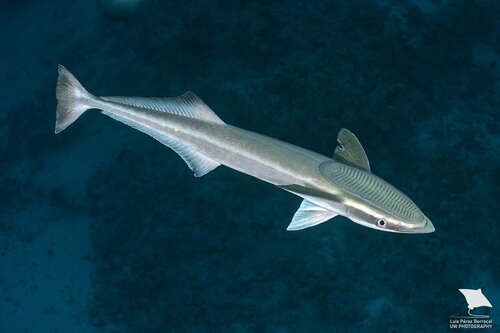
Echeneis naucrates, commonly called the sharksucker, is a medium-sized fish that can reach up to 110 cm (43 in) in length. It has an elongated, streamlined body, with a clearly prognathic lower jaw that projects well forward past the upper jaw. Villiform teeth are present on its jaws, vomer, and tongue. Its key distinguishing feature from other fish is the oval-shaped sucking disc, which is a highly modified dorsal fin that extends from the top of the head to the anterior portion of the body. The base body color of E. naucrates ranges from dark grey to dark brown, with a dark belly. A darker-than-background longitudinal stripe with a whitish margin runs along the side of the body. Its caudal fin is black with white corners. This species is circumtropical, found in all tropical and warm temperate waters worldwide except the eastern Pacific. It lives near the coast and offshore, down to a maximum recorded depth of 50 m (160 ft). Sharksuckers use their modified dorsal fin to temporarily attach to a range of objects and hosts, including sharks, rays, large bony fishes, sea turtles, whales, dolphins, ships, and even scuba divers.