About Dytiscus semisulcatus O.F.Müller, 1776
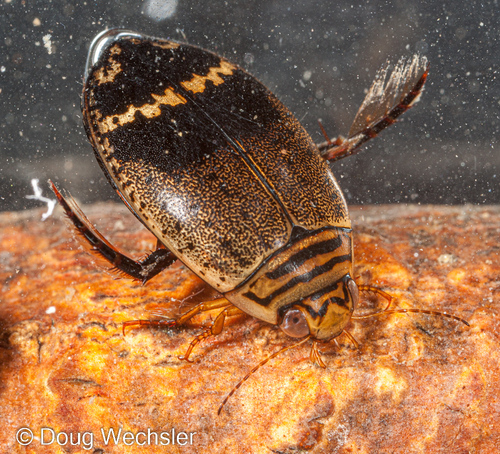
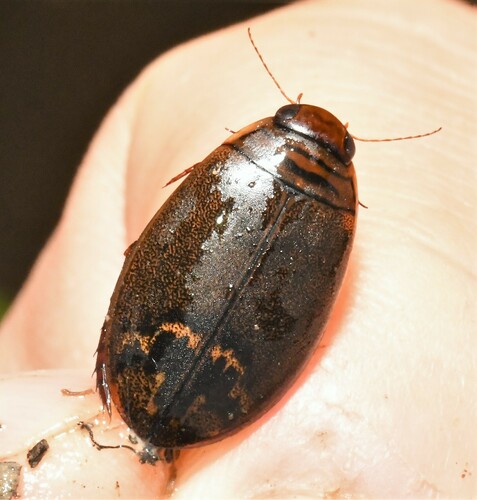
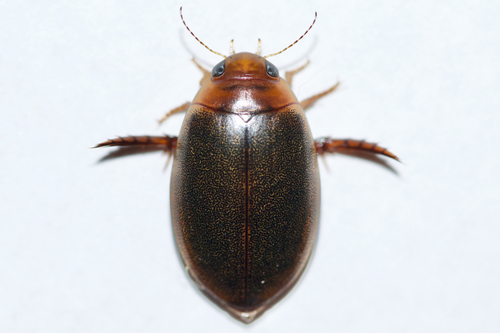
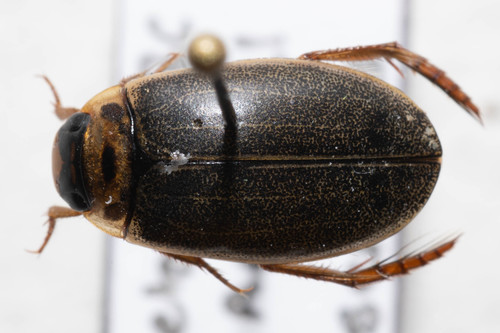
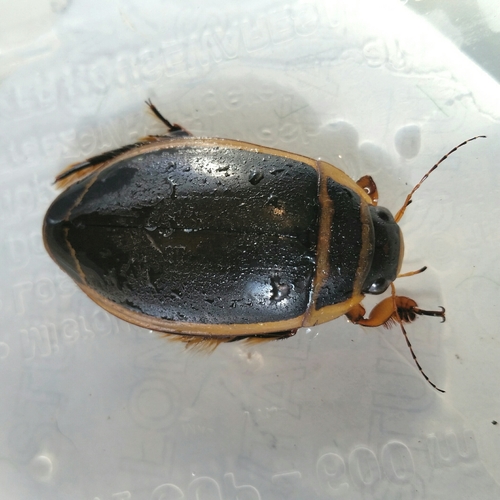
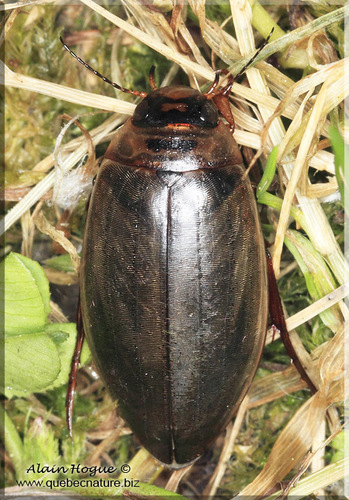
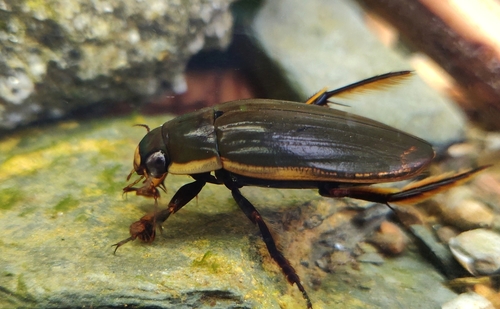
Dytiscus semisulcatus is a rather large beetle species. Larvae can reach up to 18 millimetres (0.71 in) in length, while adult body length generally ranges from 22 to 32 millimetres (0.87–1.26 in). Like other beetles, this species has three distinct functional body regions: the head, thorax, and abdomen, with an exoskeleton forming its entire body wall. The head holds the brain, eyes, antennae, and mouthparts. The eyes are compound, with a lens-like appearance and pixel-like sensory reception, constructed from thousands of tiny sensory units called ommatidia. The antennae are short, pale, and covered in many chemical receptors, working as sensory organs. Individuals are dark overall, with a black head and a testaceous (brick red) clypeus. Male heads have fine puncturing, while female heads have coarser puncturing. The pronotum, the dorsal exoskeletal plate of the thorax, is black. The elytra, or hardened wing cases on the back, range in color from red-brick to black, with a pale outer margin called the epipleuron. Male elytra bear three narrow grooves, while female elytra have 10 furrows on the lower section. Dytiscus semisulcatus has broad wings. The metasternum, the ventral belly plate of the thorax, is rounded and black. Its legs are slender, colored dark brown to black, and it possesses metatarsal claws.
This species is distributed across Europe, ranging from North Africa to Southern Scandinavia and eastward to Turkestan, as well as in Northern Asia excluding China. Its habitat includes stagnant ponds, slow-moving clear water with abundant vegetation along the banks, peat bogs, and areas among marginal sphagnum.