About Dytiscus marginalis Linnaeus, 1758
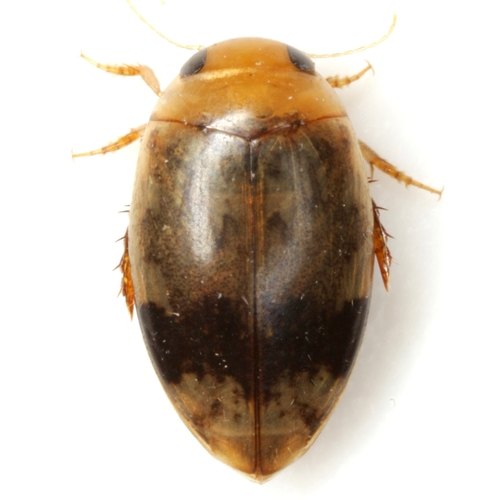
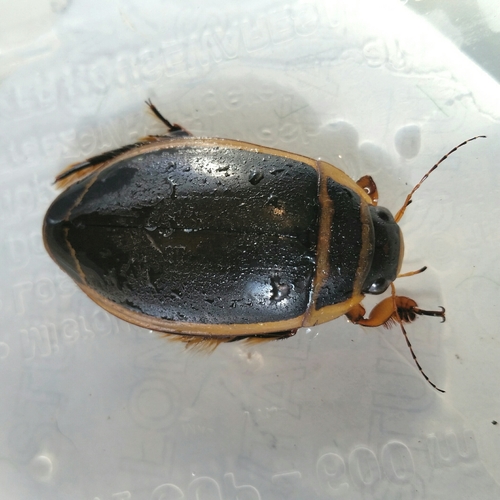
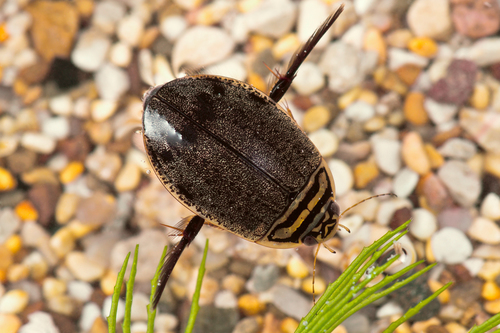
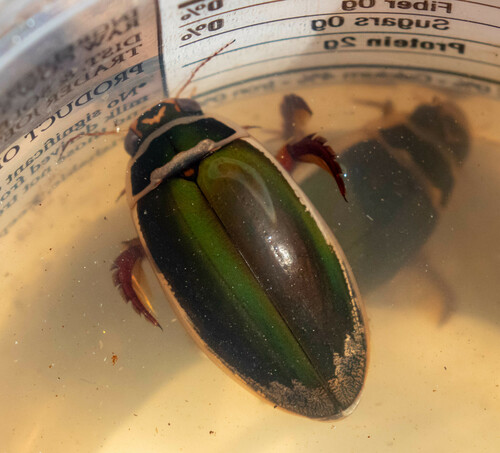
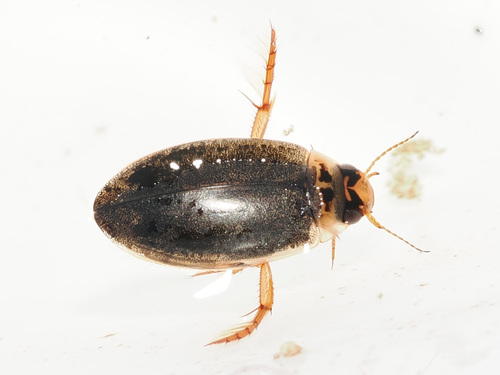
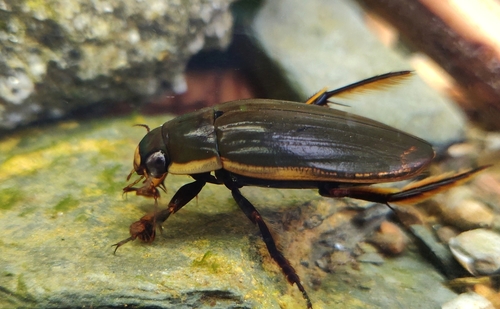
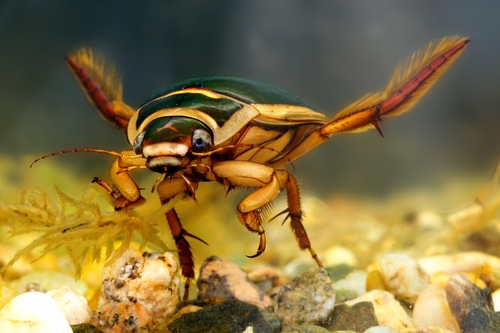
The great diving beetle, scientifically known as Dytiscus marginalis Linnaeus, 1758, is an aquatic diving beetle native to Europe and northern Asia. In the United Kingdom, it is common in Wales, most of England, and southern Scotland, but is less common in chalk regions and the far north of the UK. As its common name suggests, this is a fairly large insect. Larvae can reach up to 60 millimetres (2.4 inches) in length, while adult beetles generally measure 27–35 millimetres (1.1–1.4 inches) long. Great diving beetles live in still or slow-moving fresh water, and appear to prefer freshwater habitats that contain vegetation. They have dark brown to black colouring on their back and wing cases (called elytra), and yellow colouring on their abdomen and legs. Males have shiny wing cases, while females have finely grooved wing cases. This species is a voracious predator that hunts a wide range of prey, including small fish. Males have many suction cups on their first two pairs of legs. These suction cups help them get a secure grip both during mating and when holding onto prey. Great diving beetles are capable fliers, and they usually fly at night. They use moonlight reflection to find new water sources, and this method of navigation can sometimes lead them to land on wet roads or other hard wet surfaces. Before diving, the beetles collect air bubbles inside their wing cases; this air passes through their spiracles. Relative to their body size, great diving beetles have strong jaws. To reproduce, females lay eggs underwater inside the mesophyll tissue of aquatic plant leaves. The incubation period for these eggs ranges from 17 to 19 days.