About Dyticopycna semiclara (Germar, 1834)
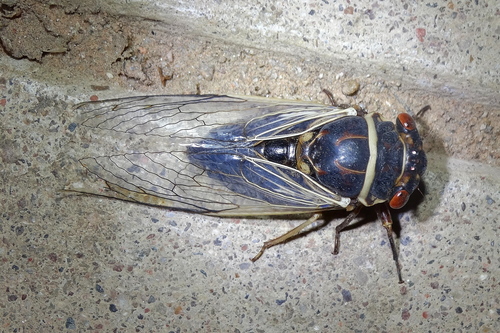
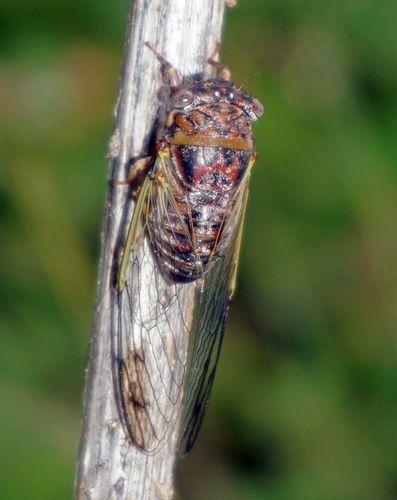
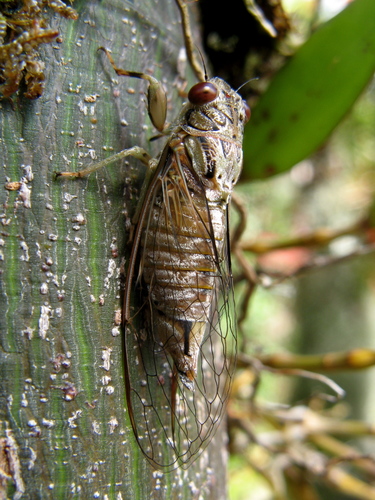
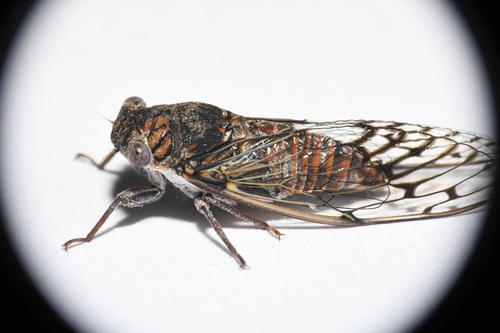
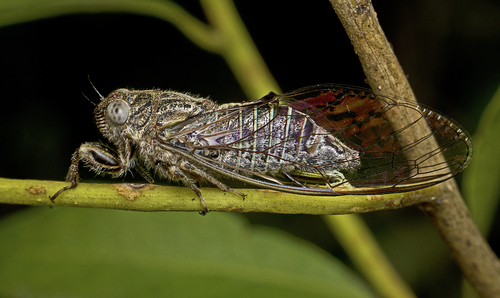
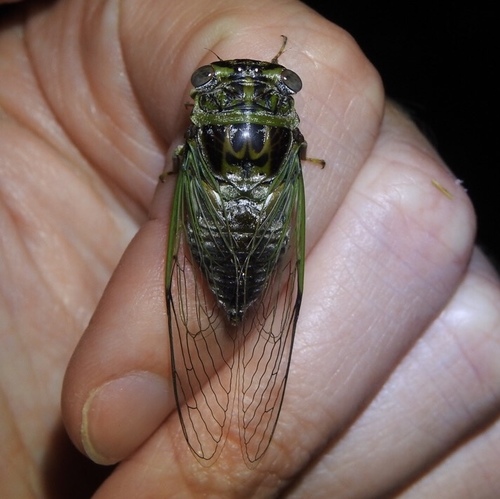
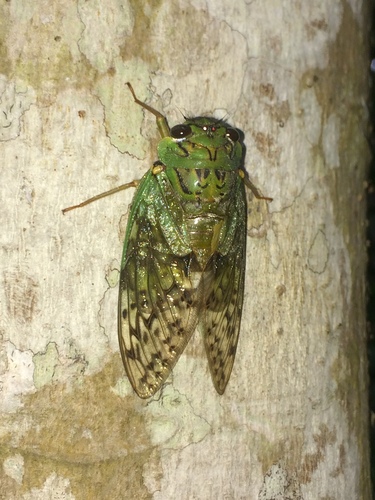
Dyticopycna semiclara, commonly called the whining forest cicada, is a South African forest-dwelling platypleurine cicada. It is the type species of the genus Dyticopycna; before a 2020 taxonomic revision, this species was previously classified in Pycna and other genera. This is one of the largest cicada species found in South Africa, and adults reach 40 to 50 millimeters in body length. Its wings have distinct green, brown, and translucent patches, and are covered in silvery hairs. The species is endemic to South Africa, and can be found in the Eastern Cape, KwaZulu-Natal, Mpumalanga, and Limpopo provinces. It prefers indigenous forests with sparse undergrowth and trees taller than 4 meters, but may also occur in stands of Quercus robur, Populus deltoides, pine, and eucalyptus. Unusually, it can also be found in dense riverine bushes in KwaZulu-Natal and Eastern Cape. Males typically call from positions a few meters above the ground on shady tree limbs, where they have a clear view of their immediate surroundings and potential predators. Males often sing in mating choruses, most actively at dawn and dusk. Their ability to sing during these times is enabled by an endothermic metabolism that raises their body temperature to more than 22 °C above the surrounding ambient temperature. This endothermy during crepuscular hours lets them take advantage of optimal atmospheric conditions for acoustic communication, while also keeping their risk of predation as low as possible. The species also produces an encounter call, which is used during courtship and to maintain personal space within choruses. Males behave aggressively towards other males that come within approximately 50 centimeters of their position. While choruses can begin at any time of day, most calling activity is concentrated into a 30-minute window at dawn and dusk.