About Dysdercus suturellus (Herrich-Schaeffer, 1842)
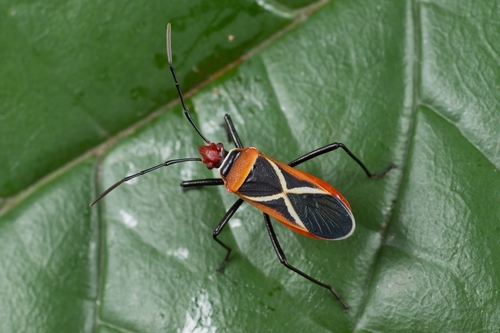
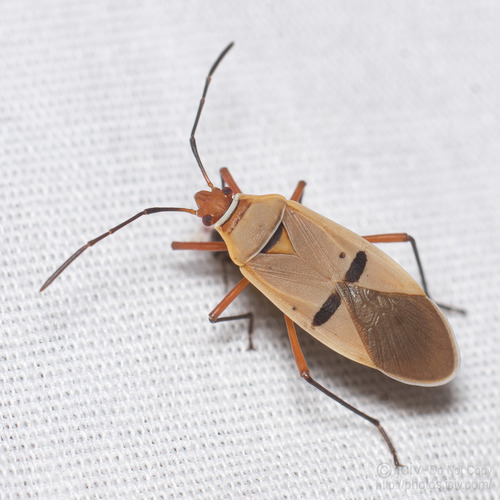
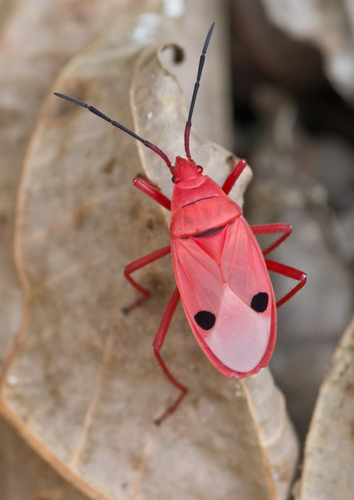
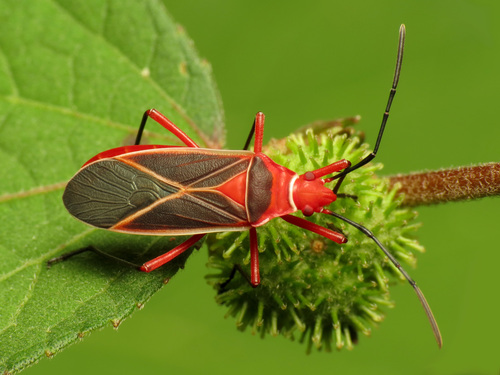
Dysdercus suturellus (Herrich-Schaeffer, 1842) is a true bug species. Adults measure approximately 1 to 1.5 cm (0.4 to 0.6 in) in length. They have a red head and black antennae, where the first antenna segment is longer than the second. The thorax is mostly red, with a white pronotal collar. Abdominal sternites are red, edged with white along their posterior margins. The corium, the leathery base of the wings, is dark brown and margined with cream; this colouration forms a large cross-shaped pattern on the insect. This species is native to the far southeastern United States, Jamaica, and Puerto Rico. Its distribution is linked to areas where cotton is cultivated, as it is a known pest of cotton crops. Other recorded host plants include tangerines, okra, papaya, oleander, roselle (Hibiscus sabdariffa), rose of Sharon (Hibiscus syriacus), Turk's cap mallow, teaweed (Sida sp.), Caesarweed (Urena lobata), Spanish needles (Bidens pilosa), Portia tree (Thespesia populnea), rose, eggplant, black nightshade (Solanum nigrum), and guava. All of its host plants belong to the plant families Malvaceae, Sterculiaceae, Bombacaceae, and Tiliaceae. As a true bug, this species does not undergo complete metamorphosis. Its pale yellow eggs are laid singly or in small groups in sand, leaf litter, or plant debris, and hatch after approximately one week. Nymphs develop through five instars, or developmental stages, over a period of three to five weeks. After hatching, the first instar nymph lives underground, before climbing onto its host plant. Nymphs are mostly red overall. In the fourth and fifth instars, dark wingpads become visible and grow larger, and pale margins on the abdominal segments become more clearly defined. There are multiple generations of Dysdercus suturellus per year.