About Dysdercus decussatus Boisduval, 1835
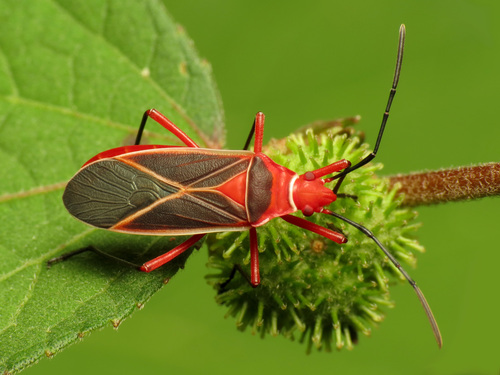
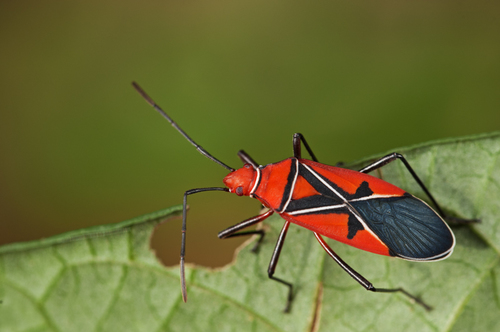
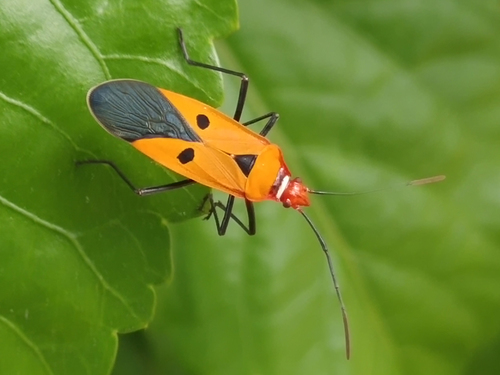
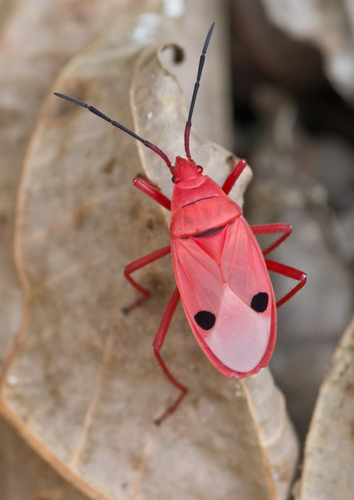
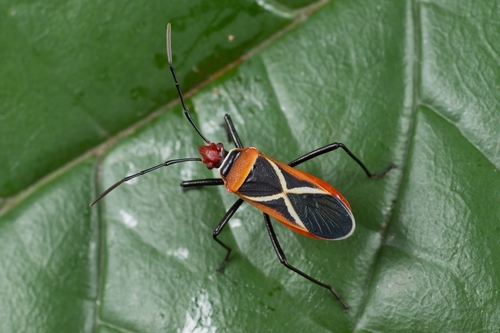
Dysdercus decussatus Boisduval, 1835 is a medium-sized bug, with adults measuring 11–16 mm in body length. Adults have a distinctive red body, black legs, and a head that may be either red or black. A prominent white X-shaped or fork-like band runs across the forewings, a marking that helps separate this species from similar species found in the same region. Nymphs of this species can be identified by their characteristic black head. Regionally, this species is commonly known by the common names "Cotton Stained Bug" and "Cotton Striped Bug." This species has a wide distribution across tropical South and Southeast Asia, ranging from Sri Lanka east to the Malay Archipelago. It also occurs in New Guinea, northern Australia, multiple Pacific islands, and adjacent temperate regions including northern China and Japan. Within Taiwan, the species is only found in southern areas and Lanyu Island. Dysdercus decussatus is typically found in groups sheltering under leaves, or among the flowers and fruits of its host plants. Common host plants belong to the genera Hibiscus and Thespesia. It favors tropical and subtropical environments, and is most often associated with coastal areas or agricultural areas, including cotton fields. This species, also called the fork-banded cotton bug, is phytophagous. It feeds mainly on the seeds and sap of malvaceous plants, including cotton, hibiscus, and thespesia. It reproduces seasonally, laying eggs on host plants during periods when fruit and seeds are abundant, which usually occurs in the summer months. During cooler months from November to May, adult bugs aggregate in groups without mating. It is called a cotton stainer because its feeding activities and excretions can stain cotton bolls, damaging the crop.