About Dyschoriste oblongifolia (Michx.) Kuntze
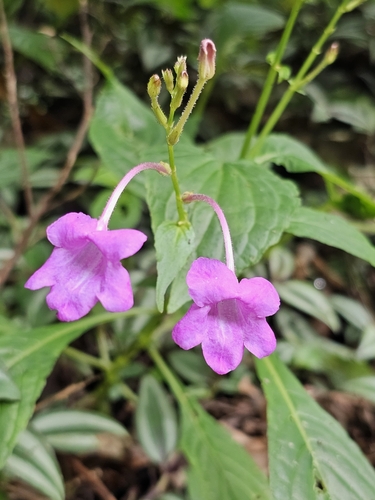
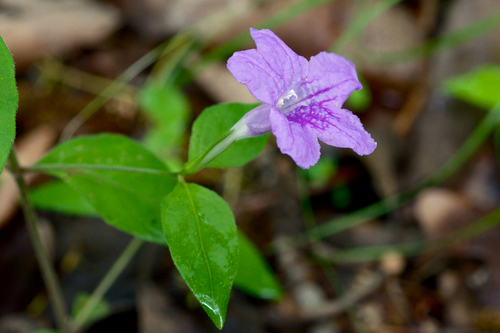
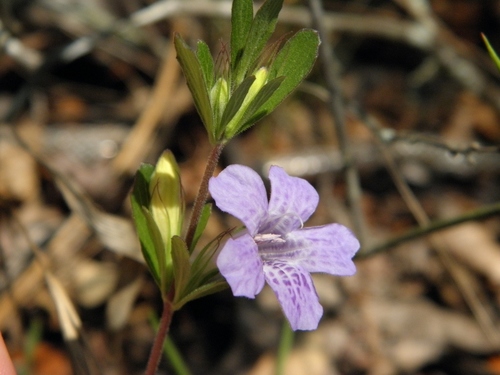
Dyschoriste oblongifolia (Michx.) Kuntze is a herbaceous, rhizomatous perennial plant that reaches 10–50 cm (4–20 in) in height. Its stems and foliage are mostly hairless. The leaves are arranged oppositely, with entire or undulate margins, an obtuse or acute tip, a cuneate or attenuate base, and a hairy leaf surface. Leaves are typically around 4.5 cm long and 1.5 cm wide. This species produces subsessile flowers that grow either solitarily or in clusters along the stem, with leaf-like bracts. Flowers often appear in pairs, which is the origin of its common name "Twinflower". The flowers are lavender in color, with five lobes, four stamens, and a style that measures 1.5 cm long. It flowers from June to August, and grows naturally in dry, sandy pine forests. Dyschoriste oblongifolia is native to the coastal plain regions of the United States from Virginia to Florida, and can also grow throughout the southeastern U.S. and along the western coast. It is a tolerant species that can grow in acidic or slightly alkaline soil, whether the soil is sand, loam, or clay. It has high drought tolerance and low salt tolerance. Fire, both wildfire and prescribed fire, is a key part of this plant's life cycle; populations will gradually disappear if fire does not occur. Gardeners sometimes plant Dyschoriste oblongifolia in butterfly gardens, where it acts as a larval host plant for the common buckeye butterfly. It is also recommended as an ornamental groundcover due to its high drought tolerance and low maintenance needs.