About Dypsis decaryi (Jum.) Beentje & J.Dransf.
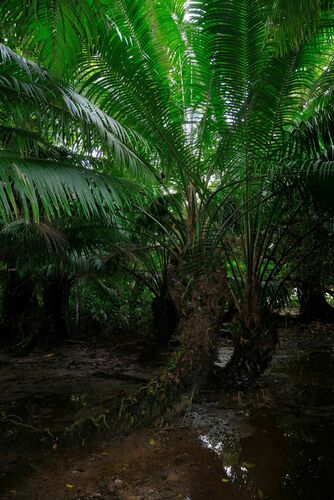
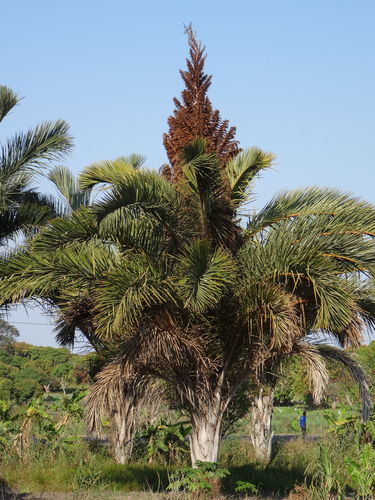
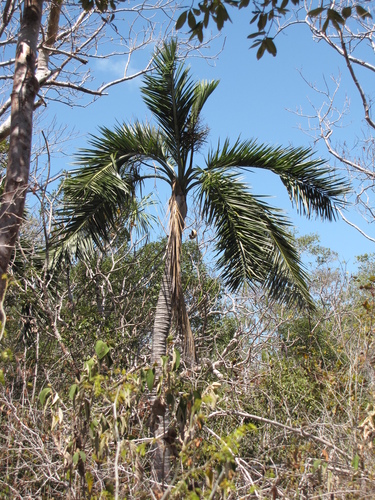
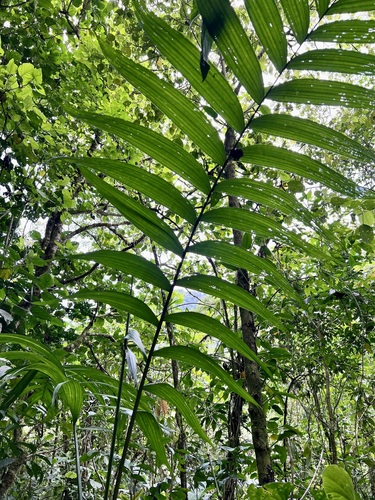
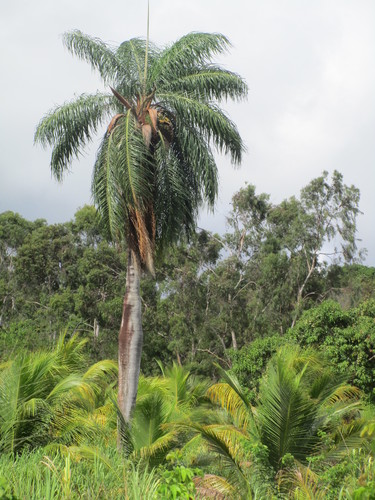
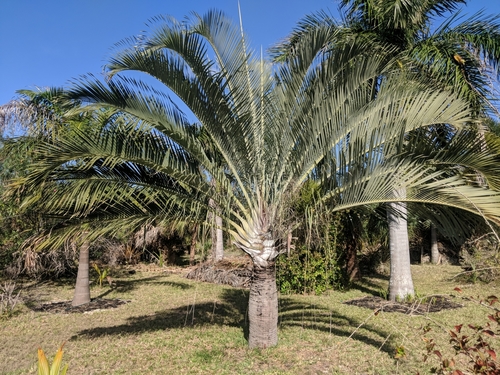
In the wild, some Dypsis decaryi specimens reach around 15 metres (49 ft) tall. This palm is relatively new to cultivation, so it rarely reaches that height when grown outside its native habitat. It grows well in containers. Its leaves are approximately 2.5 metres (8 ft 2 in) long. Leaves grow almost upright from the trunk, and arch gently outward starting about one metre from their tips. Leaf bases are arranged in three vertical columns spaced roughly 120 degrees apart around the main stem, creating a triangular cross-section. This triangular shape is the source of the palm's common name. Inflorescences branch from the axils of the lower leaves, and produce yellow and green flowers. After flowering, they form round black fruit around 25 millimetres (0.98 in) in diameter. Dypsis decaryi is native to the rainforests of Madagascar. This palm is an excellent ornamental plant, and is especially valued as a specimen tree or accent plant when grown in open space to show off its distinctive shape to best effect. In suitable climates, it blooms year-round. Thanks to its colorful flowers and fruit, plus its neatly structured form, it is unusually showy for a palm. It prefers full sun and regular watering, though it can tolerate occasional dry conditions and partial shade. Over-watering and poor drainage are much bigger risks to this palm than drought. It grows best in well-drained sandy soil, for example. Dypsis decaryi does not transplant well, so it is not a good choice for commercial field cultivation. Once established, however, it grows quickly. Its seeds usually germinate within one month of planting, so propagation by seed is a good option.