About Duttaphrynus melanostictus (Schneider, 1799)
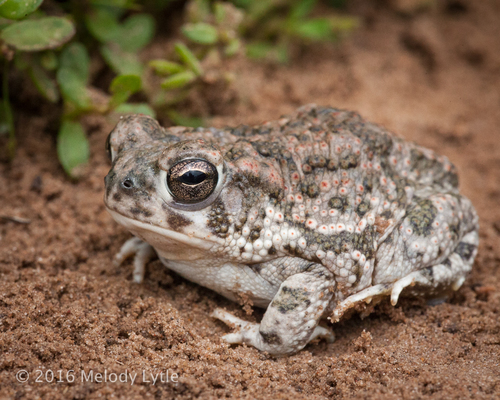
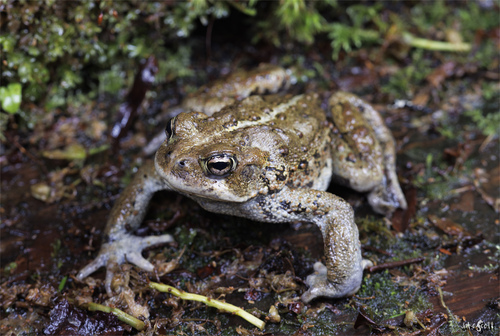
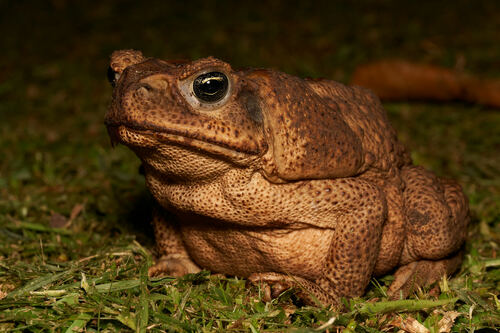
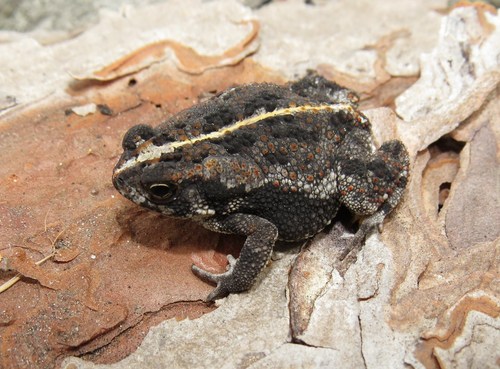
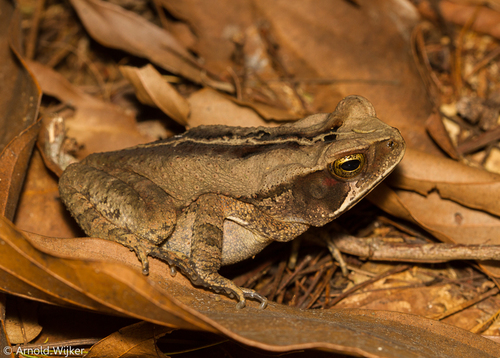
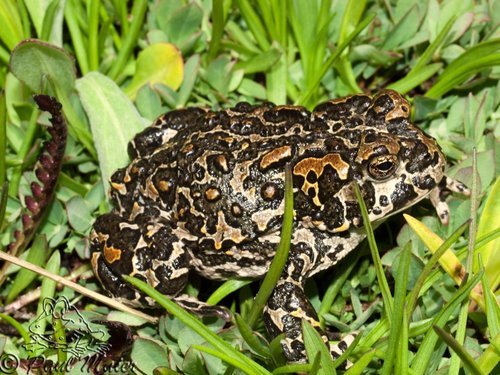
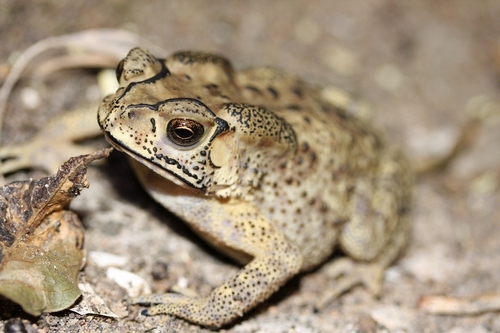
Duttaphrynus melanostictus, commonly known as the Asian common toad, has a set of distinct physical characteristics. Several bony ridges run across the top of its head: a canthal ridge along the snout edge, a preorbital ridge in front of the eye, a supraorbital ridge above the eye, a postorbital ridge behind the eye, and a short orbitotympanic ridge between the eye and ear. Its snout is short and blunt, and the distance between the eyes is wider than the width of the upper eyelid. The tympanum (eardrum) is very clearly defined, and its width is at least two-thirds of the eye’s diameter. The first finger is often longer than the second, and the toes are at least half webbed. A warty tubercle sits just before the junction of the thigh and shank, called a subarticular tubercle, and two medium-sized tubercles are located on the metatarsus (shank of the foot). No skin fold runs along the tarsus. When the hind leg is held parallel to the side of the body, the tarsometatarsal articulation, the toad’s equivalent of a knee, reaches either the tympanum or the eye. The dorsal side of the body is covered in spiny warts. The parotoid glands are prominent, shaped like kidneys or elongated ellipses, and they secrete a milky white bufotoxin. The dorsal side ranges in color from yellowish to brownish, while the spines and bony ridges are black. The underside is either unmarked or spotted. Males have a subgular vocal sac, and black pads on their inner fingers that help them grip females during copulation.
Asian common toads have a wide distribution across South and Southeast Asia. Their range extends from northern Pakistan through Nepal, Bangladesh, India (including the Andaman and Nicobar Islands), Sri Lanka, Myanmar, Thailand, Laos, Vietnam, Cambodia, southern China, Taiwan, Hong Kong and Macau, all the way to Malaysia, Singapore, and the Indonesian islands of Sumatra, Java, Borneo, Anambas, and Natuna Islands. They can be found from sea level up to an altitude of 1,800 m (5,900 ft). They live mostly in disturbed lowland habitats, ranging from upper beaches and riverbanks to human-dominated agricultural and urban areas, and are uncommon in closed forests.
In terms of ecology and behaviour, Asian common toads breed in still or slow-flowing rivers, as well as temporary and permanent ponds and pools. Adult toads are terrestrial, and can be found under ground cover like rocks, leaf litter, and logs, and they often live close to human habitations. Larvae live in still and slow-moving bodies of water. Adults are frequently seen at night under street lamps, especially when winged termites swarm. They feed on a wide variety of invertebrates, including scorpions. Tadpoles raised in sibling groups complete metamorphosis faster than tadpoles kept in mixed groups, and tadpoles are capable of recognizing their kin. For this species’ tadpoles, the 96-hour LC50 of commercial grade malathion is 7.5 mg/L, and sublethal exposure to malathion can impair swimming ability.