About Duttaphrynus himalayanus (Günther, 1864)
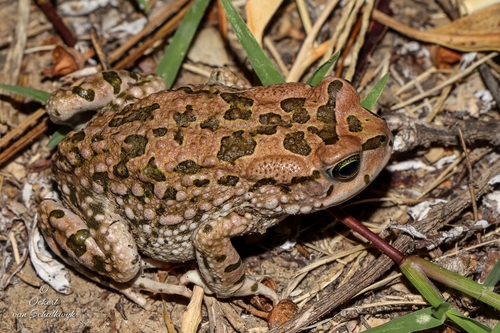
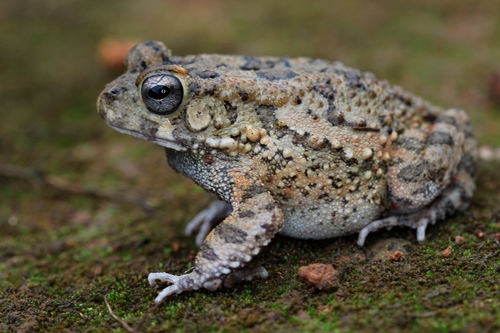
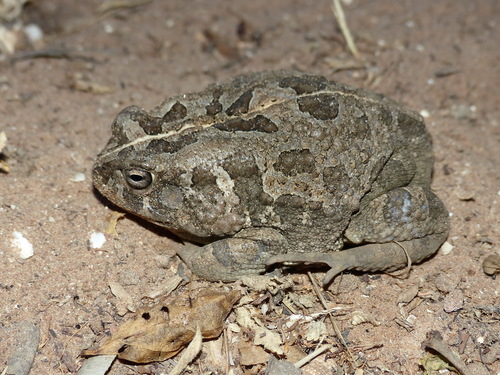
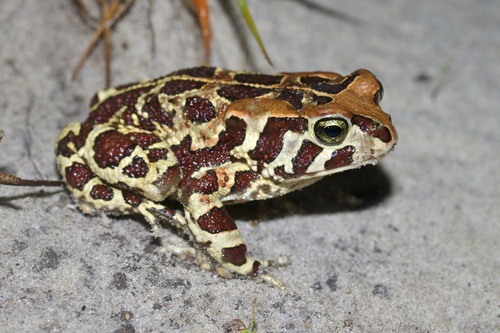
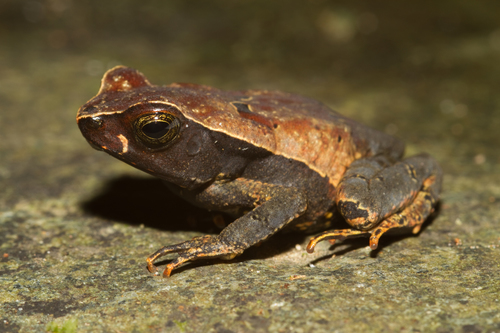
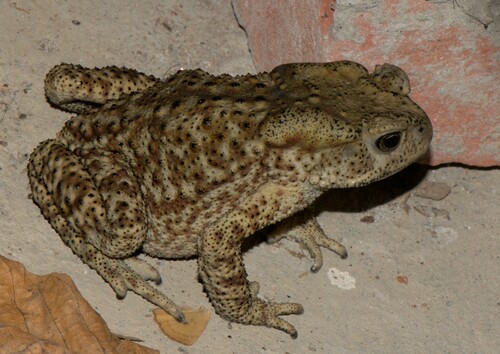
Duttaphrynus himalayanus has a deeply concave crown with low, blunt supraorbital ridges. Its snout is short and blunt, the interorbital space is broader than the upper eyelid, and the tympanum is very small and rather indistinct. The first finger does not extend beyond the second; the toes are half to two-thirds webbed, with single subarticular tubercles, two moderate metatarsal tubercles, and no tarsal fold. The tarsometatarsal articulation reaches the anterior border of the eye or the tip of the snout. The upper parts of the body are covered in irregular, distinctly porous warts; the parotoids are very prominent, large, and elongated, and are at least as long as the head. Individuals are uniform brown in color. Males do not have vocal sacs. Adult individuals measure 130 mm (5 in) from snout to vent. This species is distributed from Azad Kashmir in Pakistan, through northern India and adjacent Bangladesh, Bhutan, and Nepal, to southern and central Tibet and northwestern Yunnan in China. Its range may extend into Myanmar. It occurs at elevations between 1,000 and 3,500 m (3,300–11,500 ft) above sea level. It inhabits mountain forests and shrubland near streams, and is also found near seepages and fields. This high-altitude species can also live in the evergreen forests of the foothills. It is largely a terrestrial toad, and breeds in hill streams, small pools, and puddles. It has been recorded in many protected areas: Tarai National Park, Chitwan National Park, Khunjgerab National Park, Central Karakorum National Park, Jigme Dorji National Park, and Jigme Khesar Strict Nature Reserve. It has previously been recorded in Namdhapa National Park, Mouling National Park, and Dihang-Dibang Biosphere Reserve.