About Duncanopsammia axifuga (Milne Edwards & Haime, 1848)
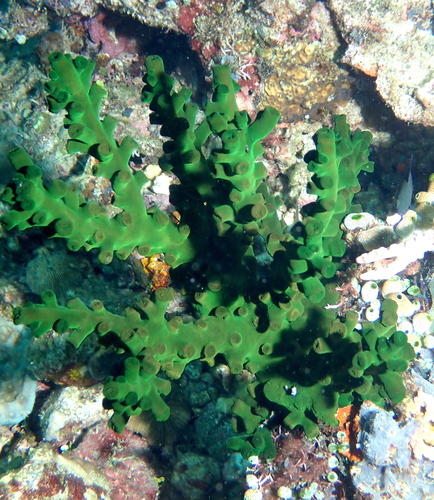
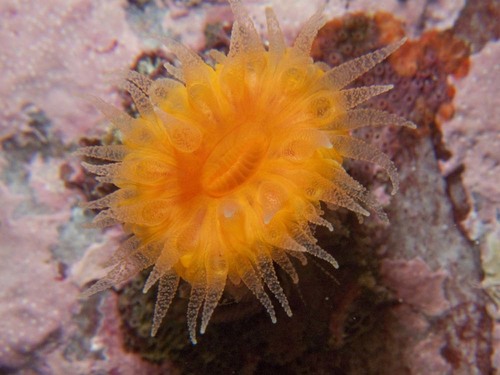
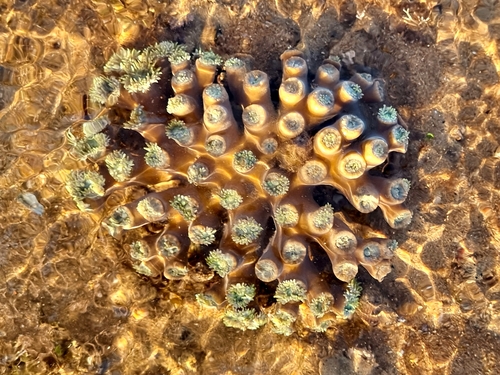
Duncanopsammia axifuga has large polyps. Each polyp has a wide, flat, circular disk that is usually light brown or green, typically patterned with faint stripes or regions of darker or lighter color. The tentacles of a typical polyp are thin and usually match the brown or green coloring of the disk. These tentacles hold rows of stinging cells called nematocysts, and they generally feel sticky when touched. A single polyp looks like a miniature sea anemone, though each polyp only reaches a diameter of 2–3 centimetres (0.79–1.18 inches). Polyps can open and contract in response to stimuli; this movement helps bring captured prey to the polyp’s central mouth. This species lives on sandy and rocky seabeds in Australia and the South China Sea. It grows in colonies of branching or clustered individuals near the base of reefs, and typically occurs at depths up to 30 metres (98 feet).