About Dumontia contorta (S.G.Gmelin) Ruprecht
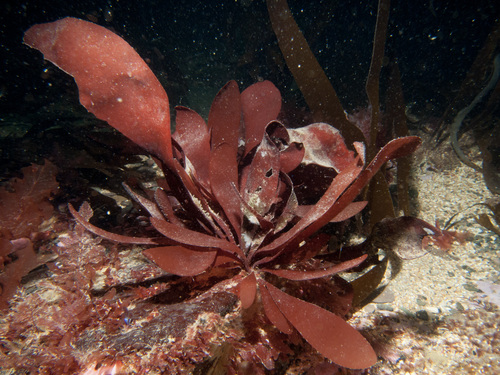
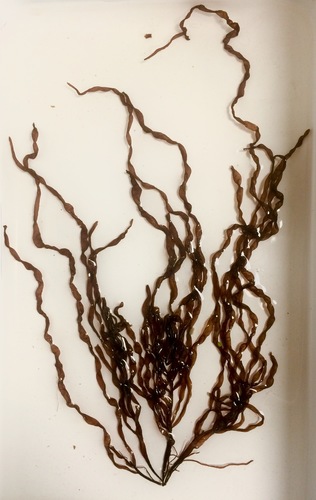
Dumontia contorta has a thallus that grows from a discoid holdfast, reaching a length of approximately 23 centimetres (9.1 inches). Its fronds branch irregularly and sparingly. The branches are hollow, soft, and twisted, with a dark reddish brown colour that bleaches to a lighter shade toward the tips, and they taper clearly at their junction with the frond. This species is generally epilithic, growing on rocks in littoral zone rock pools. It is common around the British Isles, found across Europe from Russia to Portugal, in North America from Canada to the United States, and also occurs in the Northwest Pacific and Alaska. Dumontia contorta is dioecious, meaning individual plants have separate sexes. Microscopic spermatangia, carposporangia, and cruciate tetrasporangia develop in the surface layer of the thallus.