About Ducula pacifica (J.F.Gmelin, 1789)
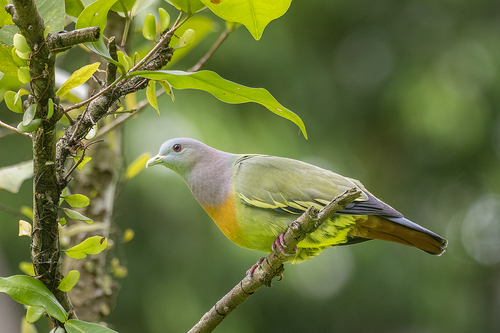
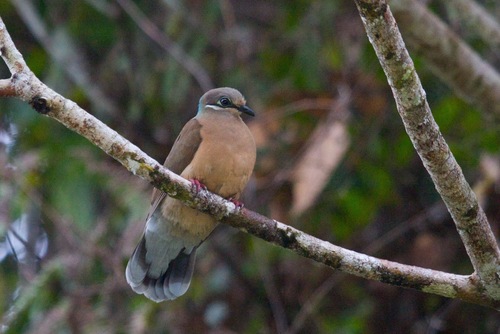
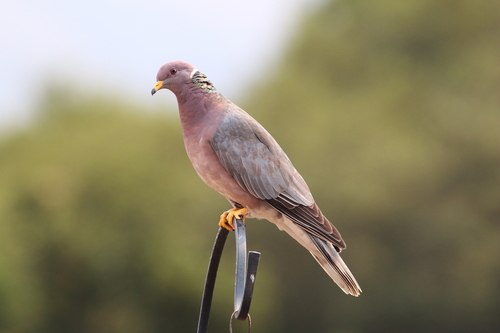
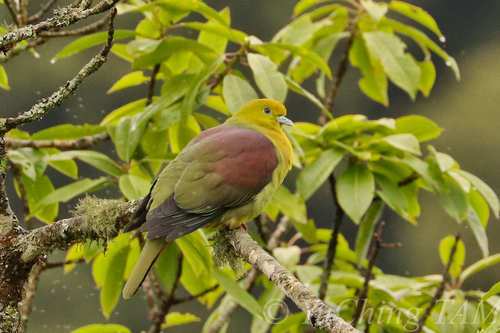
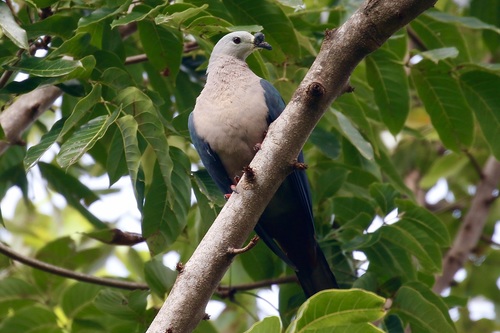
The Pacific imperial pigeon, with the scientific name Ducula pacifica (J.F.Gmelin, 1789), measures 36–41 cm (14–16 in) in total length and weighs 370–420 g (13–15 oz). Its back, tail, and wings are blackish-green, while its head and neck are light grey. The breast is grey with a pinkish tint, and its undertail coverts are brown. The bill is black, with a knob on the upper mandible, and the iris is red. Females are slightly smaller than males. Juveniles do not have the bill knob, have duller plumage, and lack the pink coloring on the breast. Its natural habitats are tropical moist lowland forests on smaller islands, and tropical moist montane forests on larger islands. It travels between islands across parts of its range to forage. Individuals can gather into large flocks in fruiting trees and travel some distance to forage. This species is frugivorous; it eats many different species of fruit, and occasionally consumes leaves and flowers. A study conducted in Tonga found that Pacific imperial pigeons ate fruit from 38 plant species across 24 families. They feed in individual trees for between 1 and 50 minutes, and generally travel short distances between trees, but may occasionally travel longer distances, even crossing several kilometers of water to reach other islands. The seeds from the plants they eat are not digested or damaged, so this species is an important seed disperser for the forests where it lives.