About Duboisia myoporoides R.Br.
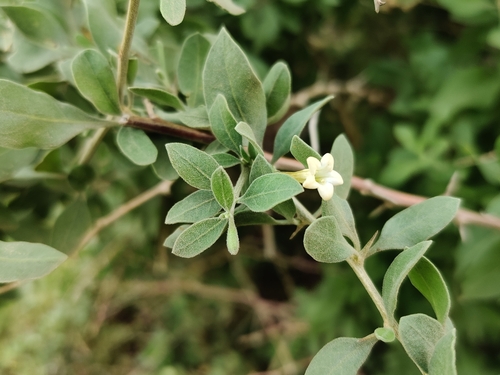
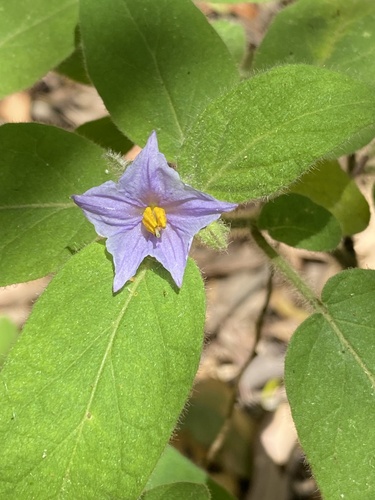
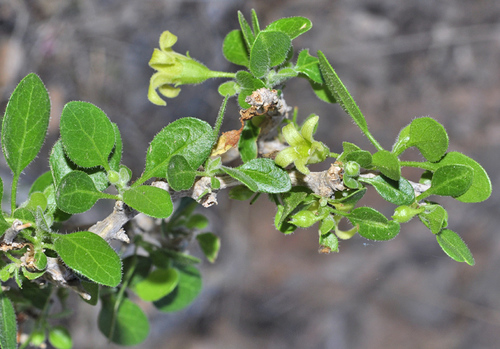
Duboisia myoporoides, commonly called corkwood, is a shrub or tree native to high-rainfall rainforest margin areas in eastern Australia. It has thick, corky bark. Its leaves range from obovate to elliptic in shape, measuring 4 to 15 cm long and 1 to 4 cm wide. Small white flowers grow in clusters, and these are followed by globose, purple-black berries that are not edible. The leaves of this plant are a commercial source of pharmaceutically valuable alkaloids. These same alkaloids make all parts of the plant poisonous. The leaves contain multiple alkaloids, including hyoscine, also known as scopolamine, which is used to treat motion sickness, stomach disorders, and the side effects of cancer therapy. A bush medicine made from this tree by Aboriginal peoples of Australia's eastern states was used by Allied forces during World War II to prevent seasickness in soldiers sailing across the English Channel for the Invasion of Normandy. Later, it was discovered that the same substance could be used to produce scopolamine and hyoscyamine for use in eye surgery, and a multi-million dollar industry centered on this resource developed in Queensland.