About Duabanga grandiflora (Roxb. ex DC.) Walp.
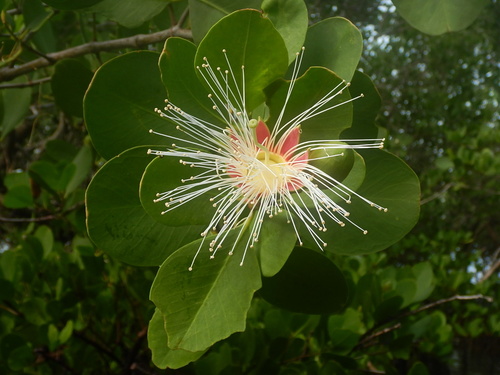
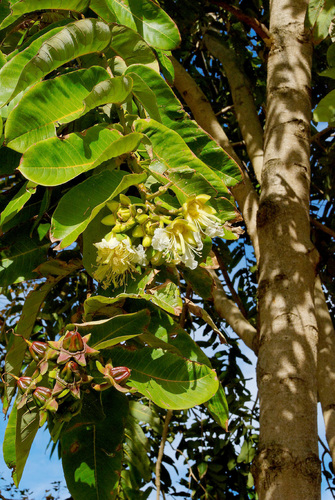
Duabanga grandiflora (synonym D. sonneratioides) is a species of evergreen tropical tree. Due to its unusual growth habit, it forms a distinctive feature in its native forests. It has an erect trunk, reaching 40–80 feet in height; the trunk is typically undivided, but sometimes forks from the base. Lower limbs are long and slender, spread out from the trunk and droop, with sparse branching. Its branches are four-angled, and are loosely covered with large, spreading leaves. Leaves are arranged in two ranks, which makes the slender branches resemble petioles holding the pinnae of a compound leaf. The leaves are also often recurved, with a deep green upper surface and an almost white underside. Large flowers bloom in April. When the flowers first open, they release a strong unpleasant scent reported to resemble asafoetida, but become odorless before the petals fall. All stamens are bent inwards while in bud. The fruit is about the size of a small apple. The wood is white and soft. This species is native to India, Nepal, southern China, Myanmar and Malaysia.