About Dryopteris intermedia (Muhl. ex Willd.) A.Gray
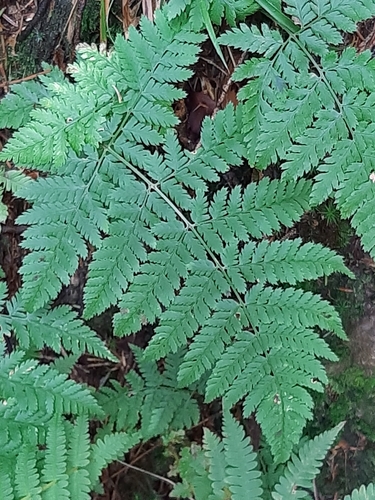
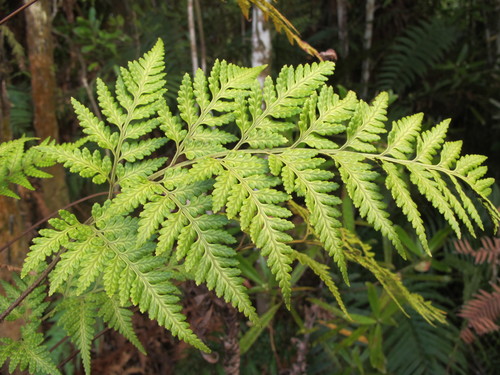
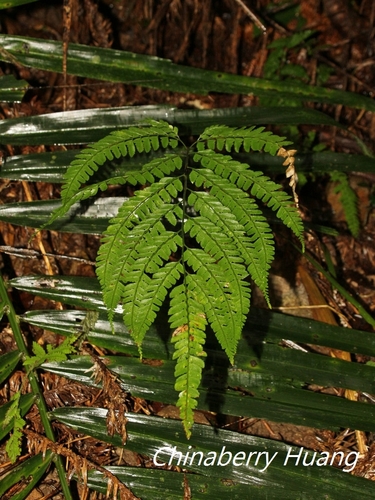
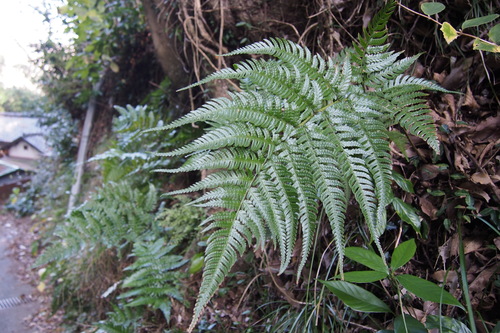
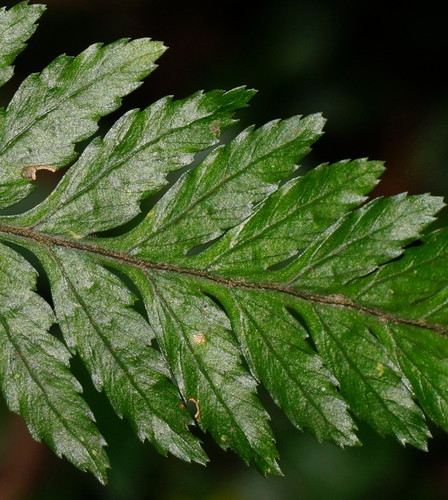
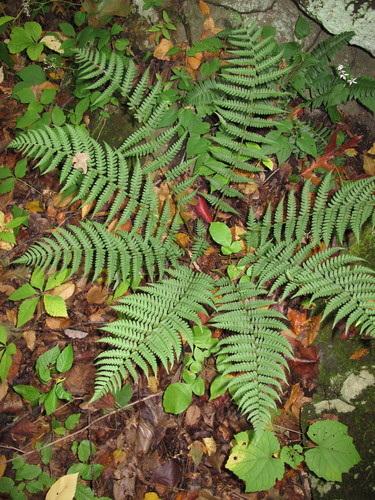
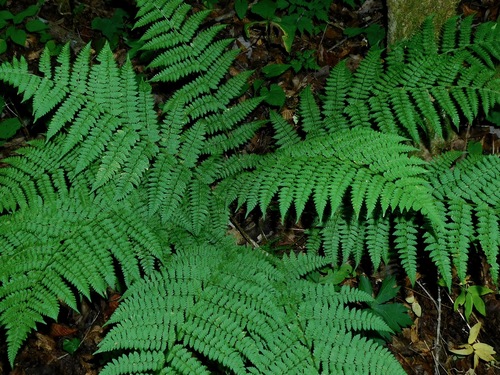
Dryopteris intermedia (Muhl. ex Willd.) A.Gray is a perennial fern. It grows to around 40–90 cm (16–35 in) tall and 60–90 cm (24–35 in) wide. It has an underground rhizome at its base, from which fronds grow in a spiral arrangement. Each frond has a stipe (stalk) that is covered in light-brown scales near its base, with short glandular hairs on the upper portion. Stipes are typically 1/4 to 1/3 the total length of the frond, and support a lance-oblong shaped leaf blade. The leaves are bipinnately compound: they divide into primary leaflets called pinnae, which further divide into smaller sub-leaflets called pinnules. The pinnules of this species are lobed and toothed. A distinctive characteristic of the species is that the first pinnule closest to the main stem on the lowest pinna is shorter than the second pinnule. This fern is native to most of eastern North America. Its range extends north-west to Minnesota, north-east to Newfoundland and Labrador, and south to south-western Alabama and south-eastern South Carolina. It is globally secure, but NatureServe classifies it as critically imperiled in Iowa and Missouri, which lie at the western edge of its range. It is classified as imperiled in Illinois, South Carolina, and the Labrador region. Similar ferns native to the Azores are often treated either as a subspecies (subsp. azorica) of Dryopteris intermedia, or as a separate species (Dryopteris azorica). Dryopteris intermedia grows in a wide range of mesic habitats, including forests, woodlands, ravines, swamp edges, and rocky slopes. It is cultivated as an ornamental plant in North America for gardens, particularly natural gardens and shade gardens. It is easy to grow in a range of environments and soil types, and does not spread aggressively. When planting, care must be taken to place this fern in a part-shade or full-shade location with consistently moist soil, as it cannot tolerate high amounts of sun or dry soil.