About Dryophytes squirellus (Daudin, 1800)
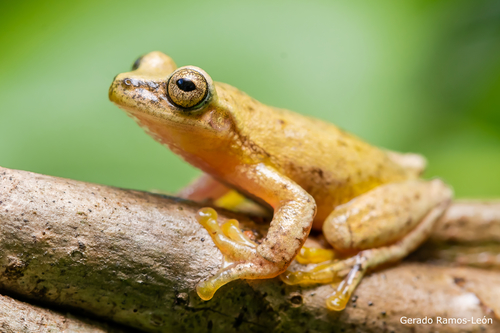
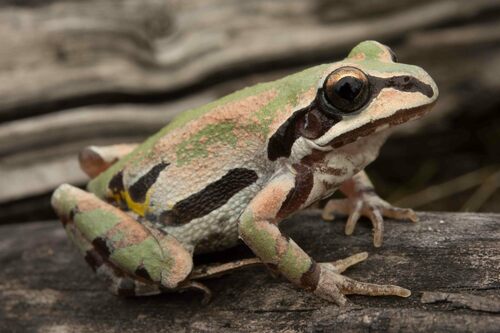
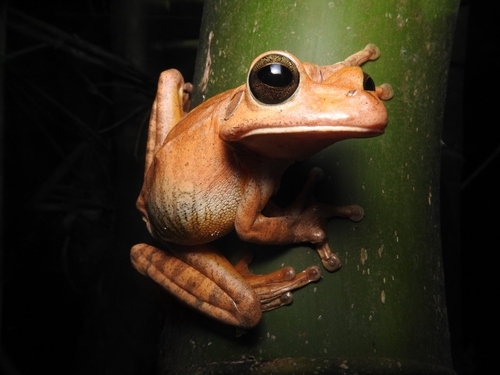
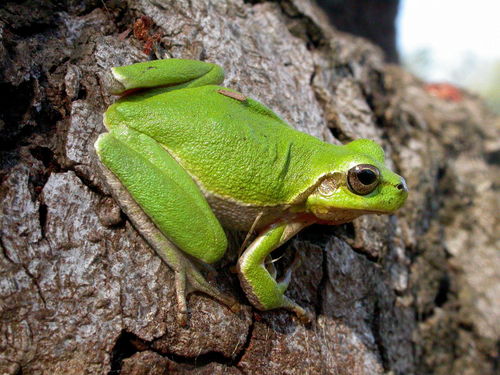
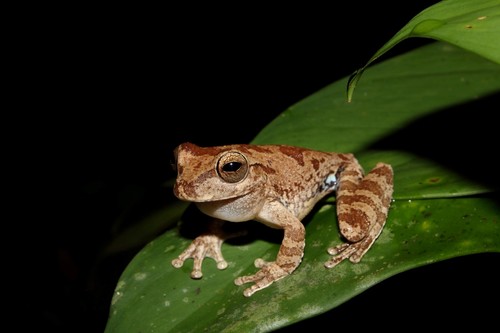
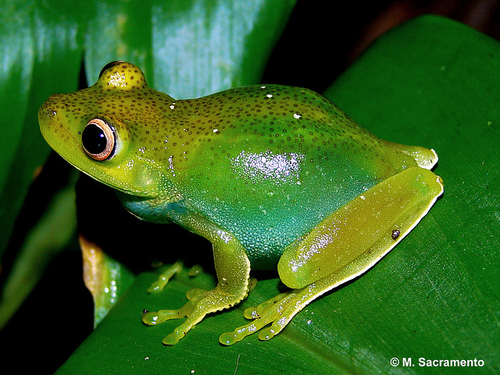
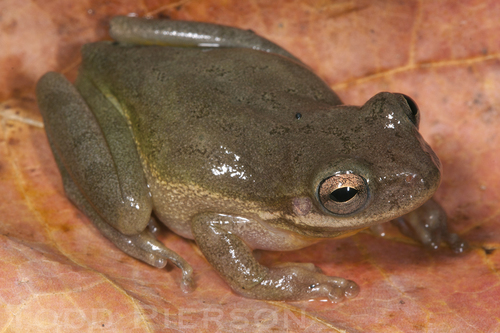
Dryophytes squirellus, commonly known as the squirrel tree frog, is a small species of tree frog. Its native range covers the southeastern United States, extending from Texas east to Virginia, south to the Florida Keys, and it is especially common across the Coastal Plain regions of South Carolina and Georgia. Sighting this species as far north as Mississippi is very rare. It has been introduced to the Bahamas, specifically to Grand Bahama Island and the Little Bahama Bank. Adult squirrel tree frogs reach approximately 1.5 inches in length. This species displays multiple color variations: most individuals are green, closely resembling the American green tree frog, but individuals can also occur in varying shades of yellow or brown, sometimes marked with white or brown blotching. Male squirrel tree frogs may have a relatively large, conspicuous stripe running along the side of the body, and thicker stripes are more attractive to females. Squirrel tree frogs occupy a very wide range of habitats, including fields, urbanized areas, swamps, pine and oak groves, open wooded areas, and the sides of buildings; they can live almost anywhere that provides access to food, moisture, and shelter. To reproduce, the frogs return to wetlands to breed, typically choosing sites like ephemeral pools, roadside ditches, or canopy pools that lack predatory fish. Breeding activity is strongly linked to rain events, and large breeding groups form during the summer months. Male squirrel tree frogs produce a specialized breeding call that can be heard from March to August, and the calling season can extend into autumn in some parts of the species' range. Females of this nocturnal species prefer medium or low-frequency calls, as well as faster, more energetically costly call rates. Visual traits such as a large lateral stripe also play a role in female mate selection. Females are oviparous, and lay eggs singly or in pairs, with a typical total clutch size of up to one thousand eggs.