About Dryophytes japonicus (Günther, 1859)
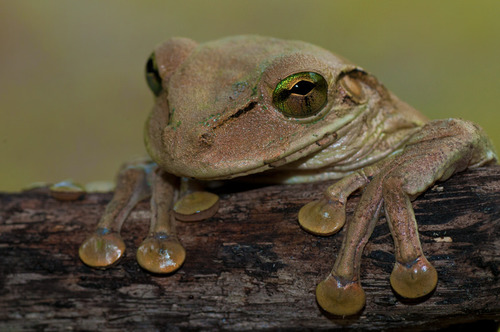
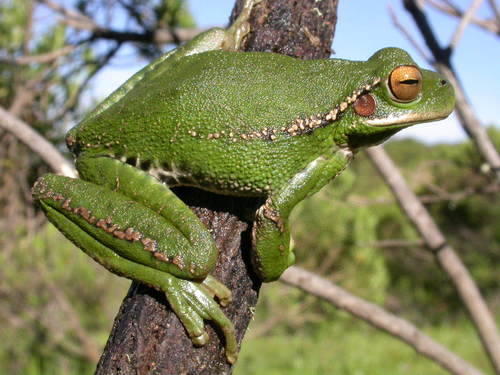
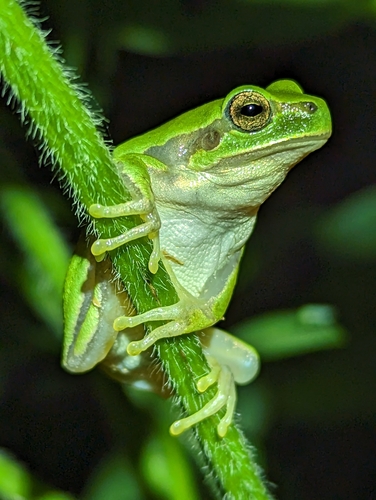
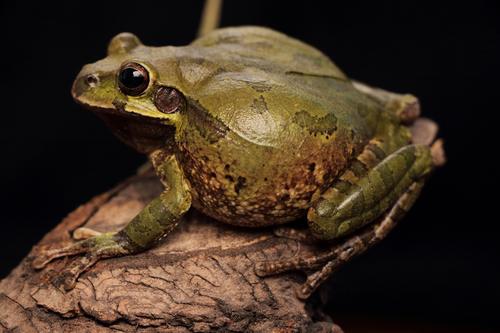
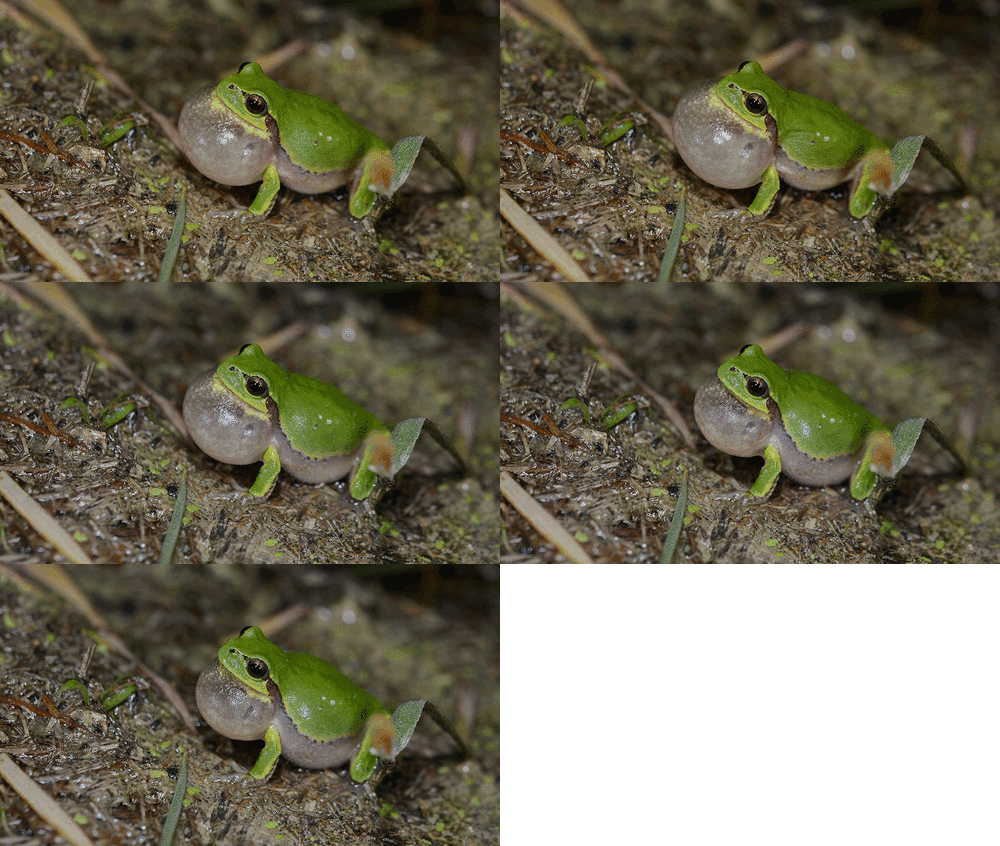
Japanese tree frogs (Dryophytes japonicus) have an average body length of 32.81±0.96 mm. Their average skull width is 12.02±0.36 mm, and their average skull length is 9.38±0.14 mm. The dorsal (upper) side of their body is green or brown, while the ventral (under) side is white. A defining characteristic of this species is a dark spot on the upper lip, positioned below the eye. On average, female Japanese tree frogs are larger than males. Males have a dark vocal sac. Japanese tree frogs occur across many parts of Asia, including Japan, China, Korea, Mongolia, and Russia. They live in forested environments, bushlands, meadows, swamps, and river valleys. Like most frog species, Japanese tree frogs occupy areas that have both aquatic and terrestrial features, because both water and land are required to complete their life cycle. When their native habitats become less available, Japanese tree frogs will settle in rice paddies. They are able to live successfully in these rice paddies, and show a clear preference for sites with dense vegetation. To defend themselves against predators in their arboreal habitats, Japanese tree frogs produce special Anntoxin-like neurotoxins from their skin. Anntoxin is a 60-residue toxic peptide that inhibits ion channels, including tetrodotoxin-sensitive voltage-gated sodium channels. While these peptides have analgesic properties when they bind to ion channels, they can harm or kill predators that consume the frog's skin. This mechanism discourages predators from hunting these frogs in the future.