🦋 Animalia
Dryophytes gratiosus (LeConte, 1856)
Dryophytes gratiosus (LeConte, 1856)
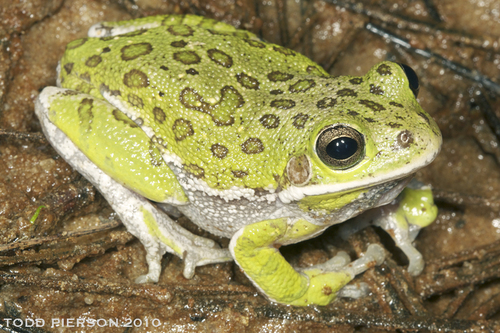
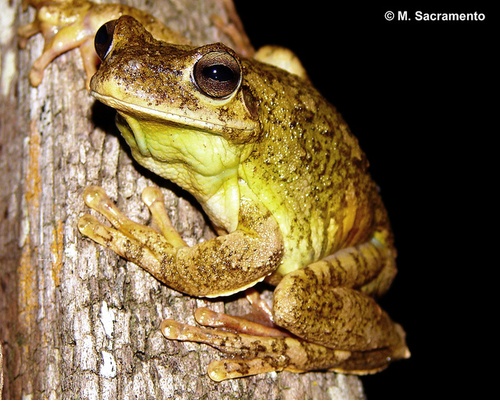
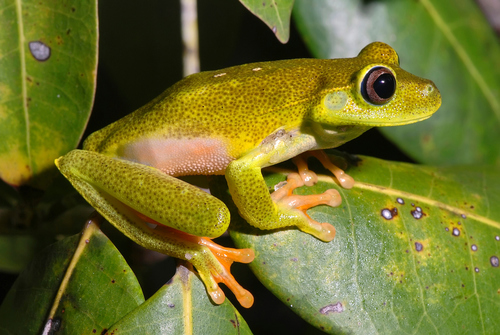
Dryophytes gratiosus, the barking treefrog, is the largest native US tree frog, found across the US Southeast coastal plain.","description":{"optimized_content":"Dryophytes gratiosus is the largest native tree frog in the United States, getting its name from its raucous, explosive call. It has a head-body length of 5 to 7 cm (2.0 to 2.8 in). While its color is variable, it is easily recognizable by characteristic dark, round markings on its dorsum. Individuals can be bright or dull green, brown, yellowish, or gray, with small grey and green-yellow spots. It has prominent, round toe pads, and males have a large vocal sac. This species has skin unlike any other American frog: it is not rough and warty, nor is it smooth, instead being thick and leathery. Its skin can change color based on lighting, time of day, temperature, or surroundings. Color changes are rapid, and its spots can appear to disappear and reappear over time. Its eyes are colored brown, gold, and black. Its geographic range spans from Delaware to southern Florida and eastern Louisiana, most often in coastal areas. Isolated colonies also exist in Maryland, Kentucky, and Tennessee. A temporary population was found in New Jersey in 1957. Adult Dryophytes gratiosus usually live in trees or bushes, and can burrow deep into mud and logs for extra protection from predators. For breeding, barking treefrogs need suitable habitat of shallow, semi-permanent pools with open canopies or grass-dominated ponds that have at least some open water.","one_line_intro":"Dryophytes gratiosus, the largest native US tree frog, lives across the southeastern US coastal areas and breeds in shallow open water pools.","This is Dryophytes gratiosus (barking tree frog), the largest native tree frog in the United States, found across the Southeast US.","Dryophytes gratiosus (barking tree frog) is the largest native tree frog of the United States, found in the US Southeast with some isolated inland populations.","Dryophytes gratiosus, the barking tree frog, is the largest native tree frog in the United States, found from Delaware to Florida and eastern Louisiana.","Dryophytes gratiosus is the largest native tree frog in the United States, distinguished by its leathery skin and variable coloration.","Dryophytes gratiosus, or barking tree frog, is the largest native US tree frog ranging across the southeastern Atlantic and Gulf coasts.","Dryophytes gratiosus is the largest native tree frog native to the United States, with distinctive skin and variable body color.","Dryophytes gratiosus is the largest native US tree frog, found in the Southeast, named for its loud, explosive call.","Barking tree frog (Dryophytes gratiosus) is the largest native tree frog in the United States with variable coloration.","Dryophytes gratiosus, the barking tree frog, is the largest native tree frog in the United States found in the Southeast.","Barking treefrog (Dryophytes gratiosus) is the largest native tree frog in the United States found in the southeast.","Dryophytes gratiosus is the largest native tree frog of the United States, found primarily in southeastern coastal areas.","Dryophytes gratiosus, barking treefrog, is the largest native tree frog in the United States with variable body coloration.","Dryophytes gratiosus is the largest native tree frog in the United States, living across the southeast in trees and breeding pools.","Dryophytes gratiosus, the barking treefrog, is the largest native tree frog native to the United States.","Dryophytes gratiosus, commonly called barking tree frog, is the largest native tree frog in the United States.","Barking tree frog (Dryophytes gratiosus) is the largest native tree frog found in the United States.","Dryophytes gratiosus, the barking tree frog, is the largest native tree frog in the United States.","Dryophytes gratiosus is the largest native tree frog in the United States, found in the southeastern part of the country.","Dryophytes gratiosus, the barking tree frog, is the largest native tree frog in the United States found in coastal Southeast.","Dryophytes gratiosus is a species of tree frog, the largest native one in the United States, found across the Southeast.","Barking treefrog (Dryophytes gratiosus) is the largest native tree frog in the United States, native to the Southeast.","Dryophytes gratiosus is the largest native tree frog in the United States, with unique leathery skin and variable color.","Dryophytes gratiosus, barking tree frog, is the largest native tree frog in the United States, ranging across the Southeast.","Dryophytes gratiosus is the largest native tree frog in the United States, named for its loud raucous call.","Dryophytes gratiosus, the barking tree frog, is the largest native tree frog native to the United States.","Dryophytes gratiosus is the largest native tree frog in the United States, occurring mainly in the Southeast.","Dryophytes gratiosus (barking tree frog) is the largest native tree frog in the United States, found in the Southeast.","Dryophytes gratiosus, also called barking tree frog, is the largest native tree frog in the United States.","Dryophytes gratiosus, the barking tree frog, is the largest native tree frog found in the United States.","Dryophytes gratiosus is the largest native tree frog in the United States, with distinctive leathery textured skin.","Dryophytes gratiosus is the largest native tree frog in the United States, living in trees across the southeastern coastal areas.","Dryophytes gratiosus, commonly known as the barking tree frog, is the largest native tree frog in the United States.","The barking tree frog, Dryophytes gratiosus, is the largest native tree frog in the United States.","Dryophytes gratiosus, the barking tree frog, is the largest native tree frog in the United States with variable color.","Dryophytes gratiosus, or barking treefrog, is the largest native tree frog in the United States.","The barking treefrog, Dryophytes gratiosus, is the largest native tree frog in the United States.","Barking treefrog (Dryophytes gratiosus) is the largest native tree frog in the United States.","Dryophytes gratiosus, known as the barking treefrog, is the largest native tree frog in the United States.","Dryophytes gratiosus, the barking treefrog, is the largest native tree frog in the United States.","Dryophytes gratiosus is the largest native tree frog in the United States, native to the southeastern region.","Dryophytes gratiosus is a species of tree frog that is the largest native one in the United States.","Dryophytes gratiosus is the largest native tree frog in the United States, found in southeastern coastal areas.","Dryophytes gratiosus is the largest native tree frog in the United States, also known as the barking tree frog.","Dryophytes gratiosus, commonly known as barking tree frog, is the largest native tree frog in the US.