About Dryophytes cinereus (Schneider, 1799)
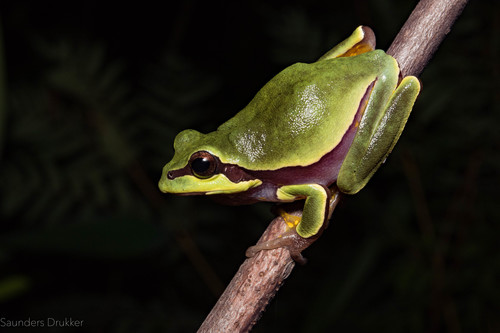
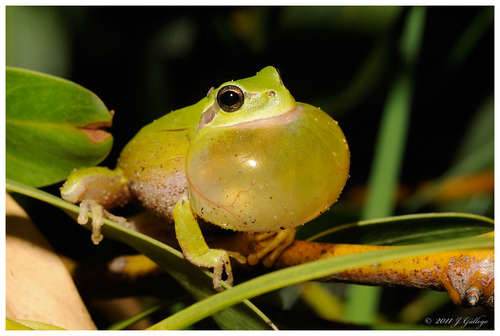
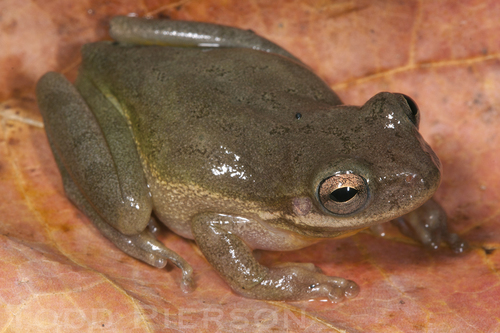
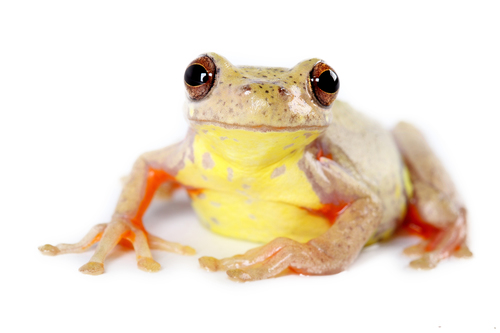
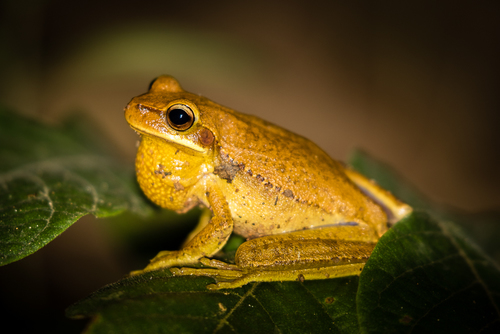
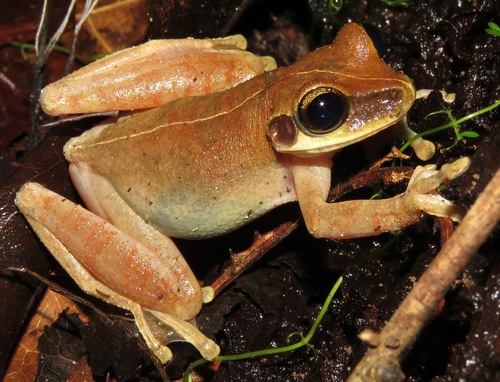
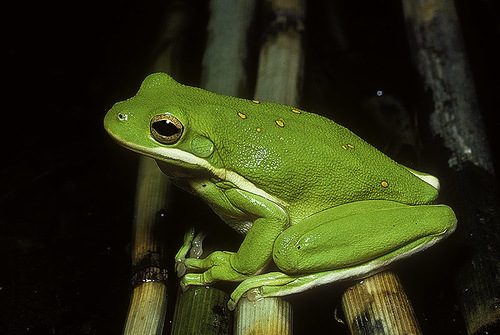
Dryophytes cinereus, commonly known as the American green tree frog, is a moderately sized amphibian. It has a streamlined, slender build, long legs, and smooth skin, with large protruding eyes that have horizontal pupils. Adults measure between 3.2 and 6.4 centimetres (1+1⁄4 to 2+1⁄2 in) in total length. Recently metamorphosed young-of-the-year juveniles measure approximately 20.6 mm. The species has an average weight of 3.76g, with weights ranging from 2.15g to 5.11g. Females are typically larger than males. Larger males have an advantage over smaller males when attracting females, either through greater physical strength during mating duels, or through more prominent call signals during mating competition. The dorsal skin can range in color from the common bright green to reddish-brown, and the species can change color in response to background and/or temperature, according to existing evidence. Dorsal skin is granular, while ventral skin is smooth and moist. The ventral side is colored white to cream, the dorsum is covered in small golden spots, and prominent white lateral stripes run along the sides of the body. This wide range of possible coloration can lead to the species being mistaken for other frog species. American green tree frogs are normally ectothermic and heterothermic. This species is found across the central and southeastern United States, with a geographic range extending from the Eastern Shore of Maryland to southeast Florida. Populations have been recorded as far west as central Texas, and as far north as Delaware and southern New Jersey; the overall size of its distribution may be larger or vary seasonally. It is indigenous to the coastal plains of North Carolina, South Carolina, Georgia, and all of Florida. While the species is considered monotypic, clinal variation has been observed from Florida north along the Atlantic coastal plain, which may be the result of strong selection, genetic drift, or both. American green tree frogs prefer habitats with open canopy forests, a permanent water source, and abundant vegetation. They can be found in both natural and human settled environments, and are often sighted in backyards with ponds, garages, or garden structures. Common natural habitats include cypress ponds, water lily prairies, and marshes. They are frequently found perched on twigs, low branches, and grasses. Overall, American green tree frogs are relatively sedentary and remain within a localized home range. In wetter regions, they will travel to nearby woodlands, but must stay close to a water source during dry conditions. Males defend their mating call sites against rival intruders through aggressive interactions that combine aggressive call signals and wrestling.