About Dryophytes andersonii (Baird, 1854)
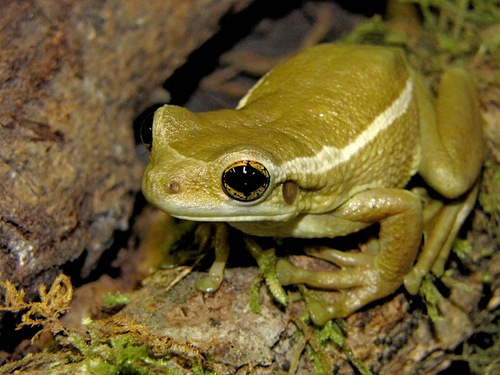
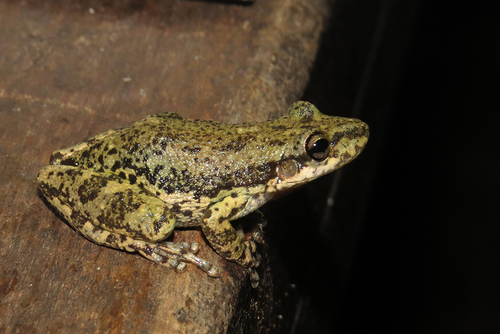
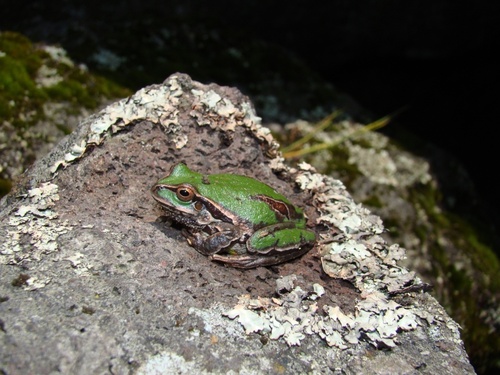
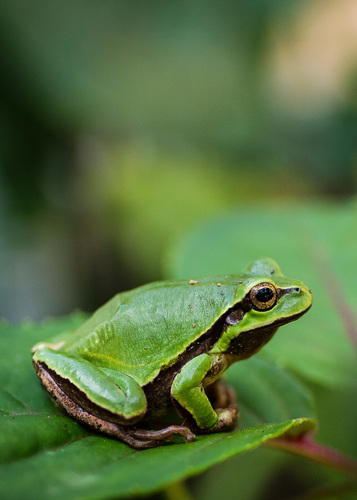
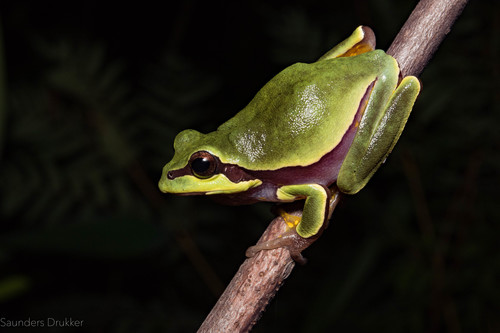
Adult Dryophytes andersonii, commonly called the Pine Barrens tree frog, measure 2.8–4.3 centimetres (1.1–1.7 inches) snout-to-vent in length. Individuals of this species are mostly emerald green. This primary green body color is edged by a white stripe, which separates the green from a lavender band that extends downward to cover the belly. The hidden surfaces of the species’ legs are orange to yellow. The belly is covered in white areolae. The toes of Dryophytes andersonii are partially webbed, while the fingers are not webbed at all. The toe and finger pads are both small. The main trait that distinguishes the Pine Barrens tree frog from the similar-looking American green tree frog (D. cinerea) is the white-bordered lavender stripe running along each side of the body, a pattern not found on D. cinerea, which only has a plain white stripe in this location. Dryophytes andersonii lives primarily near temporary still or slow-moving waters that are dominated by shrubs or herbaceous plants. Fewer, more isolated populations of this frog occur in permanent bodies of water that support fish. Its preferred natural habitats are wet areas in pitch pine forests, intermittent streams and ponds, stream backwaters, Sphagnum bogs, and Atlantic white cedar swamps. It can also be found alongside man-made water features including cranberry bogs, water-filled vehicle ruts, flooded borrow pits, and ditches. Adult frogs are mostly found in vegetation along the water’s edge, but they can also be found on the ground. This species primarily lives on the Atlantic Coastal Plain. Because suitable habitat for the species is limited, its current range is split into three separate disjunct areas in the southeastern United States: the New Jersey Pine Barrens; the Sandhills of North and South Carolina; and the Florida panhandle and southern Alabama. The largest existing populations are located in New Jersey. While a single D. andersonii specimen has been recorded from Richmond County, Georgia, no established population is currently known to exist there. Dryophytes andersonii is the official state frog of North Carolina. It was chosen through a public poll organized by the North Carolina Herpetological Society, where it was selected alongside the marbled salamander.