About Drymophila ochropyga (Hellmayr, 1906)
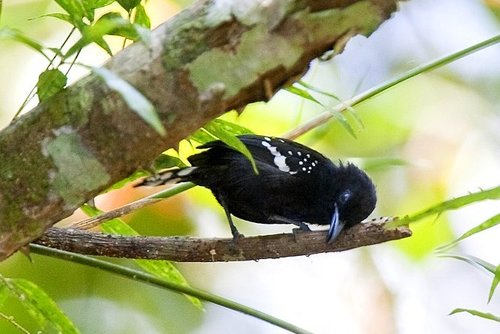
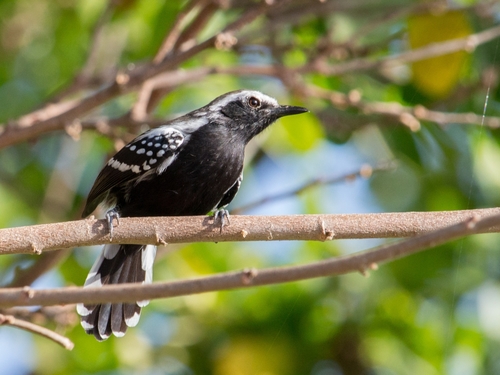
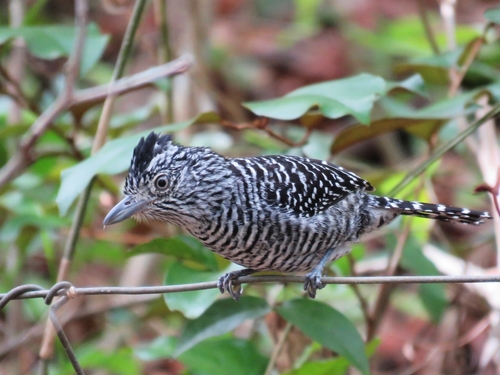
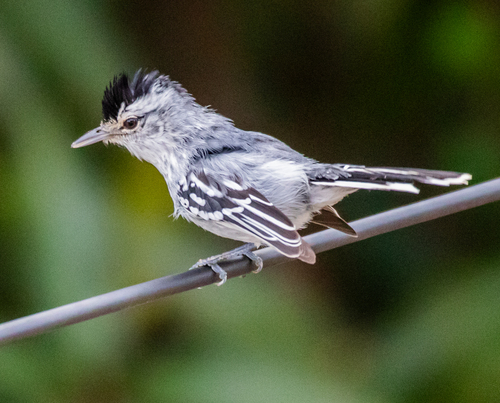
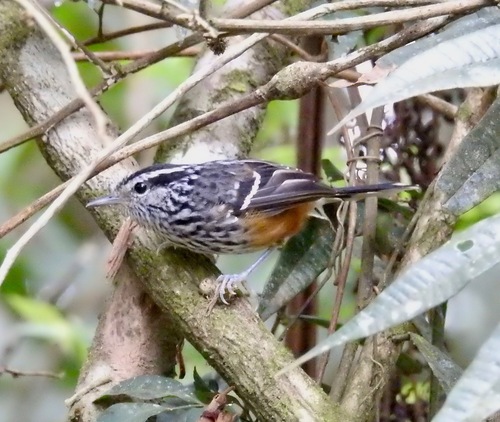
Drymophila ochropyga (Hellmayr, 1906), commonly called the ochre-rumped antbird, measures 12.5 to 13.5 cm (4.9 to 5.3 in) in length. Adult males have a black crown, a long white supercilium, a black band running through the eye, and white cheeks marked with black speckles. Their back is gray with a small number of black and white feathers, and a white patch between the scapulae. Their rump is light rufous. Their wings are blackish, with narrow buff edges on the flight feathers and wide white tips on the coverts. Their throat and breast are white with black streaks, which are thicker and more prominent on the breast. Their flanks and crissum are solid plain rufous. Females have a crown streaked with buff, an olive-gray back, and duller, buffier underparts that have less heavy streaking than those of males. This species is endemic to the Atlantic Forest Mountains Endemic Bird Area in southeastern Brazil. Its range extends from central and southeastern Bahia south through eastern Minas Gerais and Espírito Santo to eastern São Paulo, eastern Paraná, and eastern Santa Catarina. It primarily lives in the understorey of bamboo and vine thickets within montane evergreen forest, but also occurs locally in lowland evergreen forest. Its elevational range is between 300 and 1,950 m (1,000 and 6,400 ft).