About Drymaeus poecilus (d'Orbigny, 1835)
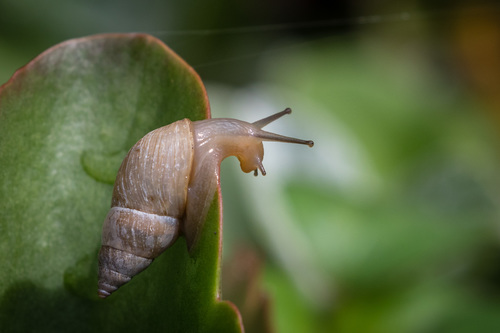
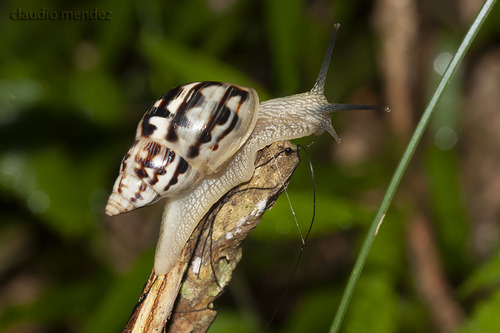
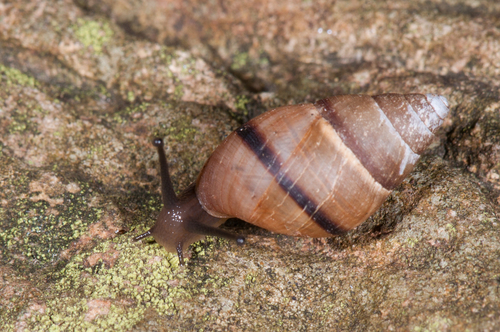
Drymaeus poecilus (d'Orbigny, 1835) shows extensive morphological and chromatic variation across individuals. This species is well known for the wide range of colors and patterns that appear on its shell, along with small differences in shell shape between individual snails. Shell patterns vary widely, including continuous or dotted spiral lines, two-toned bands, and vertical markings. Some individuals even have flame-like patterns that are similar to patterns seen in the genus Leiostracus. There are also nearly all-white individuals that only bear a single spiral band. Smaller snails may display several thin spiral lines paired with a reddish area near the shell's opening, and this feature can sometimes also appear in more 'typical'-looking specimens. In some cases, the space between spiral bands can also have a reddish tint. Despite this extensive variation in color and pattern, all individuals share a consistent overall shell structure (aside from differences in size), and have a distinct net-like texture on the protoconch, which is the earliest formed part of the shell. Because of this shared consistent anatomy, scientists recognize all of these differences as natural intraspecific variation within a single species. Shell shape can also differ slightly between individuals, ranging from narrower to broader forms. Most of the time, the shell surface is smooth aside from natural growth lines. However, one unusual specimen held at the Natural History Museum, London displays dense vertical ridges. This rare feature is currently considered an unusual variation within the species. Drymaeus poecilus is native to South America, ranging across areas from Bolivia to Argentina, including Paraguay and Brazil. In Argentina, the species occurs in the northern part of the country, across the provinces of Catamarca, Corrientes, Formosa, Jujuy, Salta, San Juan, Santiago del Estero, and Tucuman. In Brazil, its presence has been recorded in the northern, midwestern, and southeastern regions of the country, across the states of Tocantins, Goiás, Mato Grosso, Mato Grosso do Sul, Minas Gerais, and São Paulo. The species lives in a wide variety of environments across its range, from humid jungles like the Yungas to drier areas like the Dry Chaco, as well as other ecoregions including the Humid Chaco, Alto Paraná, Espinal, and Monte. Specimens of Drymaeus poecilus have been recovered from El Pobladito de Ampolla, an archaeological site in northwestern Argentina dated to the first four centuries CE. The shells were found in good condition, sometimes alongside fragments of other terrestrial gastropods such as Megalobulimus and Plagiodontes. Several of these D. poecilus shells show signs of intentional modification, which suggests the shells were used as ornaments or tools. Their occurrence in domestic contexts, combined with evidence of shell-working and comparisons to similar archaeological sites, indicates these gastropods may have been part of a broader pre-Hispanic subsistence strategy that included both dietary and utilitarian uses by local human populations.