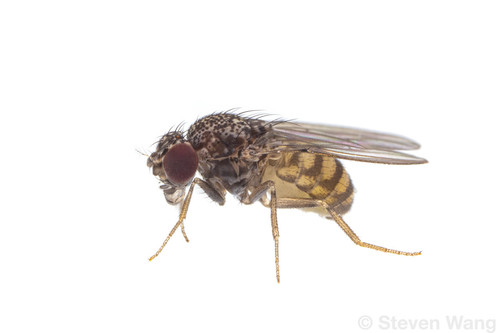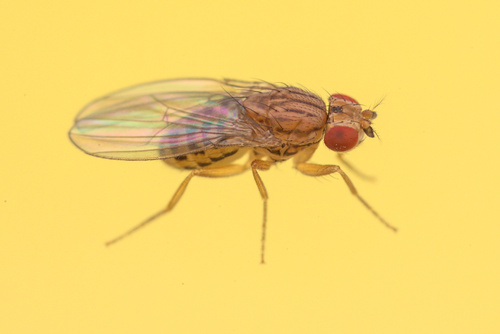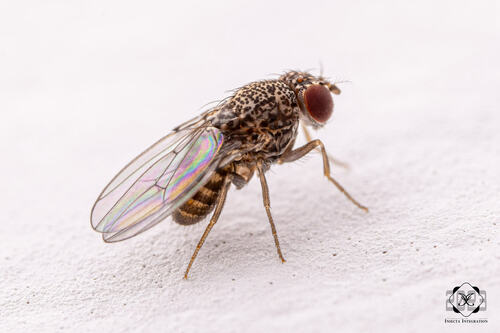
About Drosophila hydei Sturtevant, 1921
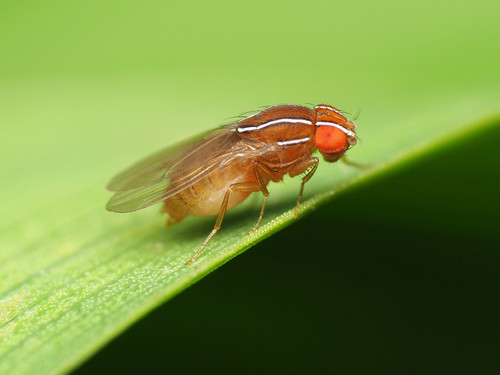
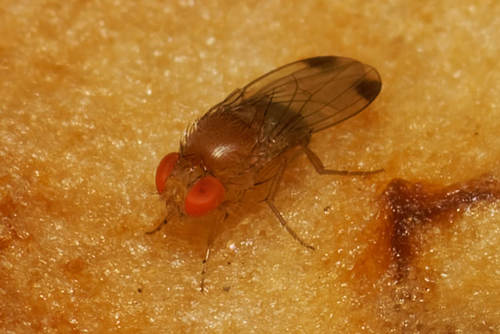
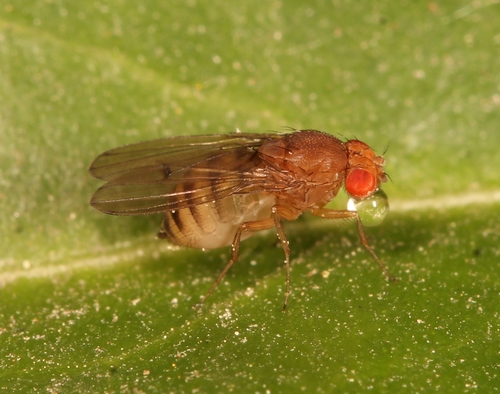
Drosophila hydei Sturtevant, 1921 is a species of fly belonging to the order Diptera and the family Drosophilidae. It is classified within the hydei species subgroup, which is part of the larger repleta species group. This species is particularly notable for its unusually large sperm: each sperm is approximately 23 millimeters long, around ten times the total length of an adult male's body. Drosophila hydei is commonly found growing on compost piles across the world. It can be roughly identified by eye by its large body size and the variegated pigment pattern on its thorax. The species' specific epithet honors Dr R. R. Hyde, who was the first researcher to recognize that this population represented a distinct species separate from Drosophila repleta. Drosophila hydei is one of the most widely popular fly species used as feeder insects in the pet trade. Several different varieties of the species are available, including flightless strains. Despite having diverged from one another roughly 50 million years ago, Drosophila hydei is very similar to the well-studied species Drosophila melanogaster. Wild populations of Drosophila hydei can carry infections of Spiroplasma bacteria, which provide the flies with defense against parasitoid wasps.