About Drosera pulchella Lehm.
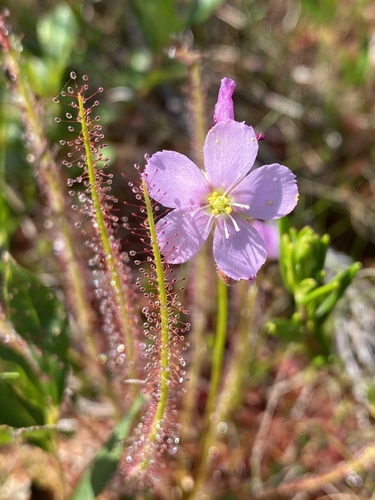
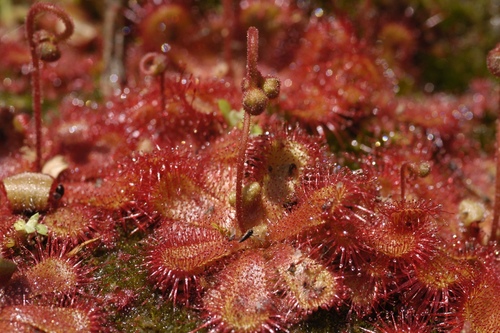
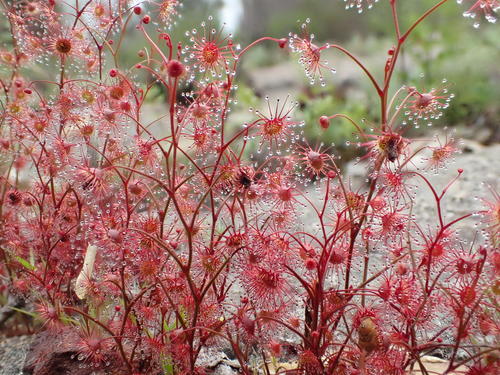
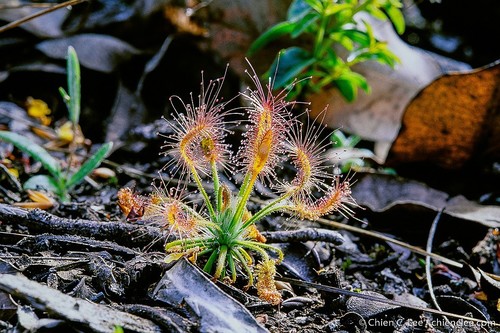
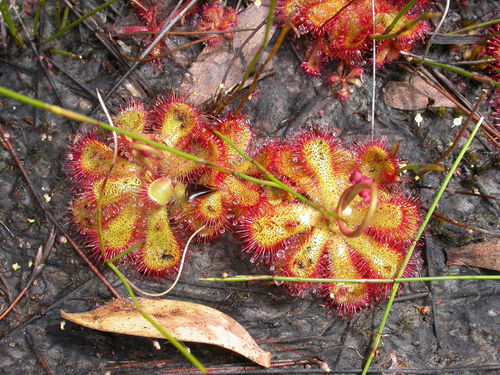
Drosera pulchella Lehm. is a low-growing sundew that forms a rosette of leaves around a central bud. Each leaf ends in tentacle-like projections that produce a sticky, mucus-like substance for trapping insects. The plant attracts insects with a sweet-smelling secretion that draws them toward its tentacles. Once an insect is caught, the tentacles contract to engulf it and cover it completely with sticky mucus. Trapped insects die either from exhaustion or suffocation, when the sticky mucus blocks their respiratory spiracles.
Drosera pulchella is native to Western Australia, where it grows in a moderate Mediterranean climate. Around 50 species of pygmy sundews are distributed mostly across Australia, Tasmania, and New Zealand, and D. pulchella is one of the many Drosera species found in Western Australia.
This species typically grows in areas with abundant year-round moisture, including swamps, creeks, lakes, and forests. Unusually for sundews, it must survive the Australian dry season, so it has developed an extensive root system to access water during periods of scarcity. The poor nutrient quality of the soils it grows in is the leading theory for why this species evolved to capture insects.
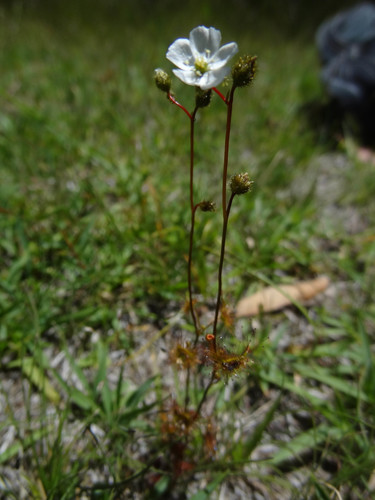
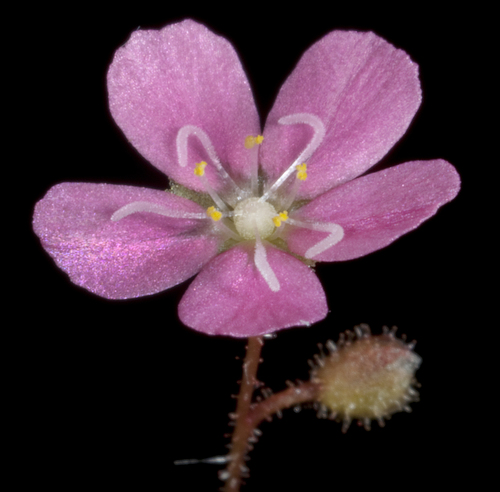
Drosera pulchella can reproduce both sexually and asexually, depending on environmental conditions. Pygmy Drosera can flower whenever conditions suit, and typically produce flowers that are white, pink, yellow, orange, or red. Although they produce flowers, they are not very efficient at producing seeds, so they only flower when conditions are optimal. Most of the time, this species reproduces asexually by forming gemmae. Each gemma is a specialized leaf that detaches from the parent plant to grow into a new, genetically identical individual. The plant produces dozens of gemmae; enough that the gemmae push against the central rosette leaves, creating tension. When the plant is touched, this tension allows gemmae to be launched up to several meters away.
These tiny plants are primarily grown as terrarium specimens and indoor plants, where they can be maintained in stable growing environments.