About Drosera cuneifolia L.f.
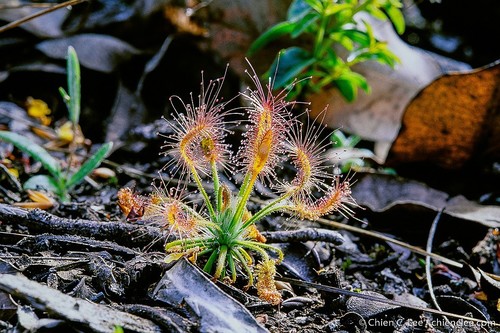
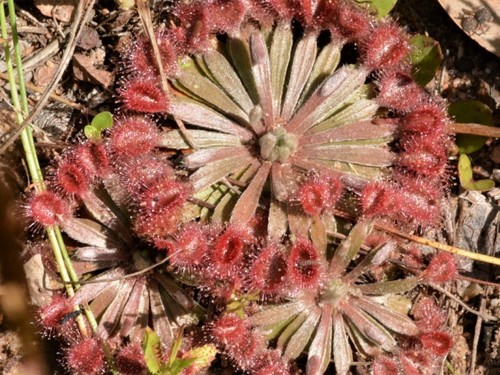
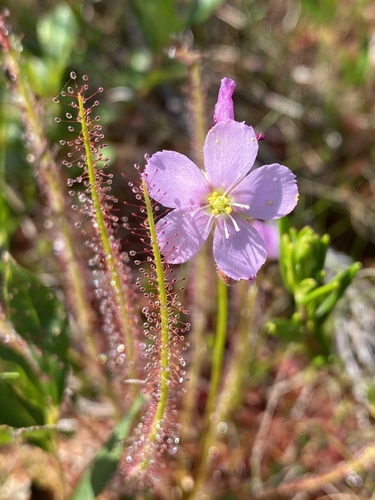
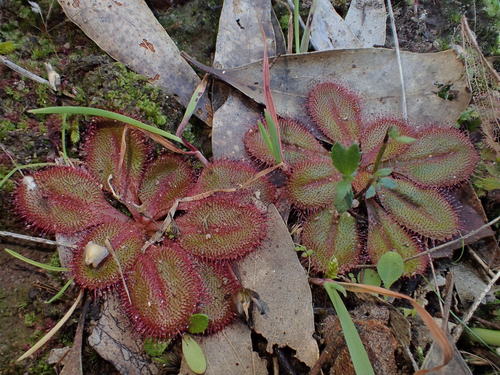
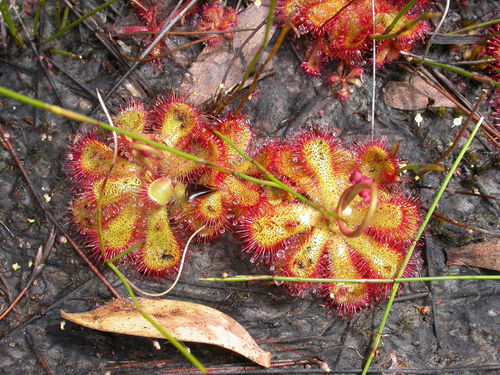
Drosera cuneifolia L.f. is a small perennial sundew species that grows in a rosette form. It is native to the Cape region of South Africa, and is only found near the Table Mountain complex there. This species was first formally described in 1781. It produces somewhat broad, green carnivorous leaves that can reach up to 7 cm (2.8 inches) in length. Without including its flowering inflorescence, D. cuneifolia can grow up to 3 cm (1.2 inches) in height and 15 cm (5.9 inches) in width. In early winter, D. cuneifolia produces multiple small flowers, up to 20 in total, ranging in color from pink to reddish-purple. These flowers grow at the end of scapes that can reach up to 15 cm (5.9 inches) tall. Individual flowers open in the morning and close by mid-afternoon, lasting only one single day. The flowers are capable of self-pollinating as they close. After flowering, the plant produces very small, black, spindle-shaped seeds that are released from the dried capsules left after the flower dies. D. cuneifolia remains dormant through the South African summer, oversummering during this hot season.