About Downingia bacigalupii Weiler
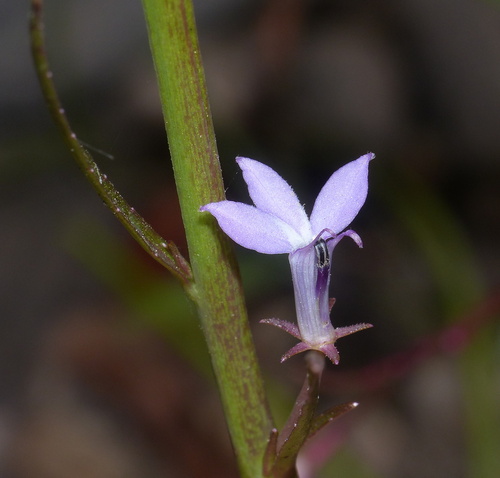
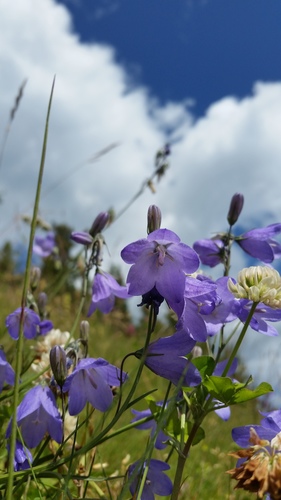
Downingia bacigalupii Weiler is a species of flowering plant in the bellflower family Campanulaceae, with the common names Bach's calicoflower or Bacigalupi's downingia. This showy wildflower is native to the western United States, ranging from California to Idaho, where it grows in moist meadows and vernal pool ecosystems. It is an annual plant that grows from a branching erect stem, with small diamond-shaped leaves spaced at intervals along the stem. One or more flowers grow at the top of each stem branch, and each flower measures between one and two centimeters wide. The flower has two long upper lobes, which may lie flat and straight, or curl back; these lobes are usually dark-veined blue. The three lower lobes are fused into a single three-toothed surface, which is also dark-veined blue, with two bright yellow blotches rimmed with white at its center. The stamens are fused together into an erect purple stalk that holds dark anthers. The plant produces a dehiscent capsule fruit that is two to five centimeters long. Both the plant's scientific Latin name and its common names honor Rimo Bacigalupi, who was known as "Bach".