About Doryteuthis pealeii (Lesueur, 1821)
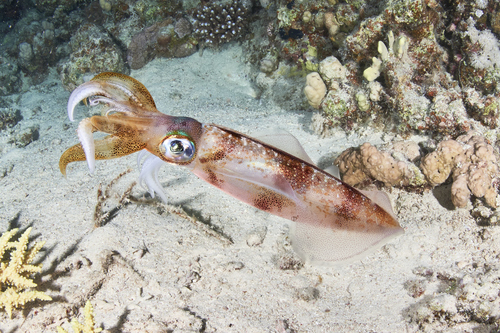
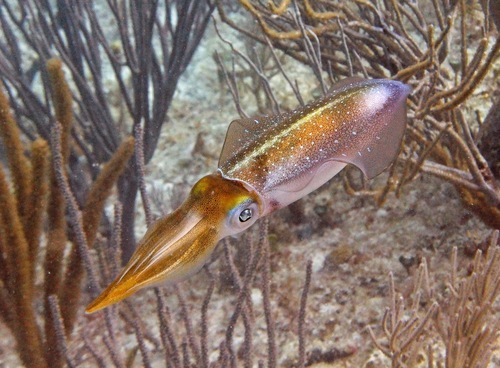
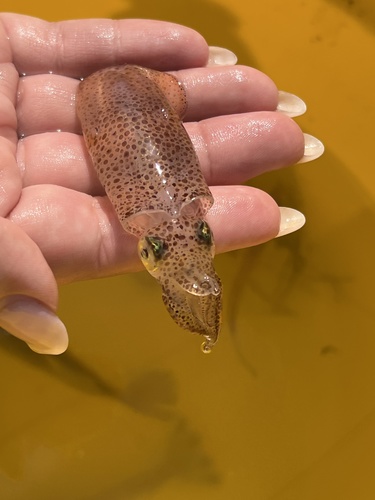
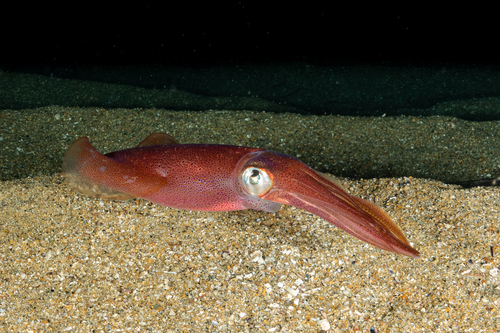
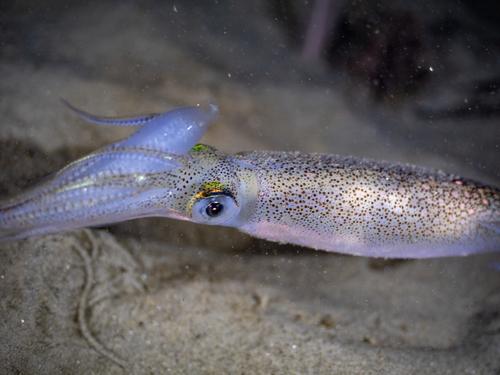
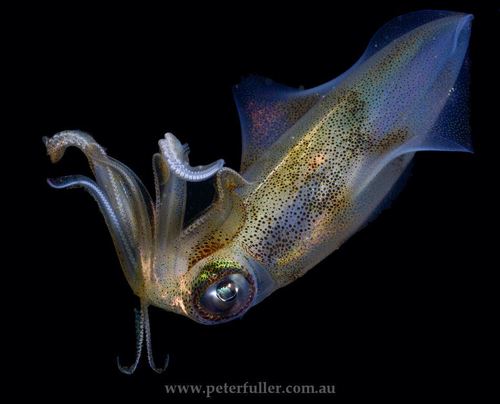
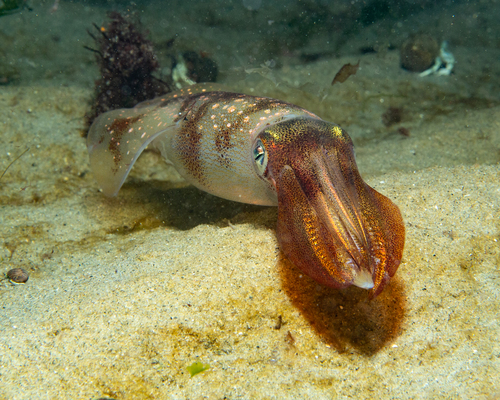
This squid species, Doryteuthis pealeii, commonly called the longfin inshore squid, often appears with a reddish hue. Like many squid species, it can actively manipulate its color, changing from a deep red to a soft pink. The maximum recorded dorsal mantle length of mature males is up to 50 cm, but most individuals caught commercially are smaller than 30 cm long. The species shows clear sexual dimorphism: most males grow faster and reach larger adult sizes than females. This squid is distributed across the North Atlantic Ocean, where it forms schools in continental shelf and slope waters ranging from Newfoundland to the Gulf of Venezuela. It is harvested commercially, with the heaviest exploitation occurring in the area from Southern Georges Bank to Cape Hatteras. Its populations complete seasonal migrations linked to bottom water temperatures: they move offshore in late autumn to overwinter along the edge of the continental shelf, then return to inshore waters during spring and early summer. Longfin inshore squid spawn year-round and have a total lifespan of less than one year. Their eggs are demersal, enclosed in gelatinous capsules that hold up to 200 eggs each. Each female produces between 20 and 30 capsules, and the total fecundity per female ranges from 950 to 15,900 eggs. Eggs are laid in large masses composed of hundreds of egg capsules contributed by multiple different females. Individuals that hatch in summer generally grow faster than those that hatch in winter, due to warmer surrounding water temperatures. Studies of this species show that males use multiple distinct reproductive tactics at communal egg beds, including mate guarding and sneaker strategies.