About Doru aculeatum (Scudder, 1876)
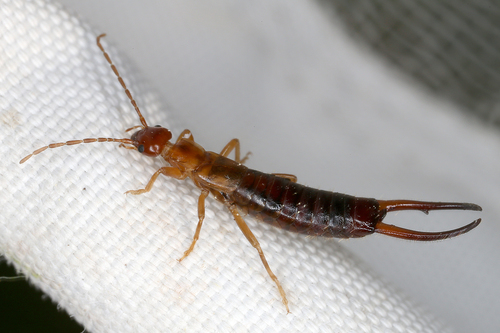
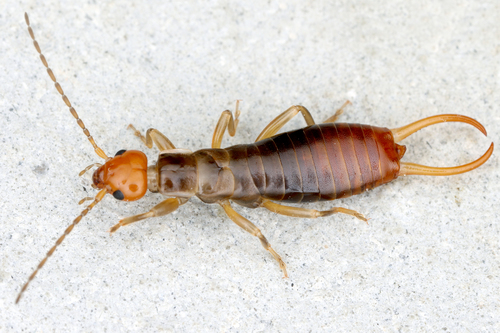
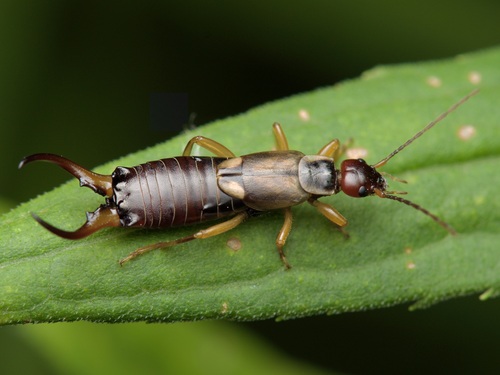
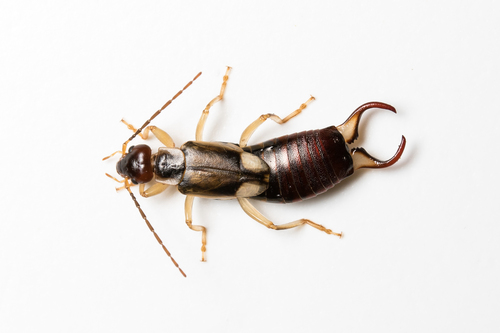
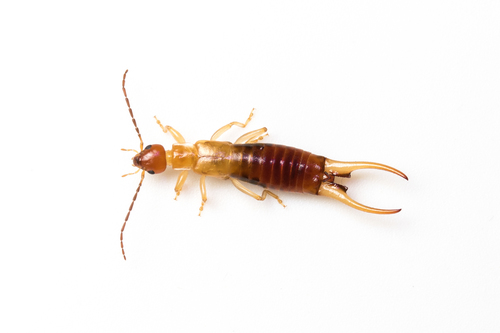
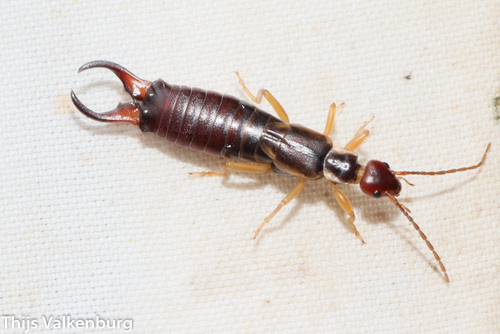
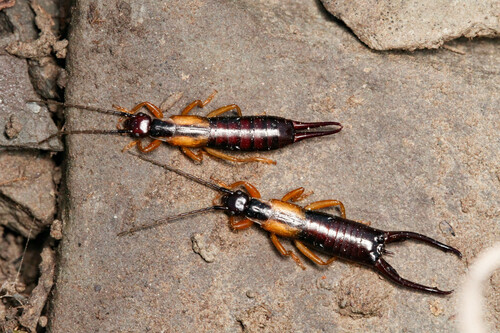
This species description follows the account written by W.S. Blatchley in his 1920 work Orthoptera of Northeastern America - with especial reference to the Faunas of Indiana and Florida. The species is overall dark chestnut brown, with yellow coloring on the palpi, legs, edges of the pronotum, and the outer two-thirds of the tegmina. The pronotum is longer than it is broad, and narrower than the head. The tegmina are nearly twice as long as the pronotum, and have a truncated shape; inner wings are usually aborted. For male forceps, they reach three-fourths the length of the abdomen, are slender, curved, bent slightly downward at the basal third, become horizontal again just before the tip, and have a pointed tooth at the second bend. Female forceps are shorter than those of males, with nearly straight forceps. The lower inner edges of female forceps are very finely crenulate, and are usually contiguous along most of their length, with incurved tips. Measured lengths in millimeters are as follows: body length: males 8–11, females 7.5–10; tegmen length: both males and females 2.5–3; forceps length: males 4.7–6, females 3–3.5; male pygidial spine length: 0.8–1 mm.