About Dorcus parallelus (Say, 1824)
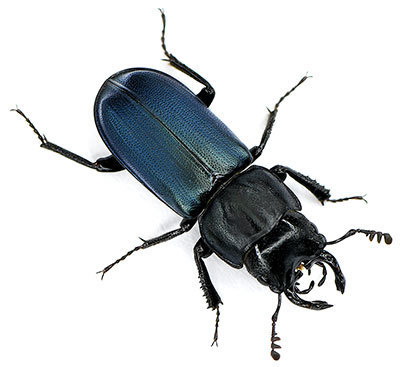
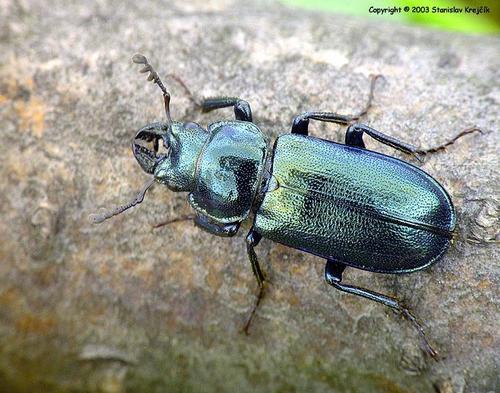
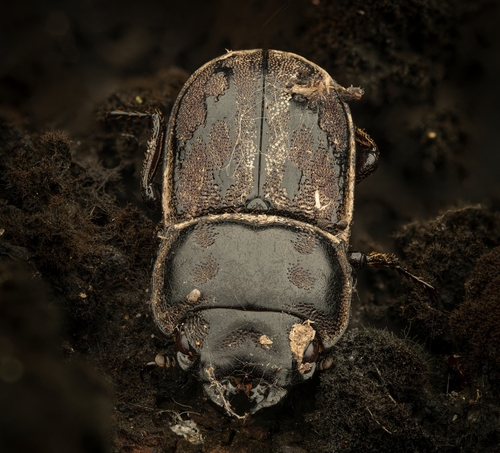
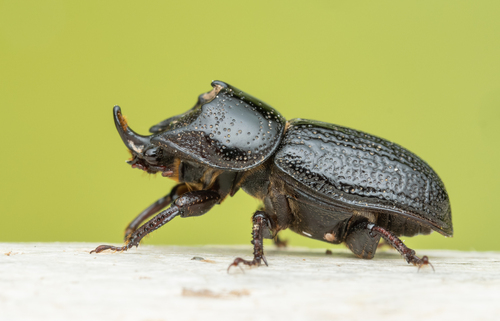
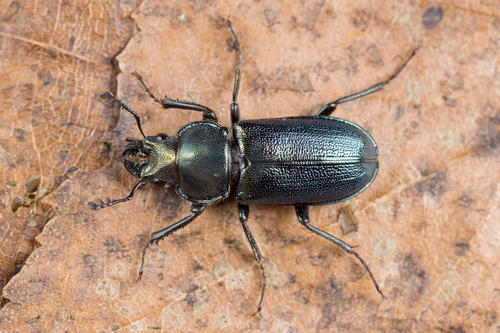
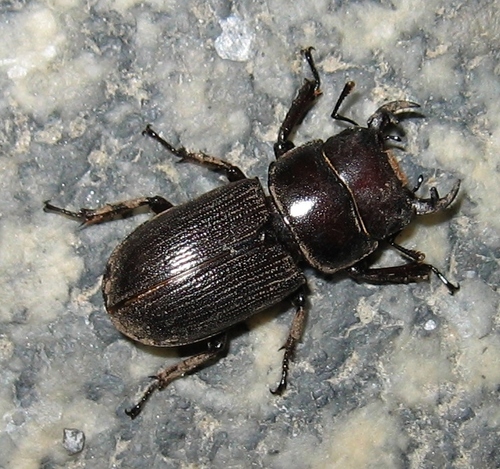
Dorcus parallelus (Say, 1824) is a beetle species that ranges from 15 to 26 mm in body length, and individuals can be either brown or black in color. This species exhibits sexual dimorphism: the mandibles of males are twice as long as the mandibles of females. Current research on the morphology of Dorcus parallelus is sparse, but there are specific traits that allow this species to be distinguished from other related beetles. Its mandibles, the paired jaw structures found in many insects, are relatively short, and they are used during mating. In field identification, Dorcus parallelus is frequently confused with Dorcus brevis. Compared to D. brevis, D. parallelus is typically darker in color, has a more elongated body shape, and bears a single large tooth on its mandibles, while D. brevis has two smaller internal mandibular teeth. Documented differences between the two species also extend to their genitalia. Dorcus parallelus is endemic to North America, where it is concentrated in eastern Canada and the eastern United States. One study has specifically examined populations of this species found in Central Illinois.
Dorcus parallelus is endemic to North America, concentrated in the Eastern United States and Canada, and one study focused on individuals found in Central Illinois.