About Dorcus parallelipipedus (Linnaeus, 1758)
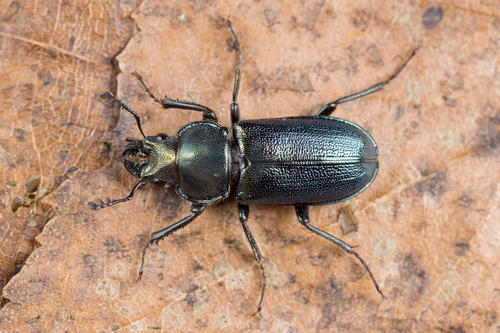
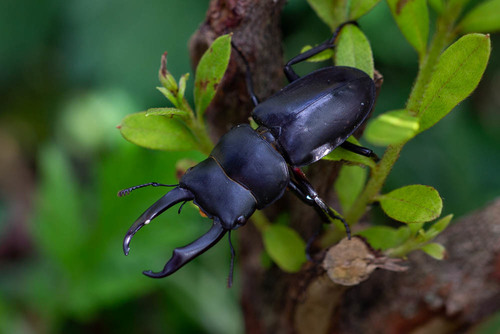
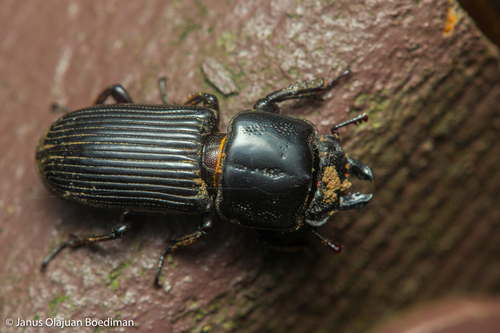
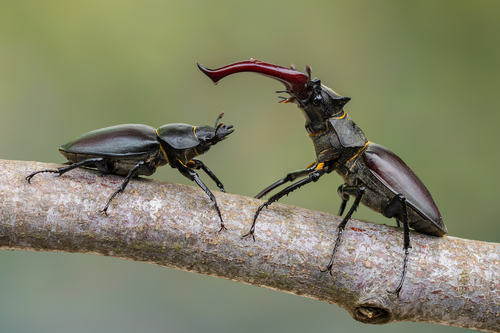
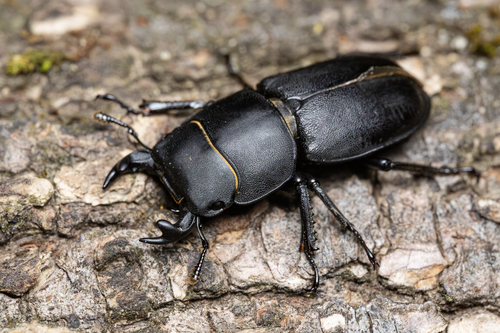
This species, Dorcus parallelipipedus (Linnaeus, 1758), is commonly called the lesser stag beetle. Both sexes of this beetle resemble the female of the larger greater stag beetle (Lucanus cervus), but Dorcus parallelipipedus has a uniform blackish color, while the greater stag beetle has chestnut brown elytra (wing covers). Males of Dorcus parallelipipedus have distinctly knobbed antennae. Though males have somewhat larger jaws than females of this species, their jaws are far smaller than the jaws of males of many other stag beetle species. The lesser stag beetle looks similar to its North American relative, the antelope beetle Dorcus parallelus. Adult Dorcus parallelipipedus measure between 18 and 32 mm (0.7 to 1.3 inches) in length. In summer, adult beetles of this species live in woodland, parkland, and hedgerows, and they often rest in sunlight on tree trunks. After mating, females lay their eggs inside rotting, decaying wood. Larvae of the lesser stag beetle develop in just 1 to 2 years, which is much faster than greater stag beetle larvae, which can take up to 7 years to mature. After emerging from the pupal stage, adult lesser stag beetles can live for up to 2 years, while adult greater stag beetles only live for a few weeks. Adults fly to disperse, and they sometimes are attracted to outdoor lights at night. This is a widespread and generally common species across most of England, though it is not found in the far north of the country. It can also enter gardens that contain orchards, old hedges, or large mature trees.