About Doodia aspera R.Br.
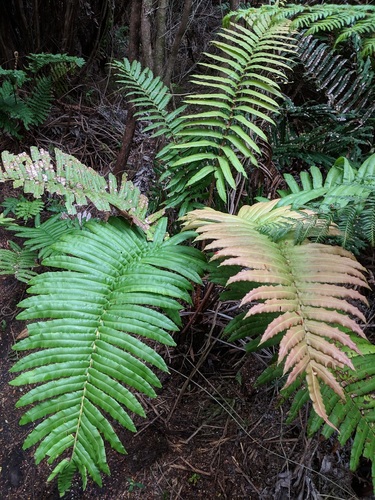
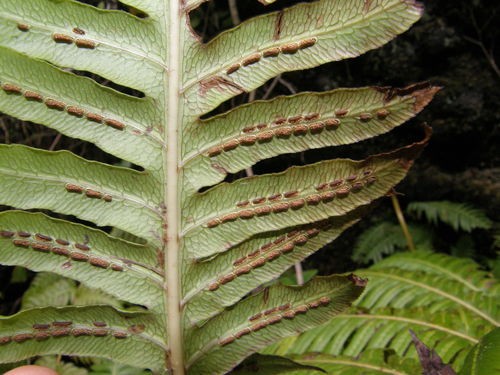
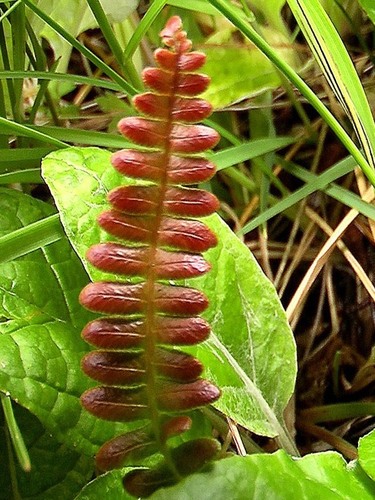
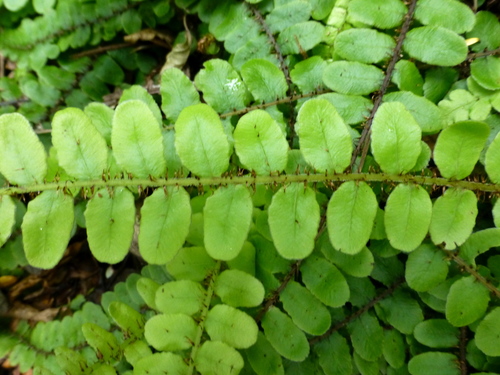
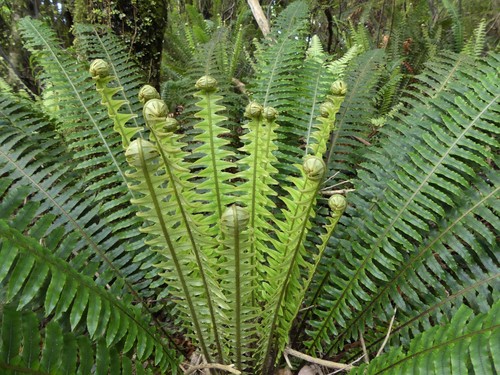
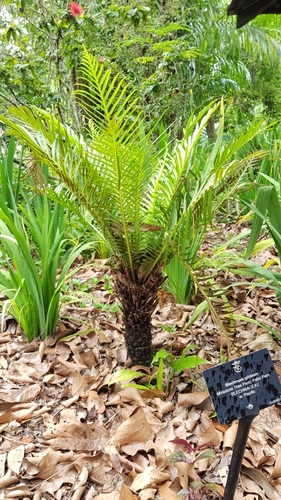
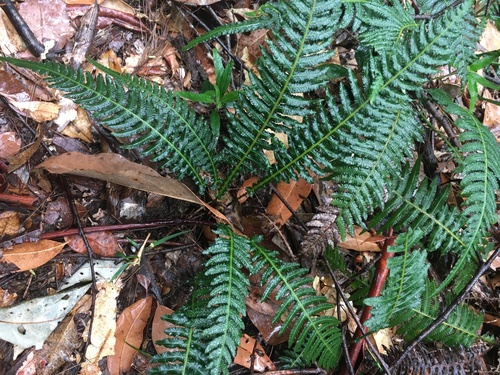
Prickly rasp fern (Doodia aspera R.Br.) grows with fronds that rise vertically from a black, scaled rhizome. These fronds are typically 20 to 45 cm (7.9 to 17.7 in) long. The frond segments have toothed (dentate) margins, measure around 6 cm (2.4 in) long, and are arranged in a zig-zag pattern along the stem. Both the fronds and stipe are covered in small bumps, which gives them a rough texture. Young fronds are pinkish, and turn green as they mature. Doodia aspera is distributed along all of eastern New South Wales, and extends into Victoria and Queensland. It is especially common in the Blue Mountains west of Sydney. It also occurs on Norfolk Island. It grows on sandstone and igneous (granite and basalt) substrates, in sandy or gravelly soils. In tall open forest of the Sydney region, it forms understory ground cover in damp areas beneath trees including Sydney blue gum (Eucalyptus saligna), mountain gum (E. deanei), river peppermint (E. elata) and forest red gum (E. tereticornis). It can also be found in rainforest and dry open forest. It grows either as scattered individual plants or in dense colonies. Doodia aspera is tolerant of short dry periods, and can grow in both full sun and shade. Its spores are dispersed by wind. Doodia aspera adapts readily to cultivation. It grows in shade or sun with adequate moisture, on acidic soils that contain some organic material. It requires sufficient drainage to avoid waterlogging. Its pinkish to reddish new growth is considered an attractive feature. This fern can be easily propagated by collecting and germinating spores, or by dividing its rhizomes.