About Donax trunculus Linnaeus, 1758
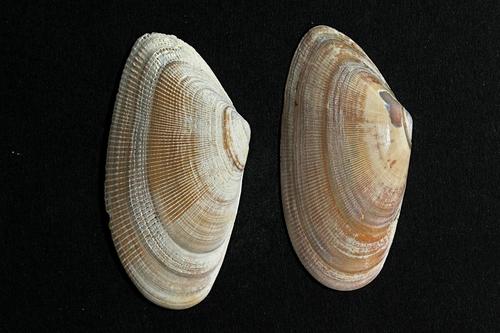
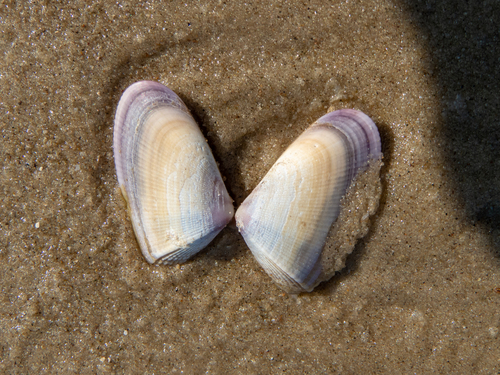
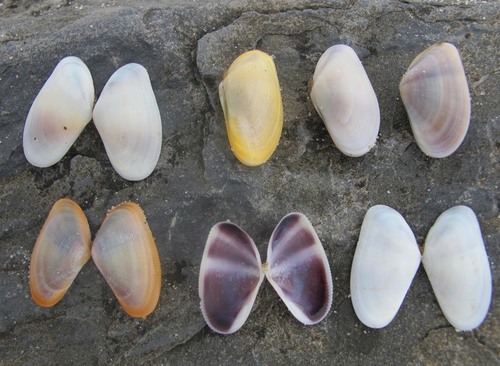
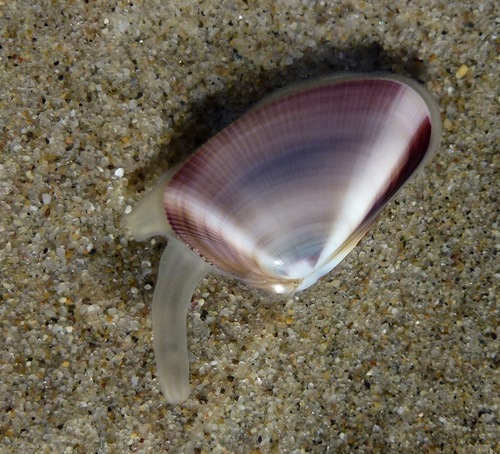
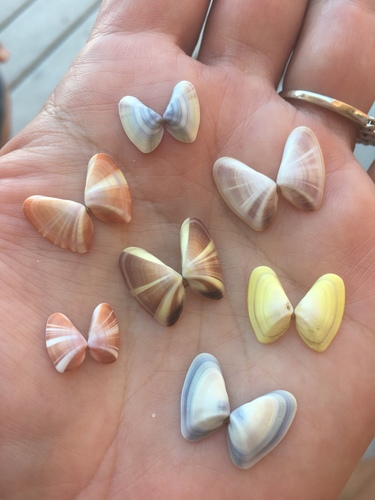
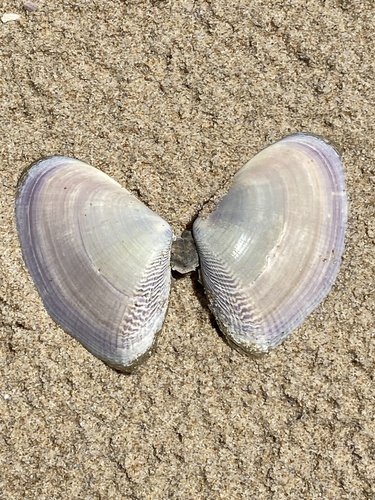
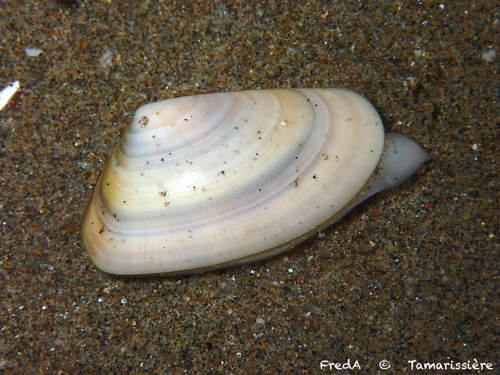
Donax trunculus, commonly known as the truncate donax, abrupt wedge shell, wedge clam, or coquina clam, is a bivalve species belonging to the family Donacidae. It is native to the Mediterranean, the Atlantic coasts of western Europe, and the Red Sea, where it is harvested and consumed as food by humans. This species prefers to live at depths between 0 and 2 meters, in clean, fine, well-sorted sand. Wedge clams are efficient, rapid burrowers, and their survival depends heavily on the composition of the sand they burrow into. Their burrowing speed varies based on sand coarseness, which explains their common occurrence in fine-sanded habitats. The wedge clam is a popular human food source, but its tissues can accumulate heavy metal and hydrocarbon contaminants. Since it is often eaten raw or lightly cooked, these contaminants are usually still present when it is consumed. Despite this contamination risk, the wedge clam works as an effective bioindicator for heavy metal and hydrocarbon contaminants in aquatic environments. Like many other species in the Donacidae family, it is easy to incorrectly orientate empty valves of D. trunculus when soft tissue is no longer present to serve as a reference. People often misidentify the anterior and posterior ends of the valve, and consequently mix up right and left valves. This confusion happens because D. trunculus has two distinct valve features that are reversed compared to what is seen in most bivalves. First, the umbo of D. trunculus points backwards, toward the posterior end, while in most other bivalve families such as Veneridae, the umbo typically points forward. Second, when a valve is divided in half along a transverse axis from the tip of the umbo, the anterior half is larger, broader, and more elongated, extending further from the umbo, while the posterior half is much shorter and reduced. This pattern is the opposite of the standard bivalve arrangement. Even with these unusual traits, empty D. trunculus valves can be correctly oriented if the impression of the pallial sinus is visible on the internal face of the valve. In this species, the deep, prominent pallial sinus always opens toward the posterior end of the animal with no exceptions.