About Donax serra Röding, 1798
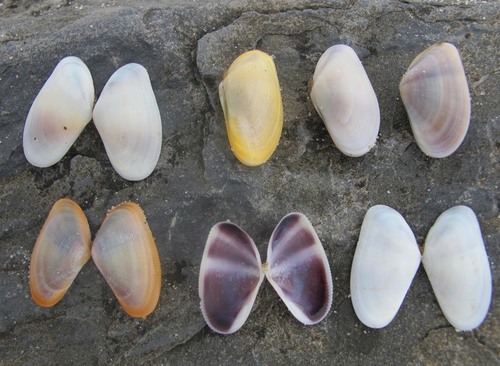
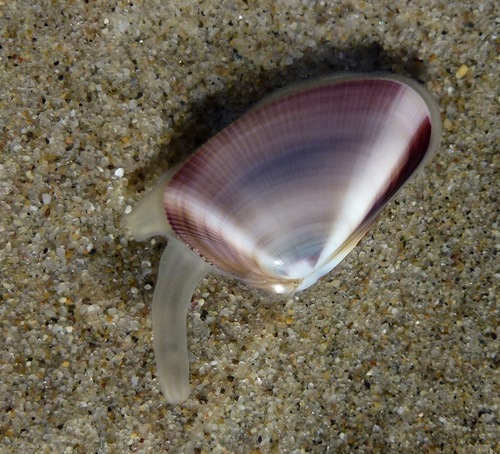
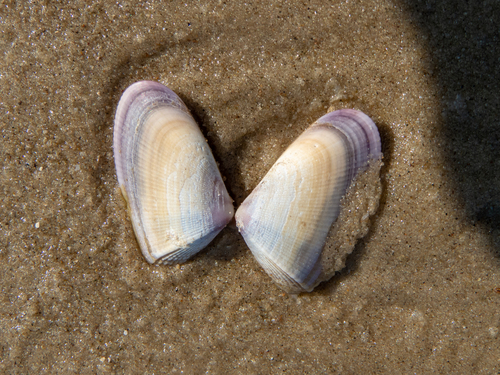
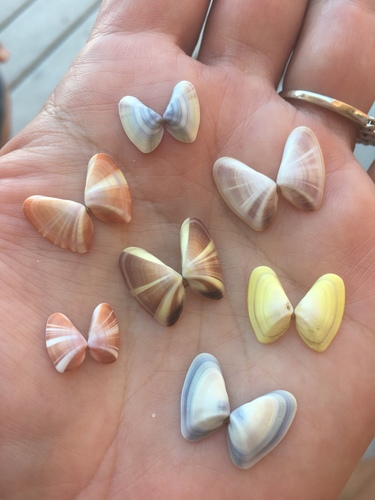
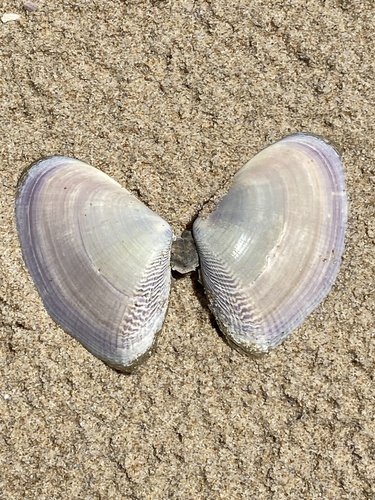
Donax is a genus of small, edible saltwater clams, which are marine bivalve mollusks that feature highly variable color patterns. Members of this genus are sometimes called bean clams or wedge shells, though different Donax species have different common names in different regions around the world. In the southeastern United States, they are called coquina, a term that also refers to the hard limestone concretions formed from their shells and the shells of other marine invertebrates. Species in the Donax genus live in the swash zone, sometimes at high concentrations, where they position themselves vertically aligned in sand on exposed beaches along tropical and temperate coasts across the globe. When waves wash these small clams out of the sand, they are able to dig back in again quite quickly. They are filter feeders that consume phytoplankton, and they serve as an important food source for crabs, fish, and shorebirds. Donax species are sensitive to environmental conditions, so they are considered an indicator of beach habitat health. Some species, such as Donax variabilis, migrate vertically and horizontally as tides change. The genus as a whole has a global distribution. These coquina clams are found extensively on the east coast beaches of Trinidad, specifically in Mayaro, and are widely available in Venezuela. Donax clams are edible mollusks that humans have consumed since prehistoric times, and they are still eaten today. Many recipes for coquina soup have been published. Recreational foragers are advised to follow seafood safety guidelines and local shellfish harvesting restrictions, and to stay aware of harmful algal blooms that can contaminate shellfish with dangerous biotoxins. In some regions, indigenous people still gather Donax clams as an important subsistence food.