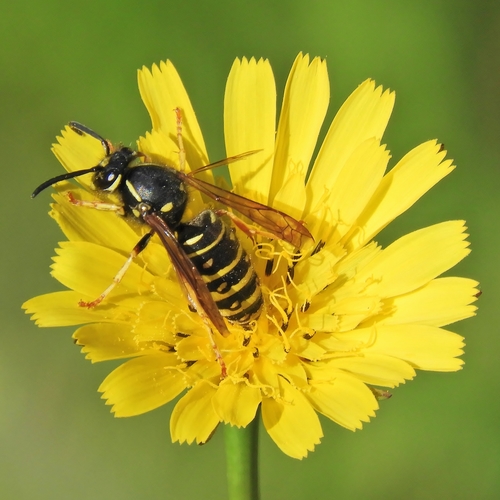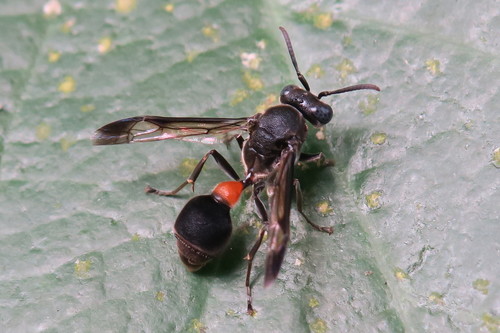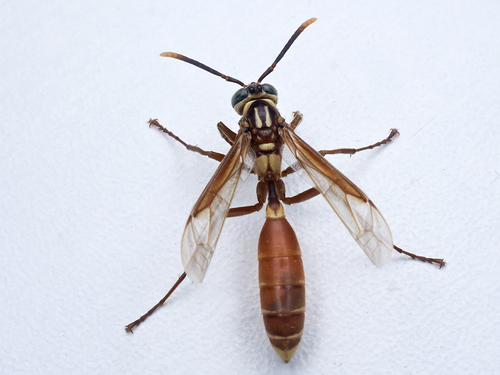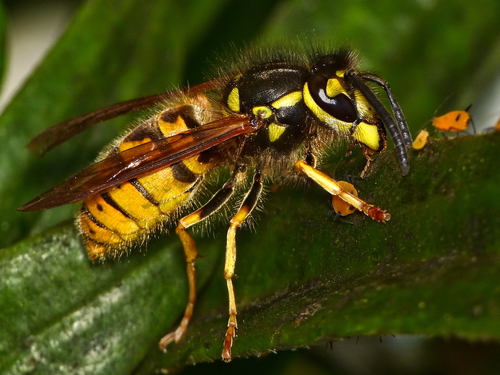
About Dolichovespula sylvestris (Scopoli, 1763)
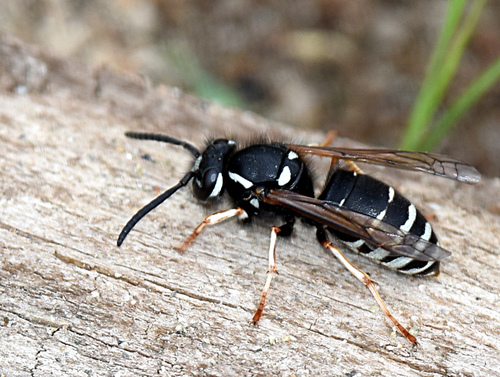
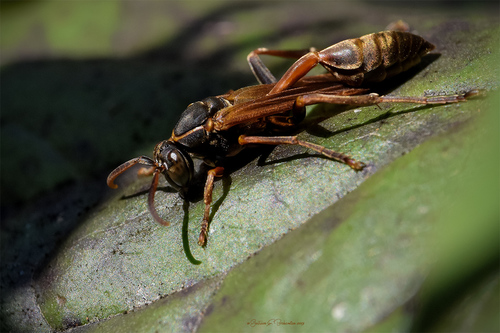
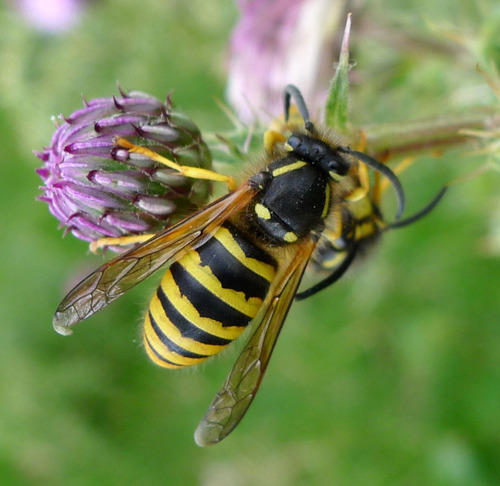
Dolichovespula sylvestris, commonly known as the tree wasp, has different body length ranges for different castes: workers reach 11–15 millimetres (0.43–0.59 in), queens reach 15–19 millimetres (0.59–0.75 in), and males reach 13–17 millimetres (0.51–0.67 in). This is a medium-sized social wasp with the characteristic black and yellow striped patterning common to many social wasp species. Its head and thorax are mostly black with yellow markings, while its abdomen is black with transverse yellow bands. Its wings have a slight brownish tint. The oculo-malar space, the distance between the mandible and the lower edge of the compound eye, is equal to or longer than the width of the antennal scape. Its large eyes are C-shaped, with a distinct deep cut along their edge. Three small ocelli are positioned at the top of the head. Key identifying features of this species include a solid yellow face with a single small central black dot on the clypeus, a thorax covered in long lateral hairs, and two posterior yellow spots. Compared to many other wasp species, D. sylvestris is less aggressive, but it will sting both animals and humans to defend its nest. Nests are constructed from paper, which the wasps produce by digesting wood, usually dead bark. Completed nests measure 10–15 centimetres (3.9–5.9 in) in diameter and contain an average of 4 combs. D. sylvestris is distributed across Western Europe, through central Asia as far east as China, and has also been recorded in northern Africa; it has not been documented living outside this range. It prefers temperate climates, and can be found in most habitats within these regions, including on trees and shrubs, hanging from human structures, and in the ground. It occurs commonly in both urban and rural areas. Despite its common name tree wasp, this species builds both aerial nests in trees and hedges, and underground nests. Underground nests are usually built close to the ground surface in pre-existing holes. All D. sylvestris nests require an overhanging structure to suspend from, which may be a rock, grass stem, or house roof, and the specific location and type of this supporting structure can vary widely.