About Dolichovespula adulterina arctica (Rohwer, 1916)
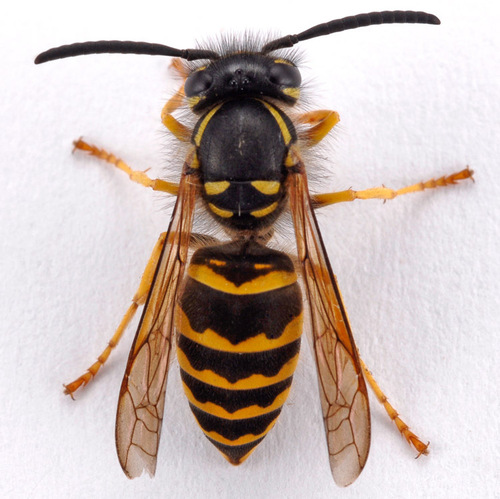
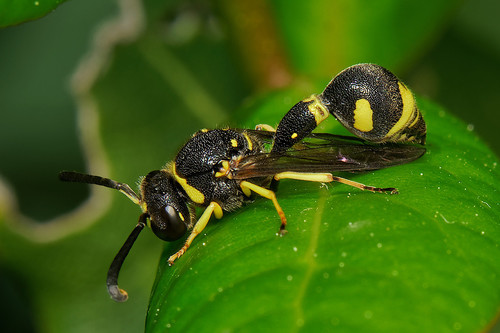
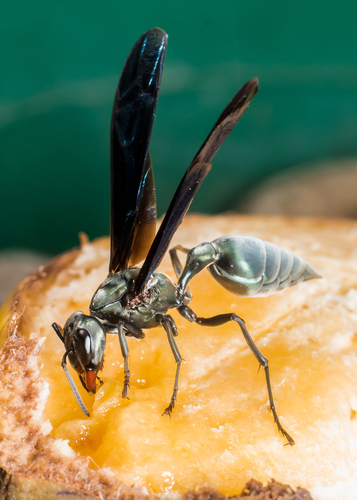
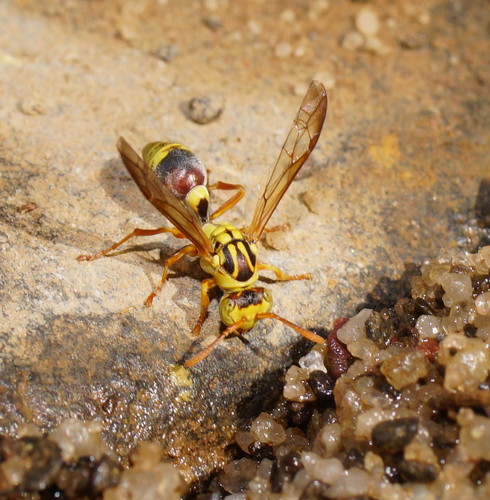
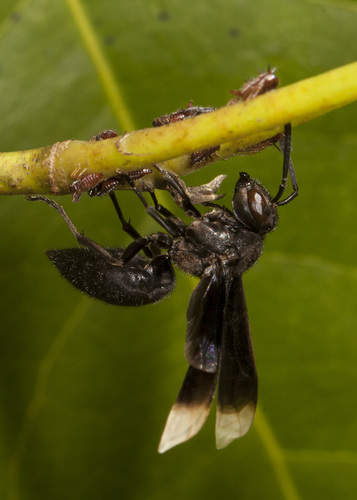
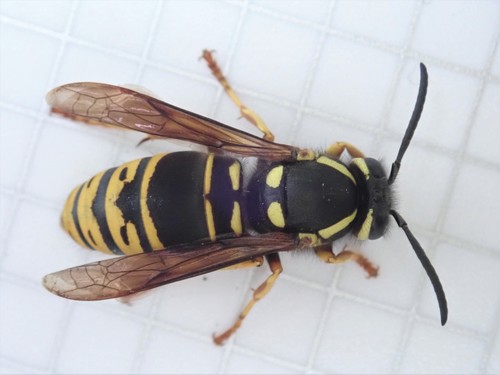
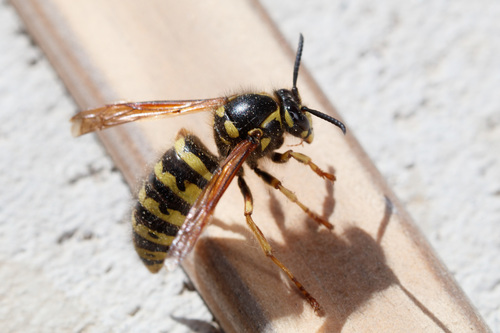
Identification: Forewing length ranges from 13.0–14.0 mm for females, and 10.0–12.0 mm for males. The body is most commonly ivory-colored, though pale yellow individuals occur occasionally; pale yellow variants of this subspecies are found in the western Nearctic and Palearctic regions. The clypeus is typically elongated, but may sometimes be small and round. Females almost always have a black disc-shaped spot on the clypeus, while males have a black mark that extends to the ventral margin of the clypeus. In melanic individuals, the black spot extends to the dorsal margin. The postocular band is narrower than the lateral postocular stripes in females, while it is rarely narrowed in males. Small ivory spots occasionally occur on the pronotum, behind the pronotal fovea. Females have paired black discal spots on tergum 5, and these spots may also occasionally appear on terga 3 and 4. In males, tergum 6 is usually black, with a less developed fascia than the preceding terga. Additionally, tergum 7 in males is usually black, and rarely has two ivory spots. This wasp is black and white (sometimes pale yellow) with brown-tinted wings. Typically, abdominal segments 1 through 5 have a thin white band along their rear edges. The large, dark malar space between the eye and the yellow jaw places this species in the genus Dolichovespula, rather than the closely related genus Vespula.
Distribution and habitat: D. adulterina has a Palearctic distribution, and it parasitizes D. saxonica and D. norwegica. D. saxonica builds nests in trees and shrubs no more than 2 m above ground. Sometimes, D. saxonica nests inside beehives, beneath the overhanging edges of roofs (up to 7 m above ground) and porches, and within wall cavities. They may occasionally also nest in tree hollows or ground holes.