About Dolichousnea longissima (Ach.) Articus
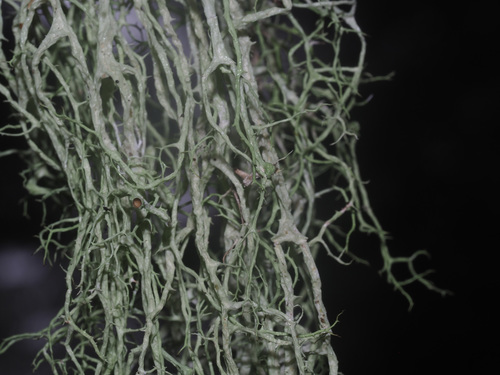
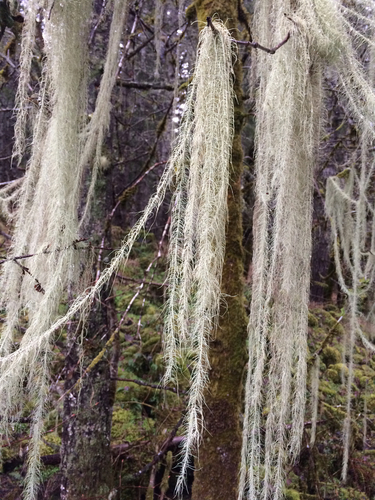
Dolichousnea longissima (Ach.) Articus is a fruticose lichen with very long stems and short, evenly spaced side branches, and it is recognized as the longest lichen in the world. Its stems are usually 15 to 30 cm long, but they can sometimes grow far longer, reaching up to 20 feet in total length. This lichen is pale green to silvery-yellow in color, and has a distinct, white central cord. It can double its length every year. It predominantly reproduces asexually via fragmentation; spore-producing structures are very rarely observed. Dolichousnea longissima occurs in boreal forests and coastal woodlands across Europe, Asia, and North America. In North America, it is primarily found along the Pacific Coast, with the largest populations concentrated in the Pacific Northwest. Its range extends from the Upper Midwest into Canada, through the Great Lakes region, and all the way to the Atlantic coast. Historically, this species had a circumboreal distribution, but it has been regionally extirpated from parts of Europe and Scandinavia. It is included on the Red List of California Lichens, and is classified as Endangered on the Norwegian Red List. It grows within the canopies of coniferous trees, most commonly in old-growth Douglas fir forests and near bodies of water. Air pollution strongly impairs the metabolic functions of this species, leading to widespread population declines. Industrial logging has also caused severe harm to its population numbers. This species is harvested for use as decoration. Historically, it has been used as bedding and filtering material. Medically, it acts as an anti-inflammatory due to the presence of the compound longissiminone. It has been documented in Chinese herbal medicine as early as 500 A.D., where one of its common names translates to "pine gauze".