About Dolabella auricularia (Lightfoot), 1786
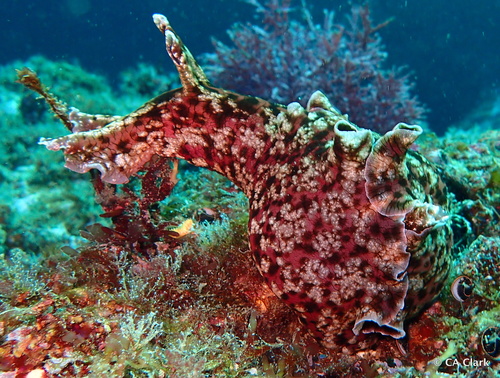
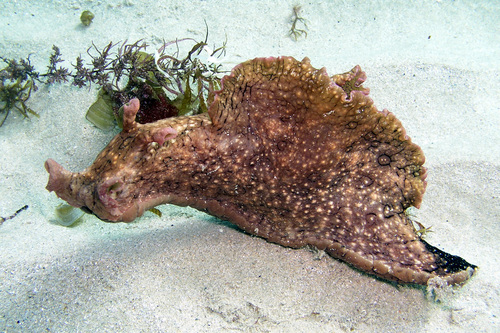
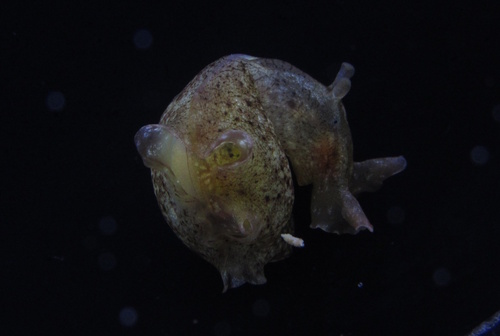
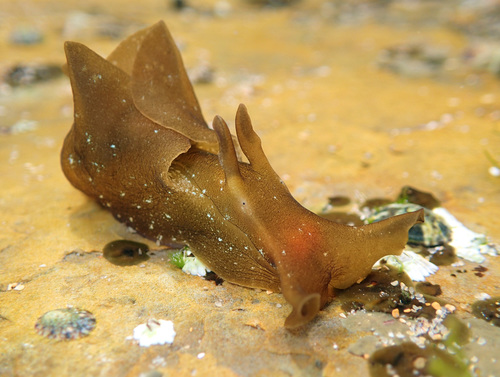
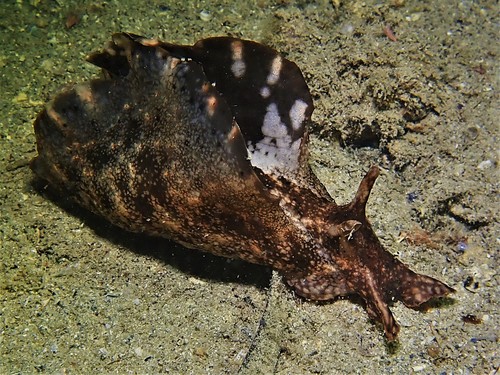
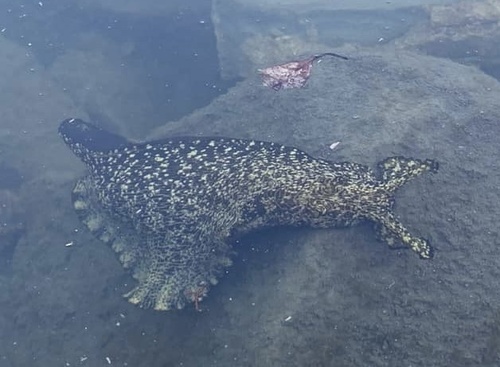
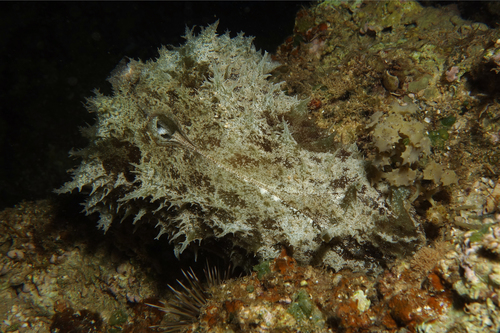
Dolabella auricularia (Lightfoot, 1786) is a rather large sea hare species that can reach 40 centimetres (16 inches) in length. It can be identified by a flattened disk on its posterior surface, and individuals may have soft pustules that give the body a distinctly knob-like look. It has a short, blunt head, and its body is covered in tubercles and skin flaps. It has a vestigial, internal shell shaped like a typical ear. Like all sea hares, it ejects purple ink when disturbed. This species is found in the Indian Ocean, and the western and northwestern Pacific Ocean, including the Philippines. It inhabits areas sheltered from rough currents, and most often hides in seagrass, sand, and mud, where it feeds on algae. Intertidal rock pools are also a favoured habitat for this species. In coastal areas of the Visayas and Mindanao islands in the Philippines, long strands of D. auricularia eggs are traditionally eaten. The species is locally known as donsol or dongsul in Visayan languages, and its egg strands are called lokot or lukot, harvested from shallow rocks and seagrass meadows. The egg strands resemble twisted noodles (pancit) in both appearance and texture, so they are also called pansit-pansitan, meaning "mock noodles", in some areas. The eggs are usually green, but can range from reddish to yellowish in color. They are often mistaken for seaweed, with a taste described as salty and sweet. They are most commonly prepared raw with vinegar and spices as kinilaw, sautéed like pancit guisado, or added to soups such as fish tinola. In Samoa, the species is called Gau (pronounced gnau). It is a favourite food for older people, cooked with coconut cream; its innards are eaten raw, and its eggs, called ape, are also eaten. Keepers of large marine aquariums sometimes use Dolabella auricularia to control algal growth inside the tank. The anti-cancer agent monomethyl auristatin E is derived from peptides found in this species.