About Diurnea lipsiella (Denis & Schiffermüller, 1775)
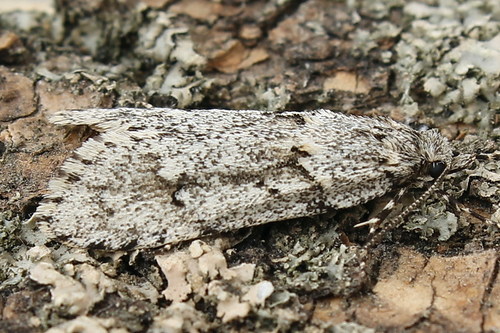
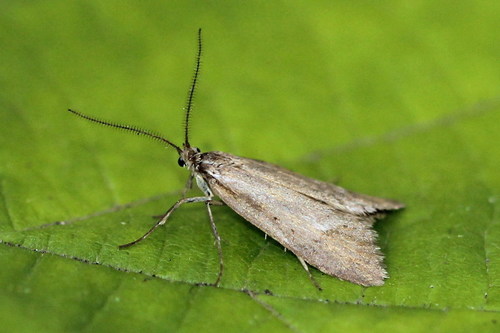
Diurnea lipsiella (Denis & Schiffermüller, 1775) is a moth species belonging to the subfamily Chimabachinae, found across Europe. The total wingspan of the species ranges from 17 to 23 mm. Meyrick provides a more detailed description, noting size differences between the sexes: males measure 21 to 25 mm, while females measure 17 to 19 mm. Males have antennae with long fasciculate ciliations. Male forewings are light ochreous-brown, sometimes with whitish sprinkling toward the middle of the costa and in the disc beyond the middle. The stigmata are very obscurely darker, and the second discal stigma sits on an indistinct oblique darker shade running from the 3/5 position of the costa to the tornus. Male hindwings are grey. Female forewings are grey-whitish, covered in dark grey irroration; the stigmata and oblique marks before the middle and above the tornus are blackish, and are sometimes partially connected. The larva is yellow-whitish, with a dark brown head. The plate on the second segment is brown and freckled. The third pair of legs is positioned on a shining tubercle, a feature that may only occur in male larvae. This moth produces one generation per year, with adults flying from October to December, with timing varying by location. The larvae feed on a range of deciduous trees and shrubs, including Rubus, apple, Prunus, Vaccinium, and oak.