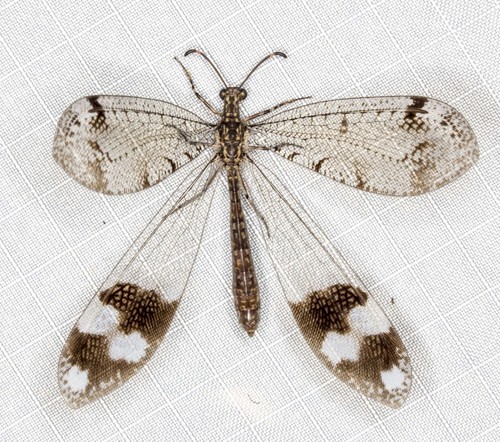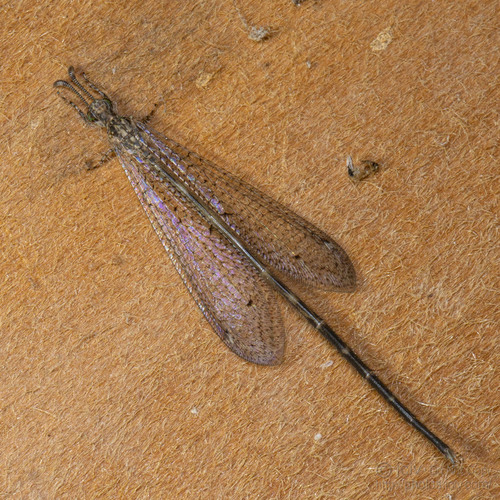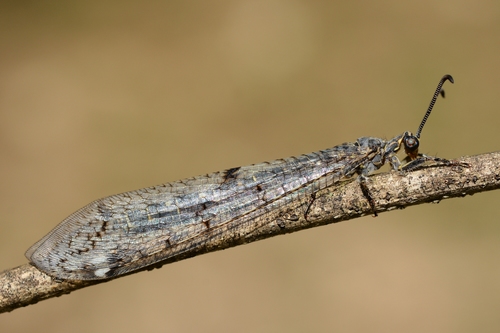
About Distoleon tetragrammicus (Fabricius, 1798)
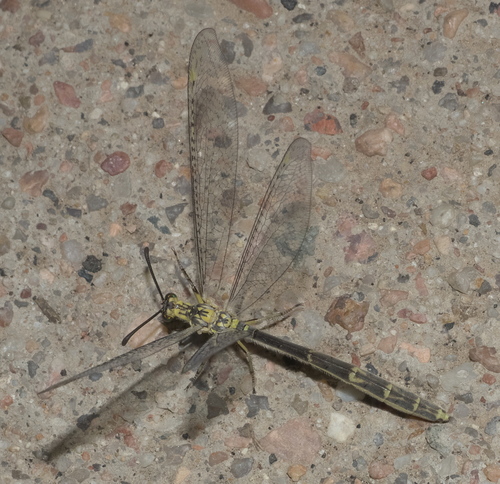
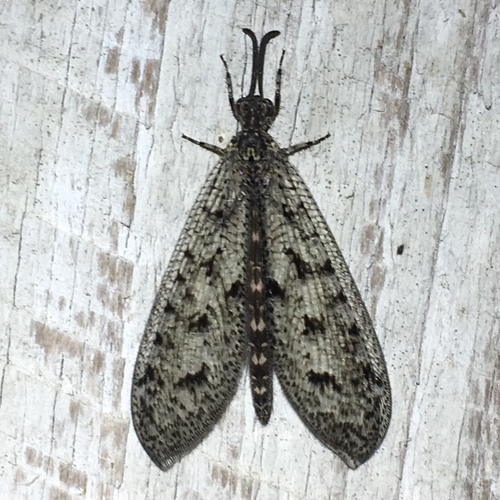
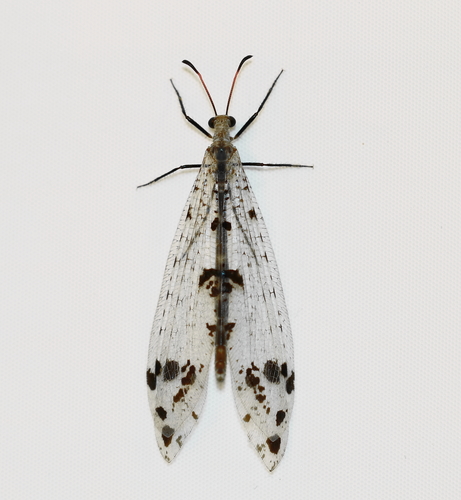
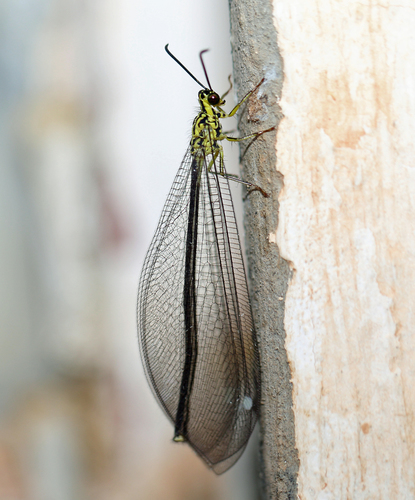
Adults of Distoleon tetragrammicus strongly resemble dragonflies or damselflies. They reach a wingspan of approximately 75 millimeters (3.0 inches). The width of their front wings ranges from 26 to 40 millimeters (1.0–1.6 inches). This species has thick, prominent antennae that end in an apical club, a long narrow abdomen, and two pairs of long, transparent, heavily veined wings marked with brown opaque spots. It is sometimes mistaken for Myrmeleon formicarius. Larvae bear no resemblance to adult Distoleon tetragrammicus. A fully grown larva typically measures 12 to 22 millimeters (0.47–0.87 inches) in length. The larva’s base body color is dark brown with darker markings, and its head is also dark brown. Its strong dark brown mandibles do not have long bristles outside their outer margins. The pronotum is covered in large black setae and short bristles. The dorsal surface of the abdomen has a series of circular markings plus a distinctive median dorsal stripe. The mesothoracic and abdominal spiracles are brown, and the larva’s legs may be yellowish or whitish. Distoleon tetragrammicus is widespread across the western Palearctic realm, and occurs across most of Southern Europe and North Africa. This species occupies a broad variety of habitats, ranging from coastal dunes to mountain forests. It occurs most often in arid, sandy areas, oak and pine forests, and various calcareous wastelands with very low moisture. Larvae of this species avoid open exposed sites such as coastal dunes.