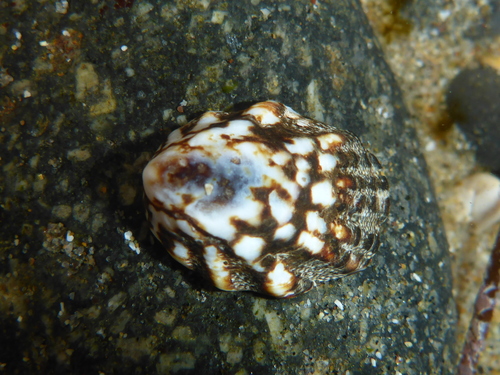
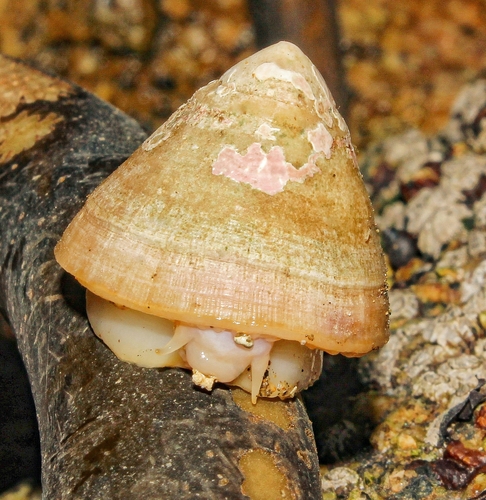
About Discurria insessa (Hinds, 1842)
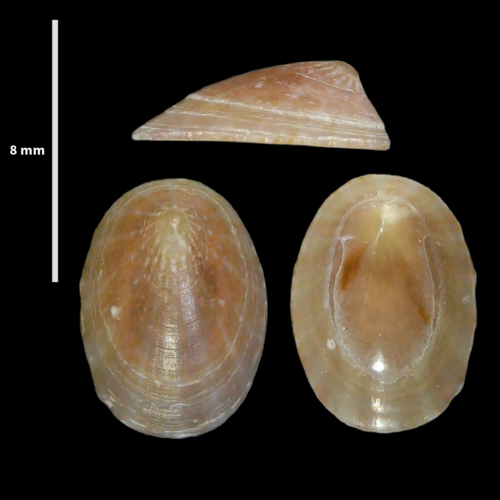
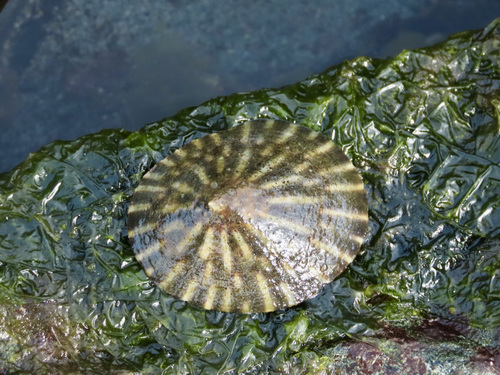
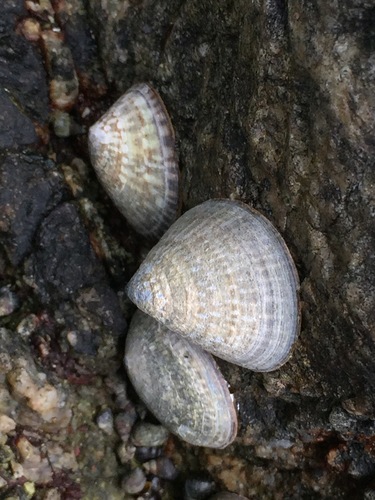
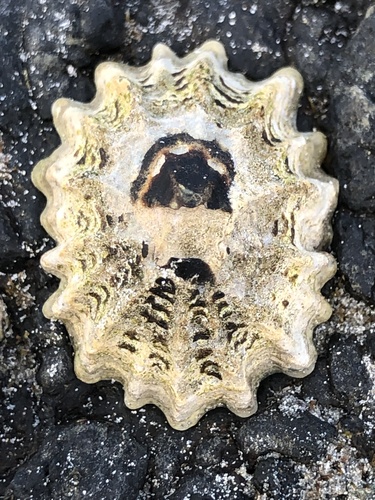
The shell of Discurria insessa ranges in size between 10 mm and 38 mm. The shell apex sits at the highest point of the shell, positioned slightly forward of the center. Shell shapes are nearly oval or elongated, with the right and left shell margins roughly parallel along their length. Limpet height is approximately three-quarters of the shell width. The exterior of the shell is dark brown and typically smooth. This marine species is distributed along the Pacific coast of North America, ranging from Wrangel Island, Alaska south to Bahía Magdalena, Baja California Sur, matching the broader range from South Alaska to the Baja California Peninsula. It is abundant in Northern California but rare in regions north of California in Oregon. Discurria insessa is thought to live exclusively on Egregia menziesii, commonly called feather boa kelp. Young limpets orient randomly on the kelp stipe, while adults are almost always oriented longitudinally along the stipe. D. insessa feeds on both epiphytes growing on the kelp and the Egregia host itself. Spawning occurs mainly during spring and summer. This species experiences high mortality over winter, so the largest individuals are usually no more than one year old. Larvae settle preferentially on large, crowded, post-reproductive Egregia plants and on fronds that already host adult D. insessa. Growth is fastest for individuals that settle on scars left by older limpets. When this limpet comes into contact with a seastar such as Pisaster ochraceus, it flees quickly.