About Dipodomys merriami Mearns, 1890
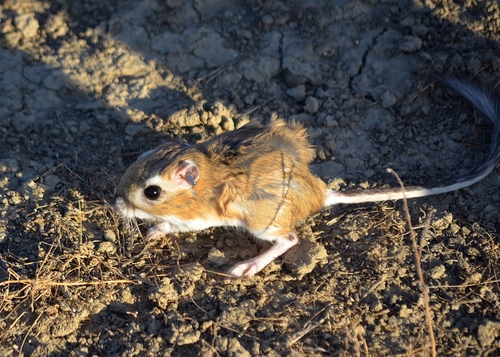
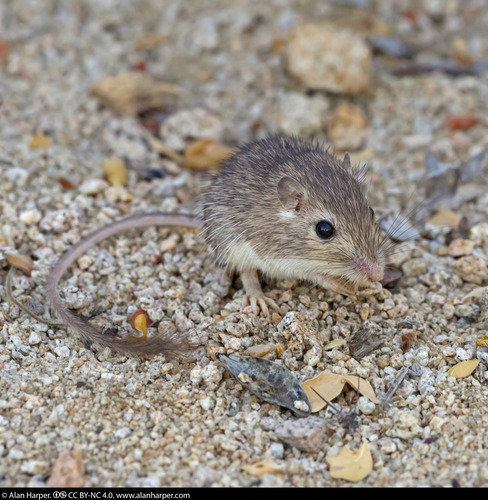
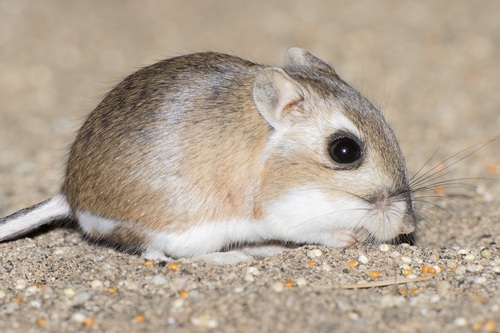
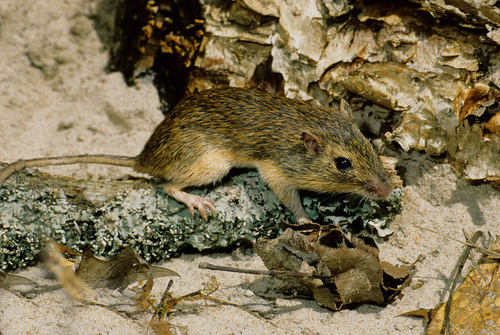
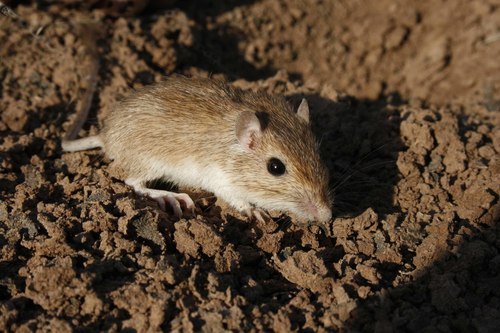
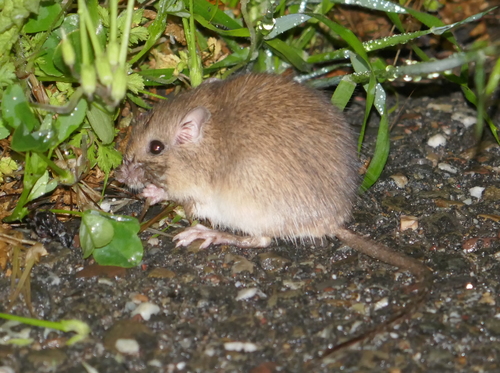
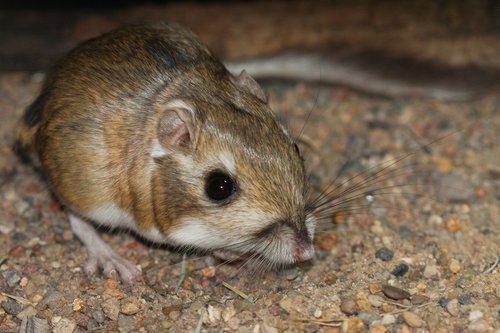
Merriam's kangaroo rat, whose scientific name is Dipodomys merriami Mearns, 1890, belongs to the family Heteromyidae, a group that also includes other kangaroo rats and pocket mice. All species in this family have fur-lined food storage pouches. The cheek pouches work as portable food caches while the animals forage. Kangaroo rats get their name from their extremely long, kangaroo-like hind feet, and they are almost entirely bipedal. Instead of scurrying or running, they move by hopping or jumping. Most heteromyid rodents also have a relatively long tail that counterbalances this hopping locomotion. Fur color varies between populations across the species' range, but the back is generally light brown or tan. D. merriami is smaller than most other kangaroo rat species found in the southwest. Adults average around 14 inches in total length. Its tail is relatively long, and ends in a large tuft of hair. This tuft is thought to function like the fletching on an arrow, creating drag to keep the animal stable while moving. D. merriami has four toes on each hind foot, which distinguishes it from two other kangaroo rat species found in San Diego County—the Pacific kangaroo rat (Dipodomys simulans) and Stephens' kangaroo rat (Dipodomys stephensi), which both have five toes. Merriam's kangaroo rat lives in desert scrub, alkali scrub, sagebrush steppe, pinyon-juniper woodland, and Joshua tree habitat across the southwestern United States and Mexico. Merriam's kangaroo rats can produce up to three litters per year, with an average of four pups per litter. Young are weaned between 24 and 33 days after birth.