About Diploria labyrinthiformis (Linnaeus, 1758)
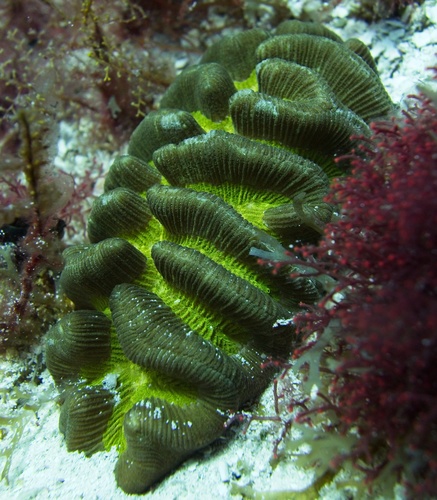
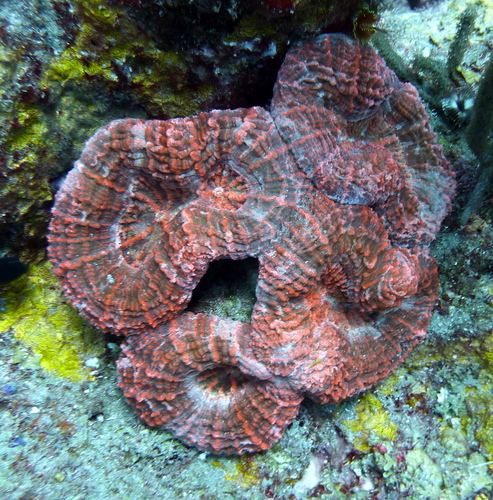
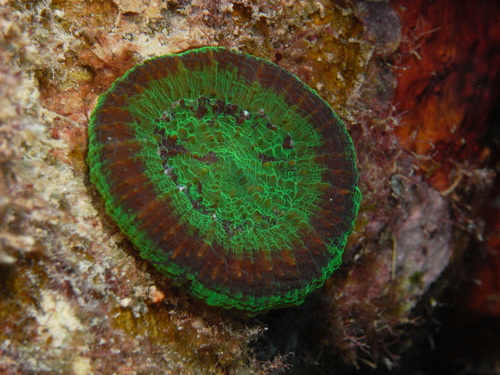
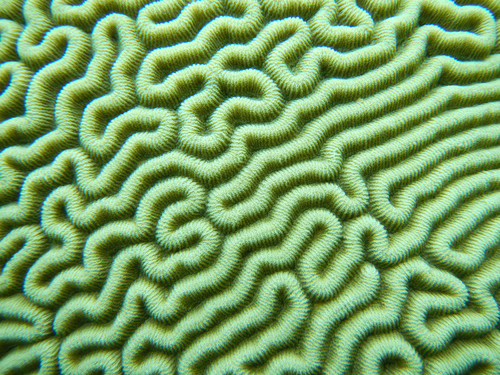
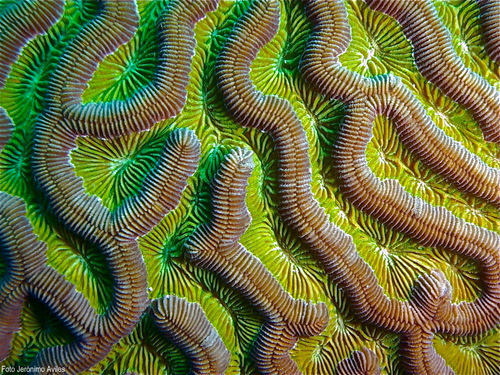
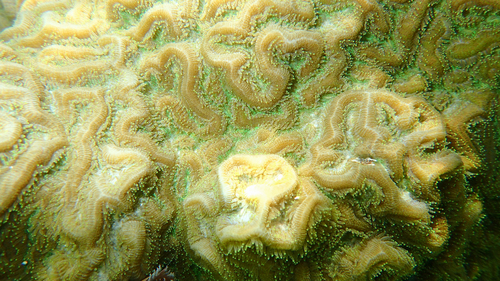
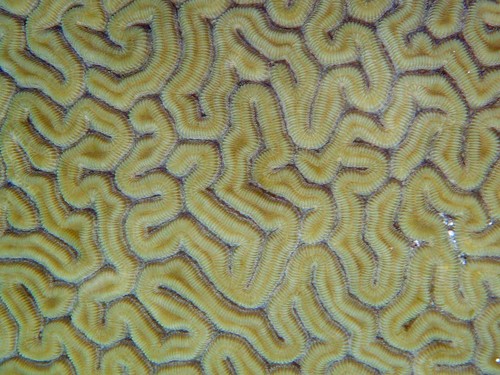
Diploria labyrinthiformis (Linnaeus, 1758) is a species of reef-building coral. It has a hemispherical, brain-like shape, and is colored brown, yellow, or grey. It has distinct deep, interconnected double valleys that contain polyps, and each of these valleys is separated by grooved ambulacral ridges. The valleys and grooves often differ in color from one another. This coral grows upward at an average rate of approximately 3.5 millimeters per year, and can reach up to 2 meters (6.6 feet) in diameter. During its planktonic larval stage, the coral is able to move; after this stage, it becomes permanently attached to the seabed (sessile). It is a suspension feeder that survives mainly on zooplankton and bacteria. Polyps capture this prey by extruding mesenterial filaments and tentacles. The polyps have nematocysts that trigger to immobilize prey, which is then moved to the polyp's mouth with the help of mucus and cilia. Diploria labyrinthiformis is hermaphroditic, and reproduces via broadcast spawning: adult colonies release eggs and sperm, after which fertilization occurs and larvae develop at the water surface. Unlike most other Caribbean broadcast spawning corals, D. labyrinthiformis spawns over multiple months, from late spring through mid-autumn. The timing of gamete release is tied to moon cycles, and exact timing can vary even within the species' regional range, but it typically spawns earlier in the year than most other Caribbean scleractinian corals. This species is found in tropical regions of the west Atlantic Ocean, including the Gulf of Mexico, the Caribbean Sea, the southern tip of Florida, the Bahamas, Bermuda, and along the coasts of Central America. It occurs offshore at depths between 1 and 30 metres (3.3 to 98.4 feet). The growth layers in D. labyrinthiformis skeletons help researchers track changes in ocean temperature over time, making this coral important to environmental and climate research.