About Diploglossus lessonae Peracca, 1890
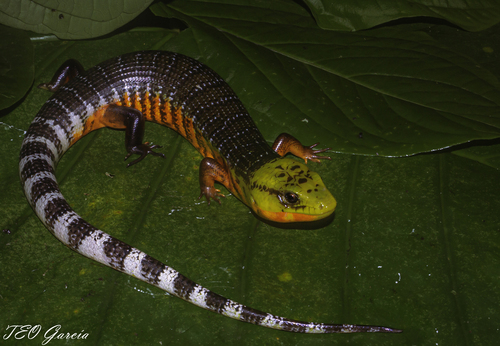
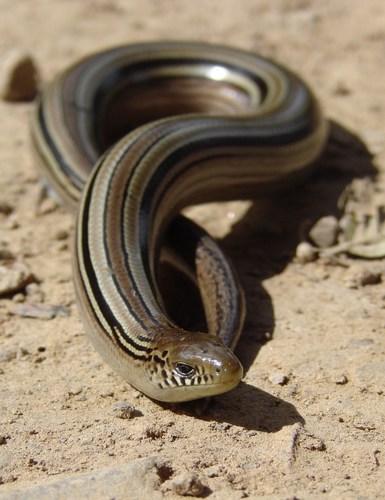
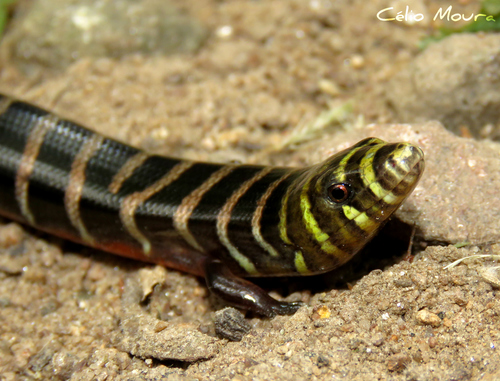
Diploglossus lessonae (first described by Peracca in 1890) reaches a total length of around 30 cm (12 inches) including the tail, and has an average lifespan of approximately 10 years. Juvenile offspring have a distinctive zebra pattern, with white and black stripes that encircle their entire bodies. Adult individuals are primarily brown, with red or yellow heads and undersides, and they have small legs. This species is native to northeastern Brazil. It most commonly occurs in semiarid environments, scrub areas, and low forests. Diploglossus lessonae is oviparous, meaning it reproduces by laying eggs. Adult females lay one clutch of eggs per year during the dry season, and each clutch contains between one and seven eggs.