About Diplodus holbrookii (Bean, 1878)
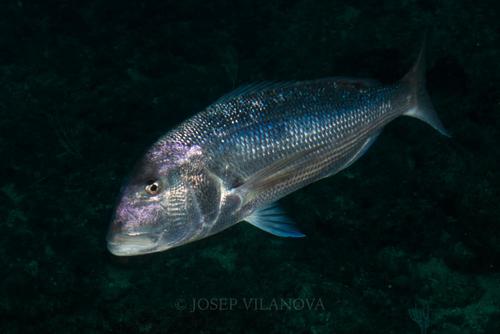
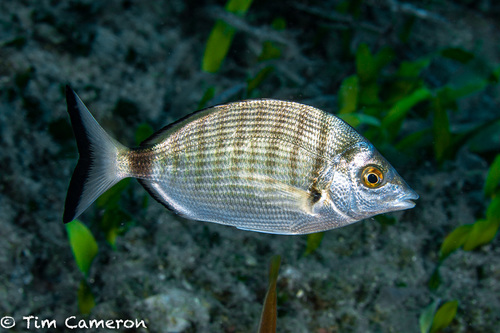
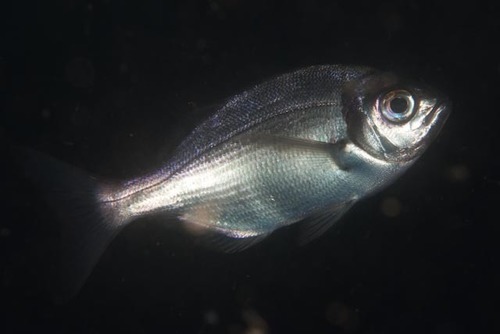
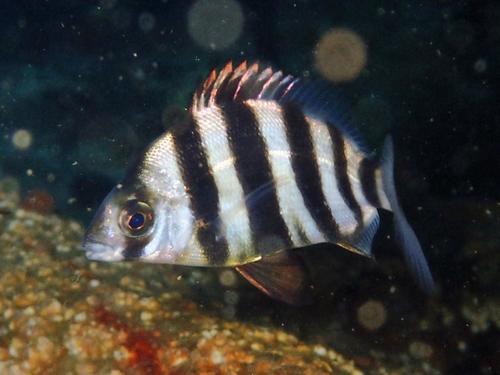
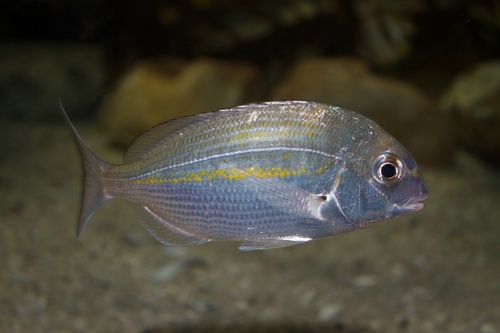
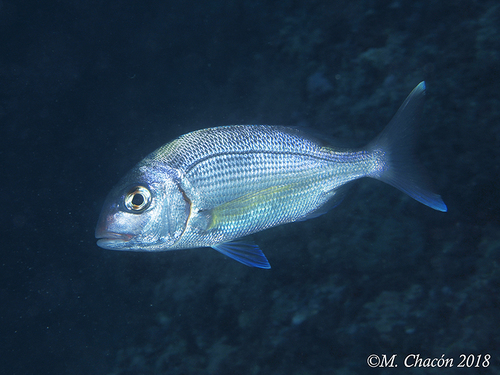
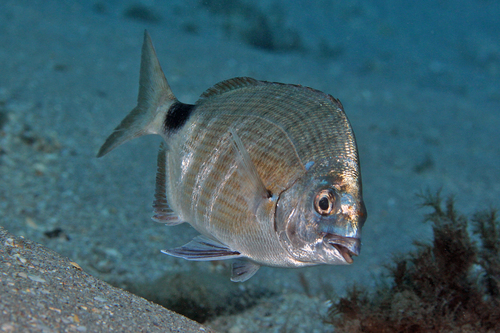
Spottail pinfish (Diplodus holbrookii) have a deep, ovoid, laterally compressed body, with a small deep head and a pointed snout. Their small mouth extends just to the position under the front of the eye. Each jaw has six large, flattened incisor-like teeth at the front, with three rows of molar-like teeth along the jaw sides. The dorsal fin is supported by 12 spines: the fourth spine is as long as 40% of the head length, and the dorsal fin has between 13 and 16 soft rays. The anal fin has three spines and between 13 and 15 soft rays. Pectoral fins are much longer than pelvic fins. The cheeks have scales, but the snout has none. The upper body is steely blue, and the flanks are silvery. There is a large black blotch on the caudal peduncle, and the operculum membrane is dark. Juveniles have dark bars across their bodies. The maximum published total length for this species is 46 cm (18 in), while 25 cm (9.8 in) is a more typical total length. Spottail pinfish are found only in the western Atlantic Ocean, ranging from Chesapeake Bay to southern Florida. They are also recorded from the northern Gulf of Mexico, but have not been recorded from the West Indies. All confirmed records from Cuba are lacking, with only unconfirmed questionable reports of this species there. This species is common in shallow coastal waters no deeper than 28 metres (92 feet), such as bays and harbors, and only rarely occurs in brackish areas. They prefer flat, vegetated bottoms, like seagrass beds, where they feed on a mix of plants including Thalassia and small invertebrates.