About Diplodus argenteus (Valenciennes, 1830)
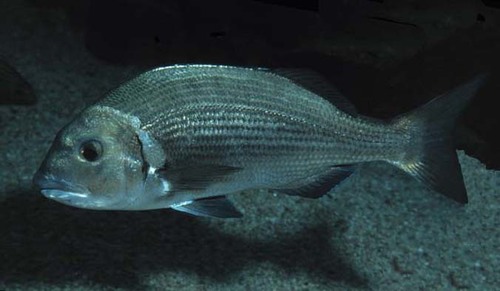
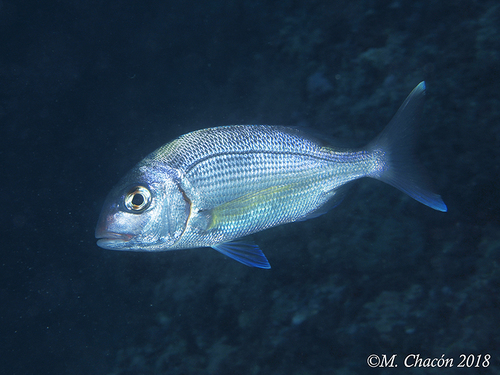
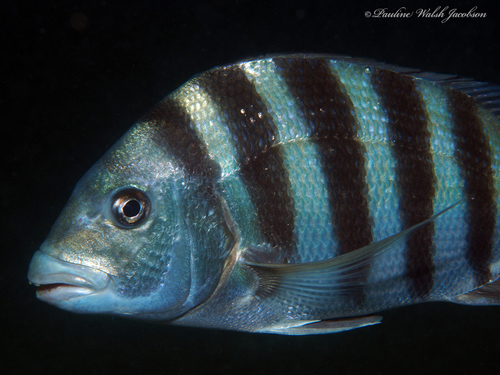
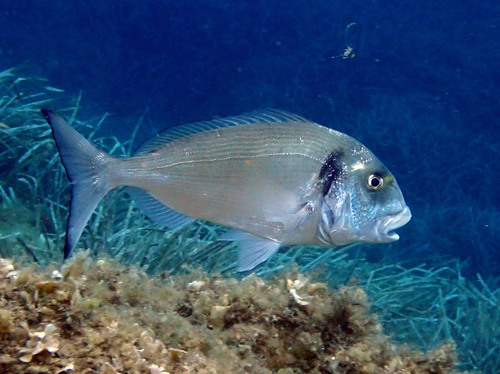
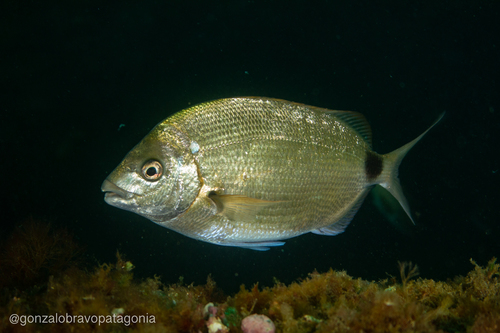
Diplodus argenteus, commonly called the silver porgy, is named for its characteristic silvery body coloration. Its scales and fins often carry an additional yellowish tint. Along with its base silver color, nine faint, narrow dark bars appear on the front portion of the body; these bars are most visible in younger fish, and fade as individuals age. The species also has a large black blotch on the caudal peduncle, and a very dark opercular membrane. The silver porgy's dorsal fin contains 12 spines and 13 to 15 soft rays, while its anal fin has three spines and 12 to 14 soft rays. Mature silver porgies typically reach 20 to 23 cm (7.9 to 9.1 inches) in length, and the maximum recorded length for the species is 37.8 cm (1.24 feet).
The silver porgy occurs primarily in the western Atlantic Ocean. Its range includes the waters of southern Florida, the Antilles, the Bahamas, the Bay of Campeche in the Gulf of Mexico, and the South American coast from Colombia and Venezuela south to Argentina, reaching as far south as the coast of northern Patagonia. Adults typically live in clear, turbulent water over rocky or coral substrates, especially on exposed, surf-heavy unsheltered coasts. Juveniles occupy much shallower water, such as intertidal rock pools, while mid-sized individuals up to 10 cm (3.9 inches) long can also be found in seagrass beds of the genus Thalassia.