About Diploderma swinhonis (Günther, 1864)
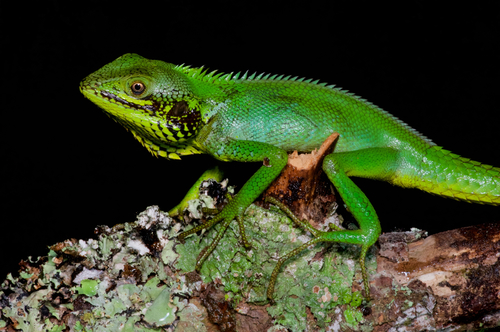
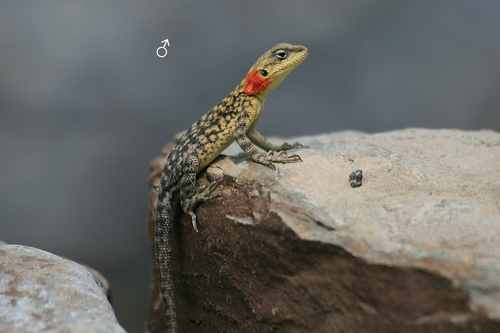
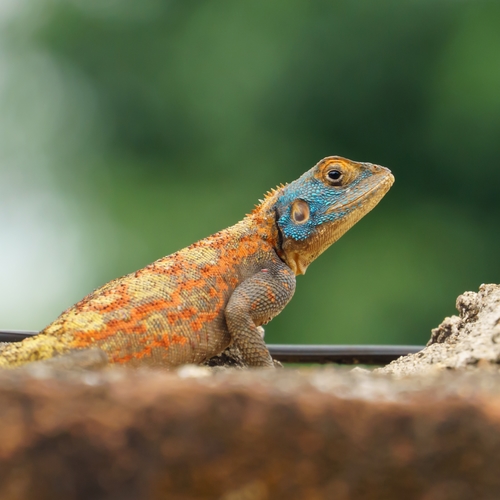
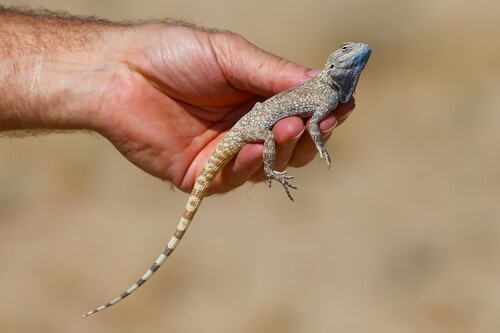
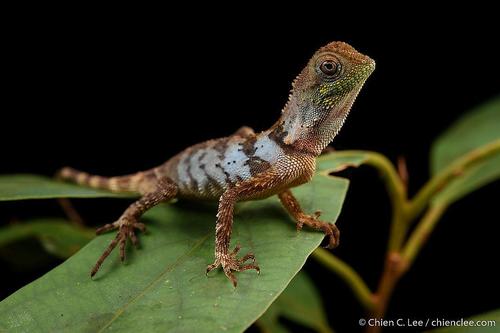
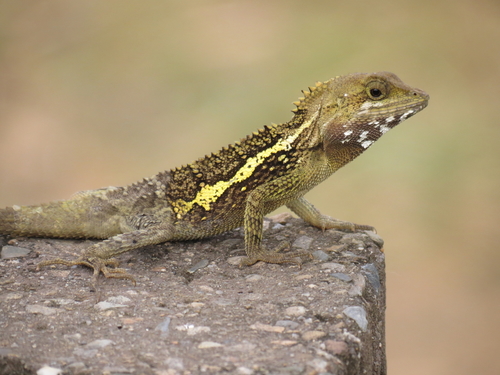
Diploderma swinhonis (Günther, 1864) shows sexual dimorphism in both coloration and size. Its maximum total length including tail is around 31 cm (12 in), with a body length of 8 cm (3.1 in). Immature lizards have an average body mass of approximately 2 g (0.071 oz), while mature lizards average around 13.4 g (0.47 oz). Adult males are significantly larger than adult females: the average snout-to-vent length (SVL) is 73 mm (2.9 in) for males and 62 mm (2.4 in) for females. Males also have much larger dewlaps, laterally compressed bodies, and longer limbs, heads, and tails than females. Both sexes have brown backs, but males have brighter coloration with a yellow stripe on each side of the body; some females have a brown-red pattern on their dorsal side, and females generally have more cylindrical bodies. Compared to other species in its genus, D. swinhonis is uniquely marked by irregularly distributed enlarged scales on its dorsal side. It also has relatively long limbs compared to other lizards overall. Physical traits including weight, size, reproductive ability, and reproductive period vary among D. swinhonis populations from different regions of Taiwan and Japan, so the species does not have a single uniform appearance.
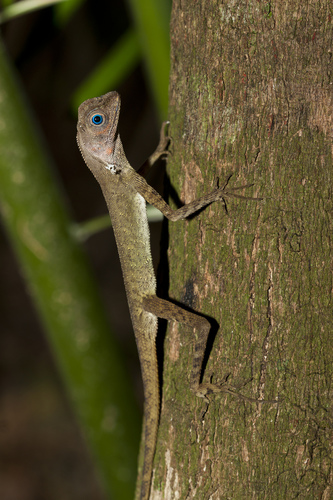
Diploderma swinhonis is an arboreal, diurnal species that prefers low-altitude habitats below 1,500 m (4,900 ft). It adapts well to diverse environments, including natural lowland forests and urban areas such as shopping malls. It typically perches close to the ground on tree trunks and forages on the ground: males usually stay at higher altitudes on trees, while females and juveniles live closer to the ground near bushes. D. swinhonis is an opportunistic ambush predator. Males are territorial and use aggressive displays to defend their territories; their territorial behavior is mainly to increase mating opportunities rather than protect food resources. Larger males have a competitive advantage in competing for mates and defending territories, which is considered a reason why males are larger than females on average. Each male's territory usually contains 2 to 3 females. Females mainly dig nests and guard their eggs, so they have smaller activity ranges. When confronted by an intruder, males expand their throat to display white spots inside to scare the intruder away. In Taiwan, D. swinhonis hibernates from November to March, and is only active outside this period. Currently, the only recorded predator of D. swinhonis is the brown shrike, which preys on it only during migration season. Male territories are established once the male reaches a sufficient size, and males remain in their home territory both in and out of the reproductive season. Females may leave their current male's range after the reproductive season ends, likely to increase reproductive success with other mates.
D. swinhonis is native to Taiwan, where it is distributed on Taiwan's main island peripheral islands including Orchid Island, Green Island, and Xiaoliuqiu. It has been found in Japan, likely introduced by human activity, and is considered an invasive species there. It was probably accidentally imported from Taiwan to Japan on plants, and was first recorded in Japan in 2006; it is now found in multiple regions of Japan. In Taiwan, it occurs below 1500 m elevation in areas with sufficient sunlight, including undisturbed woodlands and forests, as well as human-populated areas like schools and shopping malls.
D. swinhonis reproduces sexually on a seasonal cycle: females are sexually active from March to August, while males are sexually active from March to July. Spermatogenesis in males occurs at the same time that females lay eggs. Females lay 2 clutches of eggs per year on average, with an average of 4.27 eggs per clutch. Eggs within the same clutch have similar physical dimensions, and D. swinhonis is oviparous. Its reproductive cycle is similar to that of other Japanese lizards and other temperate reptiles. Females take approximately 350 days to reach sexual maturity, while males take 140 to 260 days depending on whether they hatch from an early or late clutch, so males mature faster than females. Females are sexually mature once their SVL exceeds 50.2 mm (1.98 in), while males are mature once their SVL exceeds 53 mm (2.1 in), corresponding to the growth required for spermatogenesis in males and ovarian follicle development in females respectively.
Both male and female D. swinhonis have a monthly mortality rate of around 20%, with particularly high mortality before reaching maturity. Around 88% of eggs do not survive the initial 30-day incubation period. This high mortality means D. swinhonis reproduces more slowly than many other lizard species. Male population size fluctuates due to fighting during competition for territories, mates, or resources, while female population size remains relatively stable as females do not participate in this competitive behavior.