About Diplodactylus vittatus Gray, 1832
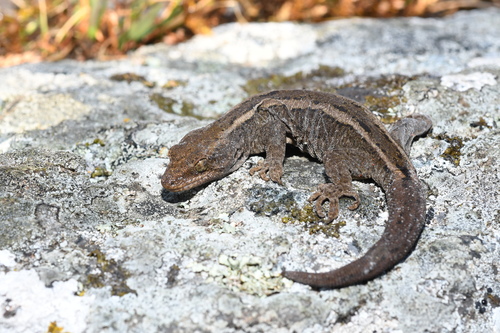
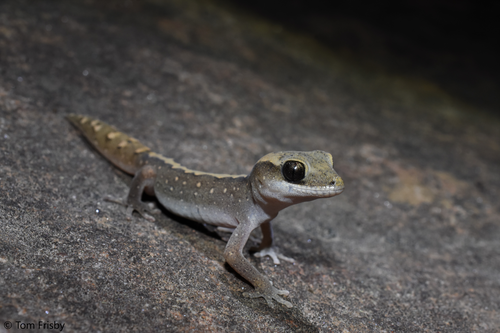
Diplodactylus vittatus Gray, 1832, also commonly called the eastern stone gecko, is a small nocturnal terrestrial lizard native to Australia. It has a dark brown body with pale notched zigzag stripes running from its back to the tip of its short, plump tail. This species has four limbs, each with four setae-covered digits, large eyes with vertical pupils, no eyelids, a fleshy tongue that the gecko uses to clean its eyes, tiny granular scales, and soft bodies. The tail serves multiple functions: balancing when climbing, storing fat, and providing camouflage. Diplodactylus vittatus can reach up to 6 cm in length from snout to vent, and up to 9 cm in total length from snout to the end of the tail. It has a relatively short lifespan of around 5 years. This species is found across forests, shrublands, and semi-arid environments of Queensland, Victoria, New South Wales, and South Australia. It is most common in dry, lightly timbered bushlands, and is mostly absent from suburban areas. During daylight hours, D. vittatus shelters in burrows and depressions under rocks or fallen timbers, which explains its common names of stone gecko or wood gecko. Like most reptiles, Diplodactylus vittatus is ectothermic, meaning it relies on its external environment to maintain and regulate its body temperature through physiological and behavioral adjustments. The species selects foraging microhabitats that fall within its preferred temperature range of 17°C to 26°C, and chooses warmer shelter locations during the day to support thermoregulation. This thermoregulation enhances key physiological processes including digestion and egg development. Individual geckos choose their foraging microhabitats and burrowing locations based on their personal temperature needs, either to raise or lower their body temperature. Failure to maintain proper thermoregulation can lead to energy loss, increased predation risk, higher competition for resources, and reduced access to prey. D. vittatus relies heavily on foliage, rocks, and debris for survival; it has adapted to use camouflage in these habitats, which also provide its main food source, so the species is commonly found in these areas. This species communicates with conspecifics via clicking, chirping, and barking noises, as well as through body language such as standing on its hind legs. This communication is used both to attract mates and for males defending their territories. Diplodactylus vittatus is oviparous (egg-laying), with a breeding season that runs from September through February, varying with the species’ environment and location. Females produce clutches of two eggs, and can lay multiple clutches over a single breeding season. Females lay their eggs in leaves, bark, burrows, and debris.